Pronunciation tips for learning a new language

In your language-learner dreams, you may be asking a local what time the train is coming in a perfect Parisian accent, or ordering scialatelli as if you’ve spent your entire life vacationing on the Amalfi Coast. But knowing the words is one thing. Sounding like a native is entirely different.

If you’re learning a language that doesn’t share roots with your mother tongue, pronunciation can be hard. So hard in fact, that it may hinder the learning process altogether.   

“We learners hold ourselves to these really difficult goals that aren’t always very realistic,” says Cindy Blanco, managing editor of learning content at Duolingo. “People feel so self-conscious about how they sound when they’re speaking a different language that they don’t get the practice, learn new vocabulary, or try out new grammar.” 

Some general recommendations

Different languages pose different challenges to learners. Mother tongues can also make picking up new lingo simpler or more difficult; it’s easier for an English speaker to learn the similarly-rooted German, and harder for them to learn Italian. But regardless of the language you’re trying to shove into your brain, there are a couple of things you should keep in mind to make learning easier for you.

Keep your eyes on the goal 

Every language has its own music, and many learners consider being able to speak with the same cadence and intonation as a local as the ultimate goal. It’s not, though. 

“From a learning perspective, you don’t need to sound like you have lived in Paris your whole life in order to speak French and be understood, and have a great time communicating,” says Blanco.

[Related: The language you speak changes your perception of time]

It’s totally valid to want to eventually pronounce everything perfectly and have people ask you if you’ve spent a lot of time abroad. But the true goal of learning a second or third language should be communication, which is often unrelated to pronunciation. 

Choose your battles

When it comes to communicating, pronunciation is only important when changing a sound changes the meaning of a word.

Consider the words “this” and “these.” For Spanish speakers, these words are tricky because the “I” sound in “this” doesn’t exist in their native language. They tend to pronounce it as “these.” Here, the shape of your mouth is crucial to get meaning across, but that’s not always the case. If you order tacos in Mexico using the American “oʊ” vowel, you’ll definitely sound foreign, but no one’s going to bring you a plate of spaghetti or a bagel. The same happens with the French “R”—it sounds lovely, but if you have a hard time pronouncing it, you’ll still probably be able to communicate with locals during your trip to the Pyrenees mountains.  

So the next time you’re having trouble with a particular sound, ask yourself if it changes the meaning of words at all. If the answer is no, your attention and focus will be better served elsewhere. 

Go slow

This tip doesn’t have any unfamiliar sounds, but it still has two meanings: speak slower and give yourself time to get better. 

Most people think that to be successful at language learning you need to speak fast and be as competent in your new lingo as you are in your mother tongue. That’s what some people mean by “speaking natively.” But learning a new language is hard on your brain. 

Blanco explains that communication generally happens in two layers: first, you think of a concept or desire, then your brain translates that into words you can express to others through sounds. 

“When you’re learning a new language, we don’t automatically map the new words to the concepts, we map them to our own language. So we create an extra layer,” Blanco explains.  

So, you think of a concept, then think of the words to express that concept in your mother tongue, and then you consciously look for the equivalent of those words in the language you’re learning. And that’s just at a conceptual level. Once you have the words, your brain has to tell your face muscles to overcome decades of use and move in strange and unfamiliar ways to emit the sounds of these new words. It’s a lot. 

Slowing down on the spot will give you more time to manage the internal process of thinking and speaking in a new language, while slowing down across the board will give your brain time to better adjust to something new.  

“The goal of learning is to have so much practice with the new language that you start mapping it directly to the concept. That’s what people mean when they talk about thinking in the language—you want to skip the translation in your head,” says Blanco. 

Thinking about your brain as a muscle and a new language as physical activity might help—picking up swimming when you’ve been running your entire life is hard. Muscles you didn’t even know you had will be sore, and maybe you won’t even know how to breathe correctly. Don’t worry—your skills will grow with time and practice.  

Listen as much as you can 

Blanco explains that listening to a language also helps with pronunciation because the movements your mouth makes to produce the sounds are connected to what your brain knows about the sounds. 

“In linguistics, we call it perception and production—so it’s the hearing, but also the speaking, and these are two parts of the same skill,” she says.

Luckily, listening is easy. Streaming platforms like Netflix and Amazon Prime Video have a lot of non-English content you can browse. There are also countless videos you can watch on YouTube, as well as music and podcasts you can listen to on your favorite platform. If you’re worried about finding something that matches your learning level, don’t fret too much about it. 

“In the beginning, it’s totally normal to not understand much or anything. That will come with practice,” Blanco says. 

Eventually, you’ll be able to pick out words, phrases, and then sentences. And if you think it’ll help you, you can listen while reading the words. The lyrics feature on Spotify, for example, can come in handy—find it by tapping the microphone icon in the bottom right corner of your screen on the desktop app, or swiping up on the player screen on the mobile app. If you’re listening to a podcast, you’ll find that publishers will often post the transcripts for it. You can usually find these links in the episode description, but a quick web search will also do the trick.

How to better pronounce a foreign language

Since learning challenges are language-specific, we decided to focus on the most popular languages people are learning in the US according to Duolingo’s 2022 report: Spanish, English (for Spanish-speaking learners), French, Japanese, and German. 

Tips for pronouncing Spanish

You may have never thought about it, but the sounds—or phonemes—in Spanish are widely different from those in English. It’s true: English has around 42 (20 vowel sounds and 22 consonants), while Spanish only has around 24 (five vowels and 19 consonants). This is the equivalent of using all the crayons in a box to draw a picture and then being told to do the same but with only half of them. Oh, and also using some entirely new colors, because some Spanish phonemes just don’t exist in English. 

When it comes to vowels, Blanco recommends that English speakers think of these sounds as shorter and sharper. For example, the Spanish “O” sounds like only half of the aforementioned English “oʊ” phoneme, which in turn sounds like the pairing of two Spanish phonemes: “O” and “U.”  

For English speakers, there’s no doubt that the Mount Everest of Spanish pronunciation is the rolling or trilled “R”. If you’ve felt the frustration of not being able to replicate this sound, Blanco says you can just skip it. More often than not, an inability to trill your Rs will not affect communication. Yes, you’ll sound like an American speaking Spanish, but locals will still be able to get what you’re saying. 

If you’re going to stress over Rs, your energy is better spent mastering the single “R” sound in Spanish—the one you’ll encounter in words like “para” and “arena.” This one’s especially tricky because it actually exists in English, but under a different letter, Blanco explains. 

“We just don’t think of it being an ‘R’—we think it’s a double ‘T’ or a double ‘D,’ like in ‘ladder’ or ‘matter,’” says Blanco. 

In cases like this one, turning off the subtitles and skipping the transcripts when you’re listening to Spanish content can be a good idea, as it will let you concentrate on the sounds and not get tricked by the words.  

Tips for pronouncing English (for Spanish speakers)

The sheer number of new sounds Spanish speakers need to learn to properly pronounce English is absurd. To continue with the crayon analogy, a Spanish speaker learning English is like a master of black-and-white art suddenly needing to paint in technicolor. There are sure to be some bumps in the road. 

Moving your face and mouth muscles in a way that may feel exaggerated is necessary for good English pronunciation. And even if it feels like you’re doing a Jim Carrey impersonation, you’re not—you’re just moving your face in an unfamiliar way. The other problem is that mastering English vowels is necessary because unlike the rolling Rs in Spanish, these sounds can change the meaning of a word, like in “bit” and “beat.”

“You can kind of cheat by using what you’ve got but making it long or short,” says Blanco. So, “bit” has a shorter vowel sound than “beat.”

When it comes to consonants, a tricky one for Spanish speakers is the “Th” sound (as in “thespian” and “thistle”), mainly because it’s a sound that doesn’t exist in Spanish. This is when looking at the mouths of English speakers can come in handy: paying attention to how people put their tongues between their teeth can help your brain visualize the movements of your own mouth much more easily. 

Tips for pronouncing French

You’d think that French has more phonemes than English, but you’d be wrong (36 vs. 42, approximately). What’s tricky about French is not the number of sounds but the number of new sounds, which forces English speakers to learn 10 new phonemes. 

Blanco explains that the main challenges are rounded vowels. These are the sounds that require you to round your lips, which can feel extremely unnatural for English and Spanish speakers since these sounds are nowhere to be found in those languages. 

To get better at this, your best bet is to observe the mouths of francophones and try imitating them. Blanco recommends streaming a French show and paying close attention to how people move their lips when they speak. You can also have a mirror at hand and try to imitate the sounds and movements on the spot. Don’t do this without a reference—you want to be able to compare the correct form to what you’re doing and tweak it as necessary.  

Just like Spanish speakers learning English, English speakers learning French will feel like they’re contorting their muscles a lot more, which can lead to feeling self-conscious. But there’s no need to—you’re probably not moving excessively, just moving in a way you’re not used to. Keep at it until it becomes natural. 

Tips for pronouncing Japanese 

Believe it or not, Japanese is very similar to Spanish. Well, at least as far as sounds are concerned. Both Japanese and Spanish have five vowels, and a similar number of consonants (14 vs. 19, approximately), so English speakers will have some of the same challenges learning Japanese as they do learning Spanish. 

But there’s a catch—or more. While Spanish is a category 1 language on the difficulty scale, Japanese is a category 8 (the highest). Among the reasons for this discrepancy are stress patterns, long vowels, double or geminated consonants, and rhythm.  

[Related: 5 great apps for learning a new language]

Japanese has a different stress pattern than English, explains Blanco, and while Americans usually stress one syllable, native Japanese speakers tend to stress syllables more consistently throughout, making words sound somewhat flatter. Geminated consonants, also present in Italian, add to longer vowel sounds that prolong the basic phonemes to create new ones. And if that’s not enough, the rhythm of Japanese is completely different from English, which forces learners to unlearn even how they breathe when speaking. 

Doing a lot of listening and thinking about intonation and rhythm can help, Blanco says, as it can make it easier for a Japanese listener to break apart what you’re saying.

Tips for pronouncing German

Luckily for German learners, this lingo shares its Germanic roots with English. While there are some new sounds you’ll have to learn (some borrowed from French), you may have an easier time trying to pronounce Goethe’s mother tongue. 

Blanco recommends focusing your attention on watching native speakers’ mouths, and listening exercises. This time, forgo any transcripts, as German has sounds that are present in English but are represented by different letters. This can result in written words being more confusing than helpful. 

Just like in French, the German “R” can be tricky for English speakers, but will seldom change the meaning of words. If you’re having trouble with it, you’re better off saving it for another day, says Blanco. 

Regardless of the language, you’re learning, it’s important to remember that there’s no single, unified way native speakers sound, and there’s nothing wrong with having an accent. Your brain and body have spent years, even decades perfecting communication in one language. Repeating the process (with the added difficulty of having a mother tongue) can be slow and challenging, so be gentle with yourself and, above all, be patient.
9 Free Cloud Computing Online Courses for Beginners

Cloud computing is a game-changing technology that has changed the way we work. IT services are now delivered over the cloud or the internet, making work processes more efficient.


With many companies migrating to the cloud, the demand for cloud computing professionals continues to grow. If you’re a beginner, choose from these free online courses to start your career in cloud computing.


Introduction to Cloud Computing IBM

Introduction to Cloud Computing by IBM takes you through the core concepts you need to become a cloud practitioner. You’ll learn about the definition, beginnings, models (IaaS, PaaS, and SaaS), and components of cloud computing. You’ll also understand how businesses apply cloud computing technology and identify the major cloud providers used today.

The lessons are friendly for beginners and don’t require programming knowledge. They cater for diverse learners, from students to cloud engineers. By the end of the course, you’ll be able to create an IBM cloud account and gain experience of cloud services.

Udacity Intro to Cloud Computing

Are you thinking of becoming a cloud developer? This course is for you if you’re already familiar with networking concepts such as DNS, web servers, and Linux. You’ll learn fundamental concepts such as the advantages of cloud computing and its different models. You’ll also get to compare the well-known cloud services today.

If you’re interested in gaining hands-on experience with Amazon Web Services, explore this course on Udacity. You’ll complete AWS exercises under the guidance of a senior cloud architect. By the end of the five lessons, you should be able to navigate AWS services confidently. You’ll also be able to build a serverless architecture and set up data storage using AWS ElastiCache.

Introduction to Mobile and Cloud Computing Free Online Course from Alison

Wireless services have deeply impacted mobile communication. Today, you can use mobile devices such as smartphones, tablets, and laptops. This course discusses how cloud computing has changed the way we communicate through our devices.

You’ll learn about Android, WiMAX, and cloud services like Gmail and Facebook. If you’re interested to learn more about the intersections of cloud technology, software, and hardware, this is the course for you.

Cloud Computing Law Specialization Free online course from Coursera

A beginner-friendly course even for those with zero law or IT backgrounds, Cloud Computing Law Specialization brings up legal issues that may arise while transacting over the internet. You’ll understand how European Union rules regulate personal data in the cloud. You’ll critically think about cloud contracts and intellectual property rights. You’ll also learn how the law and tax liabilities can potentially impact cloud customers and providers.

The course gives you a chance to work on real-world case studies. You’ll assess the legal risks of using cloud solutions and help cloud providers and customers comply with regulations. Since cloud computing professionals have to deal with complex issues in cybersecurity, data loss, privacy, and copyright infringement, you’ll find this course helpful for your career.

Internet of Things Wireless and Cloud Computing Emerging Technologies free online course from coursera

IoT is the network of physical objects with sensors that collect and exchange data with each other. These web-enabled smart devices run silently in the background, collecting and sending data to the cloud. For example, you have the best smart pet gadgets and smart home systems you can use to automate your life.

As more IoT devices are created, cloud computing professionals should understand the core IoT technologies and platforms used in product innovation. This course will serve as an introduction to these cloud technologies and platforms. You’ll also take on hands-on projects to help you use an EC2 Virtual Computer in AWS and analyze Bluetooth and wireless networks.

Cloud Security Basics free online course from Coursera

If you’re wondering what cybersecurity certifications you should train for, this is one of the best courses you can take. While the cloud has made life and work more convenient, it also births serious security issues that should worry any company. This course is an introduction to the basic techniques that solve problems in cloud security.

In Cloud Security Basics, you’ll learn about internet server security and analyze the most recent cloud security vulnerabilities. You’ll learn how to secure networks for a private cloud and use cryptography to protect data in remote setups. Practical exercises also complement the lessons to help you understand the concepts you’ve learned.

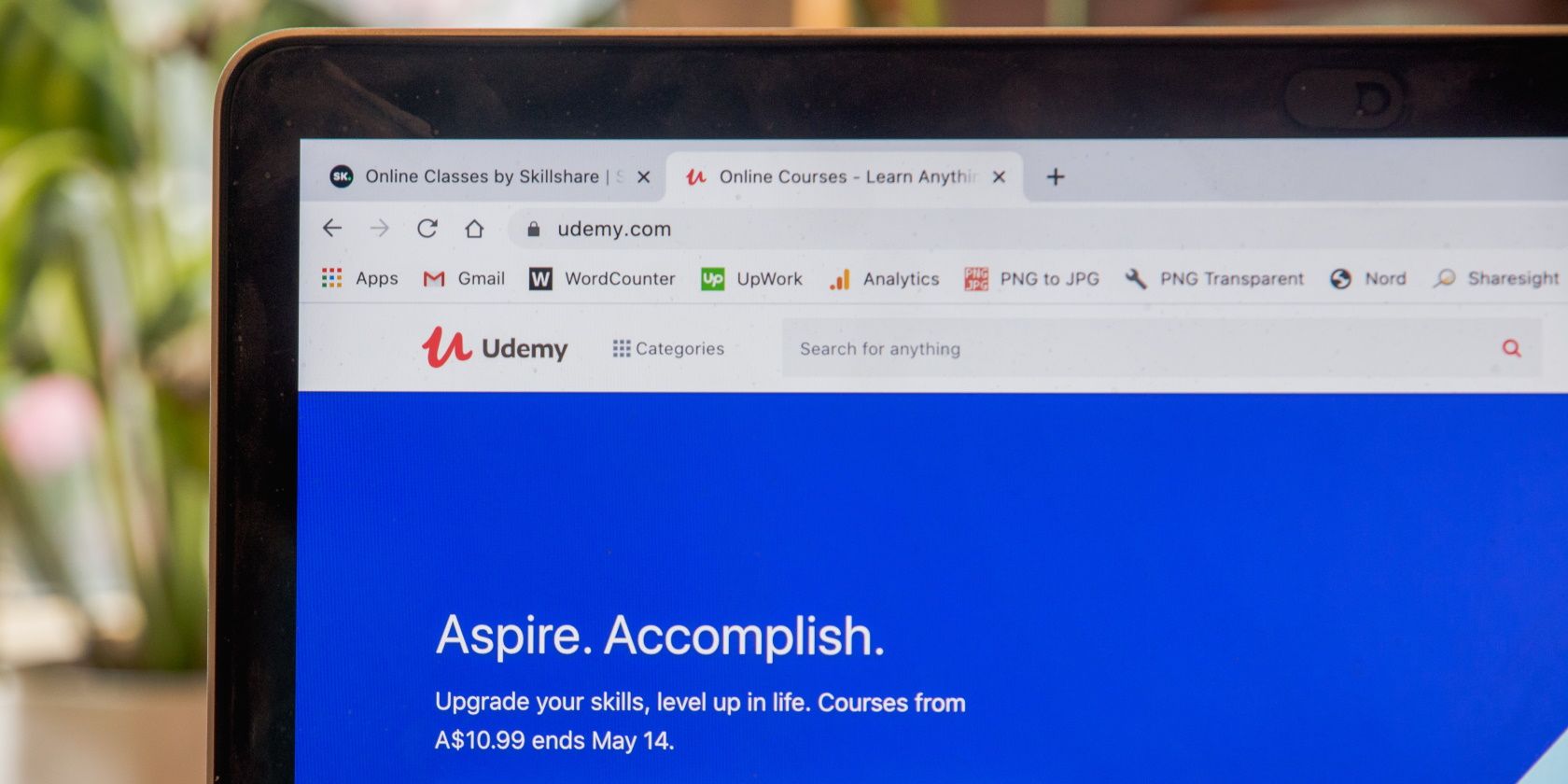
Cloud computing with amazon web services free online course from udemy

Cloud computing is a broad and complex topic. If you already know the basics, you can zero in on one of the major cloud providers today. According to Duke Learning Innovation, AWS is the most sought-after cloud computing skill in the job market today. There’s also a vast skills gap, with only 14 percent of professionals offering cloud computing skills compared to 44 percent frequency in job postings.

This free tutorial from Udemy is your beginner’s lesson in AWS cloud computing. You’ll learn AWS basics, including creating virtual services in the cloud, bulk email solutions, database solutions, monitoring and notification services, and configuring AWS services in real-time. The lessons are also peppered with practice exercises to help you apply what you have learned.

Introduction to the Basics of Azure Services Free online course by simplilearn

Azure is another in-demand skill in cloud computing. It’s one of the best skills to learn if you want to increase your employability. Operated by Microsoft, Azure is a public cloud platform that allows organizations to choose from an extensive collection of services. It’s popular for enterprises that prefer hybrid solutions that sync with legacy apps.

In this free course from SkillUP by Simplilearn, you’ll understand how Azure works. Divided into four topics (one hour total), this course takes you through Azure’s Active Directory, Data Factory, Virtual Machine, and Virtual Network. Start with this foundational course before you take on more advanced lessons.

Google Cloud Computing Foundations online course from edX-1

Perhaps you’re more interested in exploring Google’s cloud ecosystem. This course gives you an overview of cloud computing before zeroing in on Google Cloud solutions. You’ll learn the theoretical and practical applications of cloud computing. You’ll see why the cloud is significant for the future of work. Lastly, you’ll learn the different ways you can use Google Cloud.

Get Job-Ready With Cloud Computing Skills

This selection of free online courses makes it easy to learn cloud computing from scratch. If you’re wondering where to start, choose any of the classes listed above. After getting an overview, you’ll better understand which courses are worth your money, so you can pay for a verified certificate.

With most computing tasks moving to the cloud, cloud computing is worth learning. You can also supplement your cloud computing skills with other IT skills. Learn an in-demand programming language such as Python and get a more in-depth understanding of operating systems such as Windows and Linux. You have all the resources you need in the cloud.

Scenic City Shakespeare Receives Arts Education Community Learning Grant From TN Arts Commission

Scenic City Shakespeare Receives Arts Education Community Learning Grant From TN Arts Commission

Scenic City Shakespeare has introduced “Billie the Bard’s Puppet Playhouse” funded by the TN Arts Fee. This new academic puppetry program will have 10 initial performances at the Avondale department of the Chattanooga General public Library commencing spring 2023.

Puppet design and style and development is under way. These pilot performances will be No cost to the public and offered on line. Check out www.sceniccityshakespeare.org for extra information and scheduling inquiries.

Bard’s Puppet Playhouse follows a team of puppet young children in drama club as they navigate social emotional topics and function jointly to perform scenes from Shakespeare’s textual content led by their pal Billie the Bard, the human storyteller symbolizing William Shakespeare. With coaching from Scenic Town Shakespeare Puppeteer Teaching Artists, younger learners in the audience will have palms-on possibilities to find out simple puppetry capabilities and be showcased in scenes.

Erica Richardson, Founder of Tradition Books and Library Supervisor of the Avondale Department of the Chattanooga Public Library, will originate the part of Billie the Bard and help with script and lesson arranging. A former Elementary University instructor, you could possibly understand Erica from weekly on the web readings and creator interviews. Check out Culture Textbooks on the web for more on their mission and approaching situations at www.culturebookscha.org.

Brenda Schwab leads puppet design and development. Brenda’s function can be viewed at the Resourceful Discovery Museum’s Bee Show and on stage all about Chattanooga. She has served as the Costumer for Chattanooga Point out Neighborhood Faculty for virtually two many years and has costumed a great number of productions throughout the region. She is an knowledgeable puppet builder, acquiring developed and executed with colleagues of Jim Henson. A gifted and professional performer and educator in her possess appropriate, Brenda will also seek advice from on scripts and lesson information.

The system was made by Emma Collins, Scenic Metropolis Shakespeare Cofounder/Training Director, who was launched to instructional puppetry via her work at the beloved nonprofit Young ones on the Block. Till closing in 2019, Chattanooga’s Little ones on the Block took touring puppet displays to schools and coated a vary of subject areas from basic safety and cleanliness to delicate subjects like bereavement and gun violence. Emma is a Wolf Lure Educating Artist with the Arts Centered Collaborative at UTC, main arts integration qualified progress residencies for early schooling academics and students. Given that 2020, she has led monthly meetup groups for Shakespeare viewers online and in human being on Ground Five at the Edney Innovation Center.

Scripts by Emma Collins as lesson options were formulated with Scott Lee, PHD, host of The Considerate Trainer Podcast, and Scenic Metropolis Shakespeare Board Chair. For more information and facts and to inquire about performances, Puppeteer Training Artist applications, or sponsorship options, check out www.sceniccityshakespeare.org.

Cultivating a love of historical literacy and learning

Cultivating a love of historical literacy and learning

When Dr. Jennifer Jaso tells individuals she teaches middle college, most folks react the very same way: “Wow. Thank goodness for you.”  

The Sarasota Middle College background and essential thinking trainer has taught for 17 several years, most of those grades 6 by way of 8. She enjoys it. 

Last fall, Jaso’s friends at Sarasota Middle College distinguished her as Instructor of the Yr. Of the 43 Instructor of the Year nominees throughout Sarasota County, she was chosen as a single of a few finalists for district Teacher of the 12 months, and sooner or later gained the district’s best honor. 

Jaso’s recognition did not stop there. In May perhaps, she discovered that she was a major-5 finalist for the Florida Trainer of the 12 months. For the 2nd yr in a row, a Sarasota County educator experienced gained this distinguished honor. 

Though not solely cozy with the spotlight, Jaso stated she was “honored to advocate for history teachers, to represent my learners, stand for their mothers and fathers, represent my university and my colleagues on that variety of platform.”   

Jennifer Jaso, Sarasota County's 2022 Teacher of the Year.

Jaso is a tireless advocate for historic literacy whose passion for the matter led her to earn her Doctor of Education degree. With fellow educators, Jaso also started the Florida Council for Historic Education, a nonprofit that advocates for historic literacy and producing heritage extra obtainable.  

Though Jaso did not in the long run receive prime honors as Florida Teacher of the 12 months this previous summer at a gala reception in Orlando, the practical experience has been hugely gratifying. She satisfied 4 other incredible educators, with whom she continues to be in speak to these days. Jointly, they advocate for the profession of teaching, and Jaso has elevated her advocacy of historical literacy. 

Through her journey to district Trainer of the Calendar year and finalist for the Florida Instructor of the Yr, Jaso credits so considerably of her good results to her learners, colleagues, and administrators.

“It will come from them as properly,” Jaso said of these honors. She appreciates how interconnected educating is and how an complete school have to get the job done together to obtain a thriving finding out natural environment.    

Jennifer Jaso, Sarasota County's 2022 Teacher of the Year, in her classroom at Sarasota Middle.

“My amount-a single inspiration considering that I’ve entered the occupation [are] my colleagues,” Jaso mentioned. “They provide a wealth of knowledge at any stage.” 

The do the job Jaso and her colleagues do, as she famous, could not be much more essential: “Whether you’re training, or you’re an aide, you’re a cafeteria worker — we all have an opportunity to actually, seriously improve life and make a distinction.” 

‘Language ladders’ show promise for introducing multilingual instruction in classrooms

Ayla recollects her early days in Sindh, Pakistan at university, when it was absolutely nothing but a peculiar making. Her dwelling was so distinct and so was her community.

I recall my trainer, Ms. Sindhu, who lived a few residences away from mine, once requested me to narrate a story about a camel journey. We have lots of camels all around us, so I became fired up and needed to share, but I just couldn’t. I just struggled to say what I realized, what I have loved and wanted to say. It felt like my tongue froze.

Ms. Sindhu questioned Ayla to narrate this tale in English, a language that was unfamiliar to her at the time. If requested in Sindhi, Ayla would not only have communicated her practical experience but also acquired her teacher’s strength of affirmation in return. Language is an invisible resource of familiarity in university that young children keep on to—it is by means of language that they have experienced the environment so much. In this way, language gets a bridge involving college and property, making it possible for little ones to securely cross concerning the two worlds.

Irrespective of the abundance of literature and expertise supporting the added benefits of training in a acquainted language, an approximated fifty percent of all youngsters in reduced- and middle-income nations around the world are not taught in a language they fully grasp. The situation of Pakistan is no distinct. Following 200 a long time of colonial rule below British India, Pakistan was born in 1947. Nowadays, the place is residence to in excess of 70 languages, including the official languages of Urdu and English (a language that stayed, even following the British left). Urdu and English are used by the government, company sector, media, and—most relevantly—educational institutions.

As is the case with numerous other post-colonial nations, Pakistan is stricken with “English-medium fever,” a need to maintain English as the medium of instruction in schools thanks to its perceived superiority and association with wealth, position, and electric power. This fever has led to a deep disconnect involving the languages of the residence and the school. Only 2 out of above 70 indigenous languages are formally regarded in educational facilities in Pakistan. Most of the other languages continue being “informal” in their utilization, provided tiny to no recognition exterior of everyday use.

It is crucial to continue to longitudinally study the outcomes of these types of answers, to identify what is doing the job and what can be perhaps scaled up, and finally, to develop a entire world where Ayla and the hundreds of thousands of young children like her can learn and share their activities with confidence, simplicity, and exhilaration.

Inspite of the want for English-medium instruction, for most college students “English-medium” schooling only signifies that the textbooks and tests are in English. Exploration has demonstrated that a large portion of lecturers in Pakistan do not fully grasp English. Instead, lecturers rely on area languages to instruct and communicate with college students, and students memorize and replicate text with no comprehension. College students are subjected to mastering unfamiliar information in a overseas language by a instructor who has not mastered the language. This locations a stress on students, thereby furthering the inequality in between by themselves and far more privileged students.

The gap involving policy and observe in the language of instruction

Pakistan’s nationwide education and learning guidelines supply provinces with the possibility to use indigenous languages in the early several years of education and really encourage the inclusion of mom tongues.

This leads us to ask why Pakistan’s national policies are not inspiring apply within provincial and personal college units. If the intention to train youngsters in languages they fully grasp is there, why are a sizeable figures of schools continuing to educate little ones applying textbooks in Urdu or English, inspite of these languages collectively only currently being the native tongue of 8 p.c of the inhabitants?

One essential hole is that when plan details the relevance of learning in one’s personal language, there is no steering on how this plan must be executed. School programs are left on their have to design curriculum and create the needed product to carry out this policy. Also, the assessment boards for Matric and Intermediate college students are however held predominantly in Urdu and English, thereby discouraging schools from investing in educating young children in acquainted languages and as a substitute facilitating the rote memorization of unfamiliar language textbooks that students will later on replicate on exams. Mom and dad also dread that their children will do poorly on these examinations, drop options if they examine in their very own language, and forgo finding out in the English language.

This is contributing to a developing disaster wherever youngsters are attending university but battling to comprehend. When these little ones make a decision to no for a longer time go after an instruction, we say they “dropped out.” But the fact of the subject is that these small children are pushed out due to a systemic failure.

A language ladder can support bridge multilingual instruction 

Languages can present access to prospects and provide as a bridge involving a boy or girl and the exterior globe. On the other hand, to assure academic achievements, cognitive advancement, and good identity development, kids need to be taught in languages common to them. Analysis finds that soon after kids have designed proficiency in their acquainted language(s), it is less difficult for them to discover overseas languages like English. Conversely, mastering in an unfamiliar language is as well demanding for a youthful kid. This drawback disproportionately impacts kids struggling with other academic boundaries, these as poverty, hunger, and weak learning circumstances.

So, how can a mom tongue-centered multilingual education coverage be translated into the classroom? To solution this, The Citizens Foundation, which operates a single of the greatest networks of independently run, nonprofit educational facilities in the planet, began a investigation analyze in 2018 that involves a socio-linguistic study, interviews and concentrate groups with stakeholders and gurus, and literature reviews. We merged a lot more than 5 years of investigate results to build a “language ladder” (or language progression plan) that outlines how little ones can be taught in their indigenous language in the early a long time and then changeover to learning multilingually to enhance mastering and long run opportunities (see impression under).

The language ladder can be tailored to any context all it calls for is that a comprehensive socio-linguistic study be carried out in the group to make sure that the aspirations and requires of the community are recognized and are reflected in the language progression plan. The advancement of a language ladder is a to start with step toward teaching young children in languages they comprehend.

TCF is at the moment piloting this language ladder across 19 educational facilities and 84 classrooms—from pre-KG to quality 2—in Tharparkar, Pakistan. It will be scaled to close to 100 schools in the future college calendar year. The model adopts the most common language as the medium of instruction in the early yrs (until eventually quality 3), undergoes a gradual transition from common to unfamiliar language in the late most important and early secondary a long time (grades 3 to 7), and eventually entirely transitions to the language most demanded beyond education in the late secondary yrs (quality 8 onward).

fig 1

Supply: The Citizens Foundation.

The multilingual language ladder puts comprehension at the center. It insists on the use of a common language to instruct unfamiliar content material so that there is a increased chance that the university student will thrive in their natural environment. To make certain this goal is attained, it is not sufficient to produce a plan that simply just endorses mother-tongue instruction. There is also a want for complex advice as to how multilingual schools can put into action this kind of plan on a classroom amount.

Designing and introducing a language ladder can assist policymakers and practitioners in addressing multilingual teaching within their particular person contexts. It is important to continue on to longitudinally study the effects of such answers, to detect what’s working and what can be potentially scaled up, and in the long run, to generate a world the place Ayla and the thousands and thousands of small children like her can understand and share their activities with self-confidence, simplicity, and enjoyment.

You can find out extra about the Mother Tongue-Primarily based Multilingual Application at The Citizens Basis below and a new policy short similar to school language coverage here.

Photo credit history: Albertina d’Urso.

Akron Public Schools teachers’ union issues 10-day strike authorization; District to deliver learning online if strike occurs

AKRON, Ohio – Akron General public Schools is continuing negotiations with the Akron Schooling Association, the union that represents the district’s teachers, subsequent the union’s issuance of a 10-day strike authorization this week, the district announced.

The 10-working day strike authorization is notice of the union’s intent to strike in 10 times — Jan. 9, 2023. All through that time, both equally sides will put together for a strike though also operating toward achieving an agreement on all outstanding deal troubles, according to the district.

Akron General public University instructors have been doing work devoid of a deal because July. Even though both of those events have attained tentative settlement on lots of problems, many continue being, which include: wages, health and fitness insurance plan, supplemental unrestricted particular depart times and “more distinct provisions for the definition of student assault as outlined in the impartial fact finder’s report,” according to a assertion from the district.

School protection has been an ongoing situation in agreement negotiations subsequent new incidents of violence and bomb threats in the district. These incidents led Akron Education Affiliation President Pat Shipe to say the educational facilities are “not safe” in a news release. Subsequent the incidents, the district announced it is performing to update and install extra security tools and safety.

To assistance connect with moms and dads, the district on Friday introduced a website that responses frequently questioned thoughts about its strike preparing. Crucial factors of the district’s designs consist of transitioning to on the net instruction, while continuing to provide foods, crisis childcare and psychological/bodily wellness resources for students and households if a strike happens.

On the internet mastering

In the celebration of a strike, the district will pivot to on line learning, according to the site. Learners will be expected to entire the mastering, which involves opportunities for them to fulfill on the web with an adult and independently full on-line lessons at their personal speed. Though in-particular person instruction is chosen, the on the web finding out aligns with the district’s authorized blended discovering program.

Designated guidance facilities

The district has selected nine colleges to provide assistance and guidance to students and their family members in the function of a strike. Four destinations will present food select-up, tech assistance and overall health expert services. Five destinations will offer food select-up, tech aid, wellbeing products and services and youngster care for pre-registered family members.

Special instruction mastering

College students in the district’s MD and Attain classes will acquire paper assignments to full and return to college. Concerns can be directed to the Office of Particular Education at 330-761-3146.

University athletics and golf equipment

In the celebration of a strike, all sports activities practices, competitions and immediately after-university clubs will be quickly suspended, in accordance to the district.

Emergency childcare

The district will give a confined quantity of seats at Pupil Assist Heart spots for families that require crisis childcare. If a strike appears imminent, the district will start a pre-registration approach for households as soon as probable.

Transportation services

The district will continue to deliver transportation for suitable college students enrolled in non-APS universities in the party the strike occurs. Illustrations involve pupils enrolled in non-APS charter, neighborhood, non-public, non-community or parochial schools, and learners with exclusive requirements who show up at non-district colleges.

College programs

Courses presented as a result of colleges or universities will not be impacted by a possible trainer strike. Faculty courses taught by APS teachers will not be held in the course of the strike, but may well have an altered timeline, according to the district.

Want much more Akron news? Signal up for cleveland.com’s Rubber Town Update, an e-mail e-newsletter delivered at 5:30 a.m. Wednesdays.