
The Fabric of Learning: Cultural Identity as a Pedagogy of Empowerment
Education is frequently defined by the walls of a classroom, the rigidity of a curriculum, and the metrics of standardized testing. However, a more profound education exists in the spaces where history, identity, and community intersect. For students of the African Diaspora, the journey of learning is often a process of unlearning—stripping away Eurocentric narratives to rediscover a heritage that was once silenced. In this context, cultural artifacts like an African shirt, a traditional African hat, or the symbolic weight of Juneteenth shirts become more than mere apparel; they are “textiles of truth” that facilitate a deeper, more holistic form of education.
Clothing as a Primary Source: The Ghana Connection
In a traditional history class, students learn through textbooks. But when a student engages with Ghana clothing, such as the intricate patterns of Kente cloth, they are engaging with a complex mathematical and social language. Each weave and color in a Kente African shirt carries a specific meaning—gold for royalty, green for spiritual growth, and blue for peace.
To wear or study Ghana clothing is to participate in an ancient form of literacy. In the classroom, this serves as a powerful pedagogical tool:
- Visual Literacy: Understanding how symbols convey complex societal values.
- Mathematical Precision: Recognizing the geometric symmetry and weaving patterns that require advanced spatial reasoning.
- Historical Continuity: Connecting modern fashion to the Asante Empire and the trade routes of West Africa.
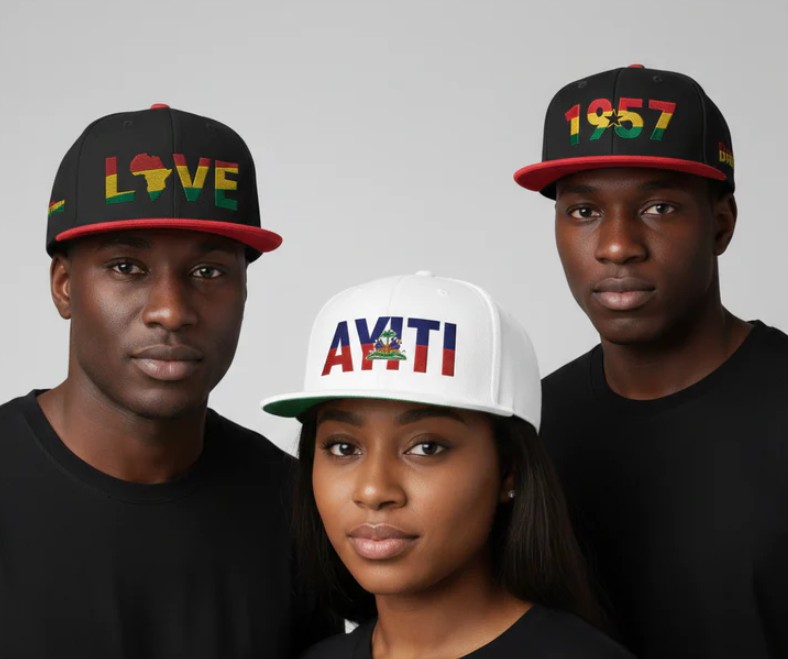
When a student wears an African hat, such as a kufi or a fila, they are not just accessorizing; they are signaling a readiness to learn and a respect for the “elders” of knowledge. This creates a classroom environment rooted in mutual respect rather than mere compliance.
The Juneteenth Shirt: A Lesson in Civil Rights and Resilience
Education is also the art of remembering. The rise of Juneteenth shirts in educational settings—from elementary school assemblies to university lectures—represents a shift in how we teach the American narrative. For decades, the ending of slavery was taught as a singular moment of legislative grace. Today, through the visual advocacy of Juneteenth shirts, education has shifted toward the “long arc” of liberation.
These shirts serve as a mobile curriculum. They prompt questions: What happened on June 19, 1865? Why did it take two years for the news of freedom to reach Texas? By integrating these garments into the educational environment, schools validate the lived experiences of Black students. This validation is critical for “academic belonging,” a psychological state where students feel their identity is compatible with their intellectual pursuits. When a student sees their history celebrated on a shirt, the classroom transforms from a foreign space into a home for their mind.
The Modern Classroom: Merging Tradition with Comfort
As education evolves into the digital and hybrid age, the “uniform” of the student has changed. The African hoodie (a modern take on the African shirt) has become a staple for the contemporary scholar. It represents the duality of modern education: the need to navigate high-tech, globalized systems while remaining anchored in one’s roots.
Furthermore, the environment in which one studies significantly impacts cognitive retention. This is where the sherpa blanket enters the educational discourse. While it might seem like a simple household item, the sherpa blanket represents the “nurturing” side of education. Learning is an arduous, often stressful process. The concept of “soft pedagogy” suggests that students learn best when they feel safe and physically comfortable.
Whether a student is late-night grading or a child is curled up reading a story, the tactile warmth of a sherpa blanket creates a sensory association with learning. It transforms the act of studying from a chore into a ritual of comfort. In the same way an African hat protects the “head” (the seat of wisdom), the sherpa blanket protects the “spirit,” preventing the burnout that often plagues modern students.
Comparative Symbolism in Educational Textiles
| Artifact | Educational Function | Core Lesson |
| African Shirt | Visual Literacy | The history of African geometry and social hierarchy. |
| African Hat | Respect and Dignity | The value of self-possession and ancestral wisdom. |
| Ghana Clothing | Cultural Anthropology | Understanding trade, craftsmanship, and West African legacy. |
| Juneteenth Shirts | Civic Education | The study of liberation, law, and social justice. |
| Sherpa Blanket | Emotional Regulation | The importance of self-care and comfort in the pursuit of knowledge. |
The “Hidden Curriculum” of Cultural Apparel
In sociology, the “hidden curriculum” refers to the unwritten, unofficial lessons that students learn in school. Historically, this curriculum often taught students of color that their traditions were “unprofessional” or “distracting.”
By reclaiming the right to wear a Ghana clothing ensemble or an African shirt in academic spaces, students and educators are rewriting that hidden curriculum. They are teaching that:
- Professionalism is not synonymous with Whiteness.
- Ancestral knowledge is a valid academic discipline.
- Personal identity is an asset to critical thinking, not a barrier.
When an educator stands before a class in an African hat, they are modeling a form of authority that is rooted in community. They are showing that one can be a master of biology, physics, or literature without abandoning the aesthetics of their culture. This representation is the most potent form of education there is.
Conclusion: Weaving the Future
True education is the process of becoming “whole.” It is not enough to fill a head with facts if the heart feels alienated from the material. By weaving the symbols of the Diaspora—the vibrant threads of an African shirt, the history of Ghana clothing, the celebratory defiance of Juneteenth shirts, the dignity of the African hat, and even the restorative comfort of a sherpa blanket—into our lives, we create a more inclusive and effective educational landscape.
We learn best when we know who we are. When we wrap ourselves in our history, we are not just prepared for a test; we are prepared for life. The future of education lies in this tapestry: a world where every student can sit at the desk of knowledge, wrapped in the warmth of their heritage, ready to write the next chapter of human history.