Studies show covid’s toll on students living in poverty, learning from home

Comment

Academic progress for American children plunged during the coronavirus pandemic. Now a growing body of research shows who was hurt the most, both confirming worst fears and adding some new ones.

Students who learned from home fared worse than those in classrooms, offering substantial evidence for one side of a hot political debate. High-poverty schools did worse than those filled with middle class and affluent kids, as many worried. And in a more surprising finding, older students, who have the least amount of time to make up losses, are recovering much more slowly from setbacks than younger children.

Most school districts saw declines, but the magnitude varied.

Those are the findings from more than a half-dozen studies published in recent months examining the pandemic’s toll on academic achievement. Across-the-board, they find big drops between spring 2019, before the pandemic hit, and spring 2021, one year in.

“The pandemic was like a band of tornadoes, leaving devastating learning losses in some districts and leaving many other districts untouched,” said Tom Kane, faculty director for the Center for Education Policy Research at Harvard University.

Students made more progress last year, but it was nowhere near enough to make up for the losses already sustained.

“People were hoping, ‘Oh gosh, there’s going to be a lot of natural bounce back that occurs,’ and we did not see it last year,” Kane said. “Maybe it will happen this year, but I’m not sure there’s much evidence underlying that hope.”

The high price of distance learning

One of the fiercest debates during the pandemic’s first year was how quickly schools should reopen and how significant the ramifications would be of keeping them closed. We now have some answers.

A pile of evidence charts setbacks that were more severe the longer students stayed in virtual school. These studies examined the impact of in-person vs. remote education during the 2020-21 school year, when policies varied widely. In Texas and Florida, Republican governors ordered schools to operate in person starting in fall 2020. Elsewhere, and often in big cities, resistance and fear of the virus among teachers and parents kept schools virtual for a year or longer.

Different studies rely on different data sets and describe the magnitude of the impact to varying degrees, but they all point in the same direction:

· A study using data from the testing company NWEA found modest academic declines for students who quickly returned to in-person classes in fall 2020. But achievement losses were far higher for those who learned from home, and they were most pronounced for students in high-poverty, mostly remote schools, widening long-standing racial and economic achievement gaps.

Students who were in person full-time during 2020-21 lost an average of 7.7 weeks of learning in math. But those who were in virtual class for more than half the year lost more than double that — an average of 19.8 weeks.

This research was based on NWEA assessments of 2.1 million students in 10,000 districts and analyzed by researchers at NWEA, Harvard and the American Institutes for Research.

· An Ohio study found that reading achievement in school districts that went fully remote fell, on average, two or three times as much as it did for those studying in person during the 2020-21 school year.

It looked closely at third-graders, because these students take reading tests in the fall and spring, so growth over the course of a school year can be assessed. During the 2020-21 school year, those who learned remotely fell twice as far behind as those in person, compared with what would be expected in a pre-pandemic year.

“The more weeks of remote learning, the less students learned during that time-period,” said Vladimir Kogan, a political scientist at Ohio State University, who produced these reports.

For math, the relationship in the Ohio data was less clear, with drops most severe for students whose districts employed a mixture, or hybrid, of in-person and remote learning.

· A study of state test scores in 11 states by Brown economist Emily Oster and others found districts with full in-person learning saw smaller declines than those that operated remotely, with hybrid systems in-between. This research, based in part on data Oster collected during the pandemic, also found in-person school was more common in districts that had higher test scores to start with and that had fewer Black and Hispanic students.

· A project called the Education Recovery Scorecard, a collaboration between researchers at Harvard and Stanford universities, looked at test results from school districts in 29 states. It found that the average fully remote district lost more academic progress than others in the same state that operated in person, particularly for math but also for reading.

Using this data, Nat Malkus, an education researcher at the American Enterprise Institute, divided school districts into three “buckets” based on how much their students were remote or in person. He calculated that students in the most remote grouping lost 60 percent of a school year in math, while those who spent the most time in classrooms lost 44 percent of a year.

For reading, the most remote group lost 33 percent of a year, vs. 19 percent of a year for the most in-person group.

“There clearly is an association between the duration of remote instruction and students’ learning loss,” he said. But he added: “It’s also not as clean a relationship as everyone expected.”

That’s because there was tremendous variation across the country, with scores in both remote and in-person districts ranging widely. And there was a major outlier: California, where schools took a long time to return but academic achievement was not particularly bad relative to other states.

Sean Reardon, director of the Educational Opportunity Project at Stanford and a project leader on the covid analysis, said Malkus’s calculations looked correct, but emphasized that remote or in-person learning explained only part of the variation.

His team is working to see what other factors might account for the rest of the differences, such as local coronavirus rates or economic conditions. He speculated that parents’ financial woes, illness and social isolation all played a part.

“To reduce the educational impacts of the pandemic to whether or not learning happened remote or in person is to miss all the other ways the pandemic has disrupted kids and parents and teachers’ lives,” he said. “There is a relationship but it’s not the only thing.”

High poverty, steep declines

Not surprisingly, the students who were already facing the biggest challenges suffered the biggest setbacks.

The Education Recovery data shows that students in the school districts with the highest poverty rates lost the equivalent of two-thirds-of-a-grade in math, compared with the lowest-poverty districts, who lost just under half-a-grade. The same was true for reading, though the gap was smaller. High-poverty districts lost 31 percent of a grade, vs. 25 percent in low-poverty schools.

The analysis of NWEA data found that high-poverty schools were more likely to go remote in the first place, and when they did so, they suffered larger declines than the low-poverty schools that did the same.

The report found 30 percent of the difference in achievement losses in math between high- and low-poverty schools could be attributed to the increased likelihood that high-poverty schools were remote, and 50 percent was due to the impact of learning virtually.

“Remote instruction was a primary driver of widening achievement gaps,” the report found.

Several studies show that students are crawling out of the holes they fell into, though not every student and not as quickly as needed to reach the academic growth expected pre-pandemic.

A national study using 2022 NWEA data found in the case of younger students, the learning last year was close to pre-pandemic levels, helping students begin to catch up. But given the steep declines of the previous year, students were still far behind, particularly in high-poverty schools.

The research also found the rebound stronger in math than in reading, which is important given that math took a bigger hit to start with.

Also encouraging: Renaissance, another testing company, found that last year, students grew academically at about the rate that would be expected in a pre-pandemic year.

But again, some subgroups of students grew at faster rates than would be expected, including Asian American, Pacific Islander and White students. Hispanic and particularly Black students grew more slowly than expected, as did students with disabilities.

“What alarms me the most are the widened inequities we’ve seen,” said Karyn Lewis, director of the Center for School and Student Progress at NWEA. “Everyone’s been harmed but some have been harmed more than most.”

Bigger kids, bigger problems

Several studies show that older students are not recovering as quickly as younger ones. This trend is masked by much of the research, because many of the state tests are administered only through eighth grade. But others include older students.

The Ohio data, for instance, showed that students in grades three, four and six made up at least half of the lost ground in reading. Seventh-graders made up some ground, though not as much. There was scant improvement in eighth grade, and in grade 10, scores dropped again.

In math, there was modest progress in most grades, but in 10th, there was virtually none.

That worries Kogan, the Ohio State researcher who did the analysis. “You’re talking about high school students with just a few years left,” he said. “We don’t have that much time left to get them back on track. … The older students should be our top priority.”

The NWEA research from 2022 also found that younger students were catching up much faster than older students.

The Renaissance data, which includes every grade, showed the same. For reading, growth was about as expected or higher last year for students in grades five and younger, but lower than expected for all those older than that.

The same pattern held for math, with students in grades nine and up seeing slower than typical growth in the 2021-22 school year.

For these kids, the downward spiral continues, said Gene Kerns, vice president and chief academic officer.

“The recovery is actually playing out in very different ways for different kids,” he said. “The kids in our elementary schools have weathered this much better. It seems the older the kid, the more lingering the impacts.”

Incorporating new learning techniques in the school curriculum

The earth has remodeled!

When was the past time you visited a bank to execute normal transactions, or you stood in a extensive queue to acquire prepare/bus tickets, or for that issue even your groceries, food items and domestic merchandise are now remaining requested and sent with a handful of clicks on a cell device?

Whether it is banking, travel, enjoyment, hospitality and most of the other industries, the way they function and supply buyer experience has totally modified. 

Instruction has also found a ton of advancement above the very last few yrs, specifically in the course of recent times technology has performed a massive position in providing understanding in a hybrid product (actual physical + digital), and the similar has changed the standpoint on how instruction shipping and delivery in colleges is witnessed in India. Now with NEP 2020 coming into the photo, the faculty ecosystem, specifically the university curriculum, is about to see a radical change. 

The new plan focuses on enjoy-primarily based studying for the early basis decades and step by step moves toward interactive, discovery and exercise-based mastering. It also encourages competencies-dependent understanding to make pupils ready for the real earth. 

In this posting, we will focus on 3 important features which, about time will completely rework the school curriculum.  

1.Integrating Technologies with University Curriculum

Working with Technologies both equally as a “skill” and a “facilitator” to produce finding out in an partaking fashion would be a recreation changer.

  • Technological innovation as a facilitator by reworking physical school rooms into digital will not just enhance the learning knowledge of college students but will also present benefits to all the essential stakeholders. 
  • College students will have accessibility to data & analyze resources where ever and whenever they want, guaranteeing learning is not restricted just to the school rooms. In addition, leveraging know-how will motivate partaking ways of mastering using films, digital simulations, and gamification, which will greatly enhance the curiosity, curiosity and retention of essential ideas. 
  • Instructors will have entry to all the demanded means, lesson strategies, preparatory materials and customized facts about a student’s finding out progress in excess of a unit (Cellular/Pill) that will help them to mould their way of teaching. 
  • University Leaders, on a solitary click on, can get a look of the development and efficiency for a unique Grade/Issue/Pupil/Skill which will permit them to get educated conclusions to even more increase the finding out knowledge and proactively choose any corrective / enhancement actions if demanded. 
  • Parents’ dependency on figuring out about their Child’s progress would not be restricted to PTMs and evaluation results. Rather, utilizing a customized App, they can usually see the functions, initiatives, updates and development involved with their Youngster.
  • Technological know-how as a talent – NEP’s concentration on Introducing coding and growing exposure to know-how at a young age will go a very long way in supporting the learners direct the way to a new globe of innovation and creative imagination and will assist them establish analytical, important considering & challenge-fixing techniques along with an publicity to serious-life cases to remedy difficulties in various realms. College students with a robust expertise of coding due to the fact formative many years will locate it a lot much easier to familiarize themselves with new-age technological innovation, generating them upcoming-all set.

2. Action Primarily based Discovering

You do not learn swimming just by studying and composing about it. You discover it by obtaining into the drinking water.

Reworking lecture rooms into activity labs the place pupils can exercise, implement and utilize their finding out to have an understanding of the context and utilization of ideas in the true-environment situation would be just one of the critical levers to transform schooling. 

Translating textbook content into serious-daily life situations wherever lecturers really encourage creativity, experimentation, and demo-and-error. Education and learning 4. focuses on using arms-on learning outside of the science lab. As a substitute of just training pupils what is seed and the process of seed turning into a plant, if the learners are engaged in plating seeds and overseeing the full approach of it transforming into a plant – that is a finding out which will hardly ever be forgotten and which would make the conceptual knowledge very powerful. Conceptual pursuits which are not random but 100{af0afab2a7197b4b77fcd3bf971aba285b2cb7aa14e17a071e3a1bf5ccadd6db} built-in with the school’s curriculum would be expected to guarantee that studying gets a continuous, partaking and attention-grabbing course of action.

3. Collaborative Difficulty Solving

Learners understand through solving difficulties. 

Whilst enjoying a video clip match, when you cross a unique stage a couple of occasions, the next time, it becomes particularly effortless. The moment you have solved a challenge, it is solved permanently – that’s how learning transpires.

When it will come to serious daily life, you are not just envisioned to resolve complications, but you are anticipated to remedy them collaboratively. Not often you do the job by itself – irrespective of sector most of the time, you operate in groups, and hence it will become an really vital talent to be developed from the formative decades.  

Education and learning 4. faculty curriculum focuses on crew-primarily based tasks which exposes college students to new concepts, opposing viewpoints and a number of approaches to remedy a individual issue though demonstrating the energy of collective mind. 

In the finish, we retain only what we use virtually, and which is wherever Instruction 4. is heading – toward the Progress of capabilities which make us prepared for the serious world, leveraging technology to incorporate multi-dimensional learning, practiced and implemented by means of things to do and projects in a collaborative manner, earning the method particularly participating, exciting and extensive-long lasting. 


Linkedin


Disclaimer

Views expressed earlier mentioned are the author’s personal.


End OF Article


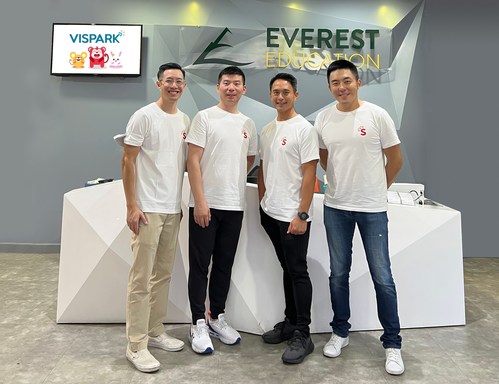
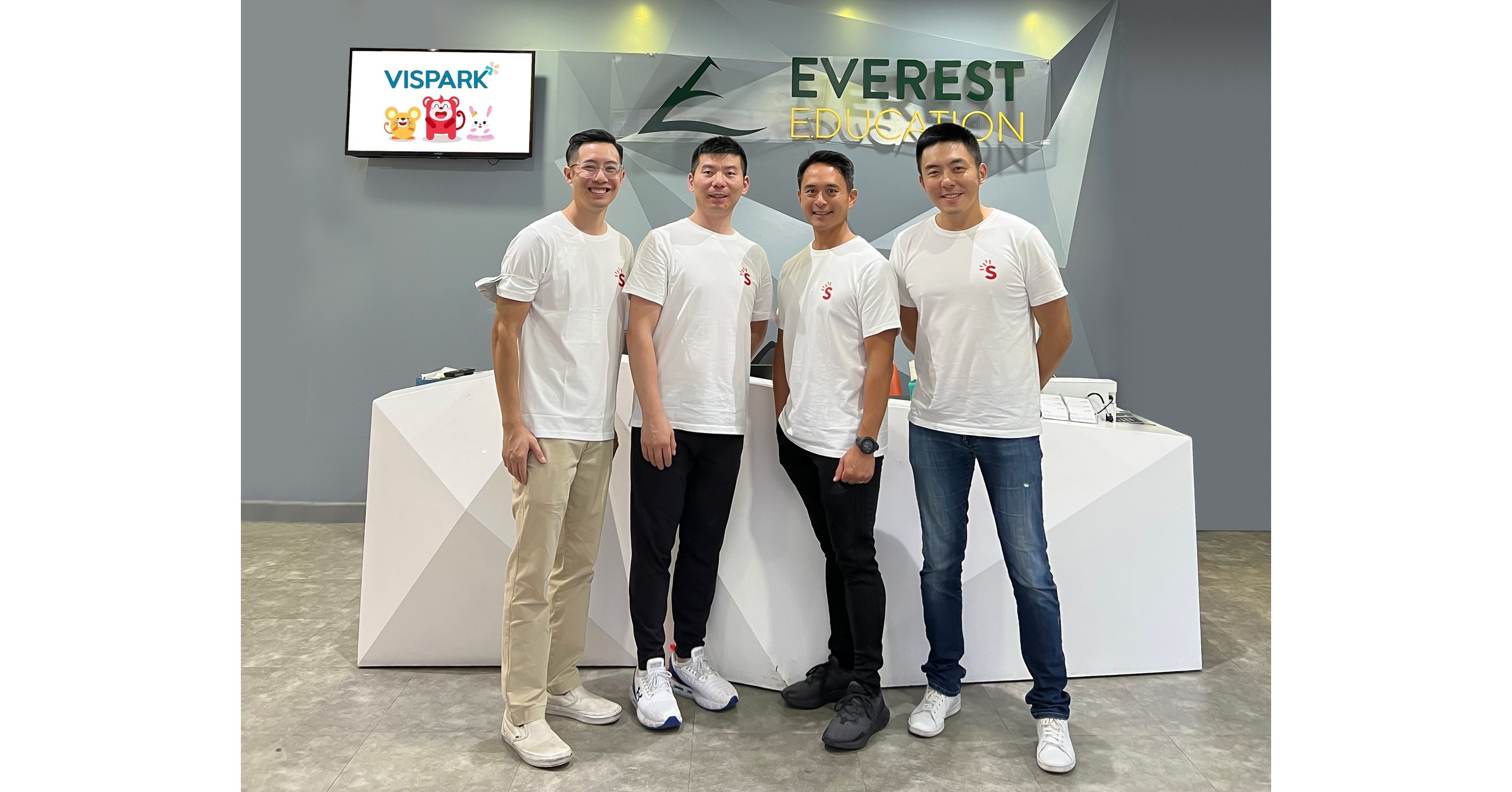
Spark Education Group Partners with Everest Education to Bring World-Class Online Learning to Vietnam

HO CHI MINH City, Vietnam, Nov. 21, 2022 /PRNewswire/ — Spark Education and learning Team (Spark Education), a environment chief and innovator in interactive dwell small-course studying, declared a joint undertaking with Everest Education and learning (Everest), a top service provider of top quality offline and online schooling providers in Vietnam, to provide planet-class online mastering to Vietnam.

Considering that 2018, Spark Education’s portfolio of brands have enrolled about half a million learners in its courses. The corporation is backed by best buyers like Sequoia, KKR, IDG Capital, GGV Cash, TrustBridge, Carlyle, and far more.

Everest allows students in Vietnam to obtain entrance and be successful in worldwide educational environments, providing Math and English enrichment programs, exam prep, college or university admissions consulting, and personal tutoring to college students from Quality 1 to Grade 12.

This collaboration merges Everest’s online company with Spark Education’s proprietary technologies system and courseware, localized for the Vietnamese market. The joint enterprise localizes VISPARK (www.vispark.edu.vn), and launches with its math application based on Singapore Math ideas taught in Vietnamese. This partnership leverages the competitive strengths of both of those Spark Instruction and Everest to convey an innovative studying working experience to the Vietnamese marketplace, bettering the learning encounter of regional students.

Don Le, CEO of Everest Training, shares his vision for the partnership, “Spark Schooling has invested over $100M into exploration and growth of the VISPARK curriculum, including substantial-excellent animations, interactive courseware, and a proven technological know-how process that has served much more than 500,000 college students all over the world. We think that Spark Education’s R&D spending plan is much more than the overall amount invested by the whole Vietnamese edtech marketplace. By partnering with Spark Training, Everest gains obtain to the most participating discovering system with a observe document of scaling correctly.”

Wilson Li, CSO & CFO of Spark Education Group, included his excitement about coming into the Vietnam sector, “We are very pleased to enter into this partnership with Everest Training, who has previously proven a sturdy reputation among Vietnamese households for astounding global studying results by way of their finding out facilities and on-line compact classes.  They will aid us localize our world offering for the exceptional wants of Vietnamese learners, and we appear ahead to empowering K12 pupils through the nation jointly.”

About Spark Instruction Group

Started in 2017, Spark Education and learning Team is headquartered in Singapore. Its portfolio of schooling brands aims to blend investigate-primarily based pedagogy with technologies to make improvements to the finding out knowledge and results for learners. It was not too long ago awarded “Greatest Interactive Finding out Working experience” at EdTech Asia in 2022.

Media Call:

Sheralynn Ong
[email protected]

ABOUT EVEREST Education

Launched in 2011 by Tony Ngo (Harvard Business College and Stanford College) and Don Le (Stanford University), Everest Instruction gives supplemental educational lessons and college admissions advisory providers supporting students in Vietnam who aspire for good results in international tutorial environments. As a result of its network of discovering centers and on the web lessons, Everest Training offers Math and English enrichment classes, examination prep, faculty admissions consulting, and non-public tutoring to pupils from Grade 1 to Quality 12.

Media Call:

Tony Ngo
[email protected]

Source Spark Training Confined

The Guardian view on the pandemic’s educational impact: make good learning losses | Editorial

Children in England ought to have uncovered to examine by age seven. Specified an age-proper reserve, they are expected to be capable to focus on understanding – who the story is about, what is going on – instead than expend effort on sounding out individual words and phrases. Literacy, numeracy and social and bodily competencies are the blocks on which all learning is crafted. So it is relating to that the latest study on the pandemic’s consequences exhibits that the quantity of incredibly low attainers in looking at, in the 3rd calendar year of education, has far more than tripled.

In a sample of 6,000 pupils from 81 educational institutions, the proportion who fell below envisioned levels rose from 2.6{af0afab2a7197b4b77fcd3bf971aba285b2cb7aa14e17a071e3a1bf5ccadd6db} to 9.1{af0afab2a7197b4b77fcd3bf971aba285b2cb7aa14e17a071e3a1bf5ccadd6db} between 2017 and this calendar year. There was also a marked decrease in maths, with extremely minimal attainers raising from 2.6{af0afab2a7197b4b77fcd3bf971aba285b2cb7aa14e17a071e3a1bf5ccadd6db} to 5.5{af0afab2a7197b4b77fcd3bf971aba285b2cb7aa14e17a071e3a1bf5ccadd6db} of the total. Although there had been some signs of a restoration in the 12 months to spring 2022 – a period of time when educational institutions remained open, with catchup strategies in spot – the head of the Training Endowment Foundation, Prof Becky Francis, says that inequality exacerbated by the pandemic is now the “largest obstacle” experiencing schools total.

In retrospect, Boris Johnson’s refusal to fund the post-pandemic bundle suggested by the skilled employed for the goal in 2021, Sir Kevan Collins, appears even much more shortsighted and mean-minded than it did at the time. Mr Johnson supplied much less than 10{af0afab2a7197b4b77fcd3bf971aba285b2cb7aa14e17a071e3a1bf5ccadd6db} of the £15bn that Sir Kevan reported was required. How considerably improved for the authorities to have invested in the long term then, by placing in position a thorough recovery offer.

In its place, schools have been left substantial and dry, missing the means to make up for missing finding out and to help the children most troubled by the disruption. Even the national tutoring programme was botched 1st time spherical, with the deal presented to a non-public firm that could not provide. Other research, including from Ofsted, has proven that very youthful youngsters had been among the worst influenced by the pandemic, with improved social and emotional problems and delays. Unsurprisingly, evidence details to the most major penalties remaining suffered by all those who currently experienced the very least – and who expended lockdowns in overcrowded housing, with adults who were much less able to assist them.

From this backdrop, the boost in school funding promised this month by the chancellor, Jeremy Hunt, available some relief. An additional £2.3bn a 12 months for two years is envisioned to deliver funding back to about wherever it was in 2010 – and suggests teachers’ pay out rises will no lengthier have to be funded by means of cuts. But the determination to plug the gap in schools’ budgets although ignoring nurseries and more training schools is unforgivable. Several years of rhetoric from successive ministers about skills, and new vocational routes as alternatives to college, have been uncovered as incredibly hot air.

Academic divides are stark. Even before the pandemic, efforts at closing the hole among children from wealthy and poor homes experienced stalled. The early yrs sector will have to have financial investment if this is to transform. So will provision for pupils with unique demands. The pupil high quality really should also increase, to give educational facilities with the most deprived intakes extra means. More have to be done to recruit, retain and motivate academics. The harm wrought by Covid-19 is apparent. But the Conservatives do not have a good story to explain to seven-12 months-olds, or any individual else, about what has happened to universities in England all through their yrs in business office.

Babbel Language Learning Lifetime Subscription

The wintertime period can come to feel infinite, dim, chilly, and dull. You have binged all the shows and are feeling normally burnt out by the for a longer period days. Have you believed of taking up a new existence skill? It’s possible discovering a new language so you can escape someplace hotter immediately after the holidays?

By now you’ve possibly listened to of Babbel. It has about ten million consumers around the globe and was featured in a substantial variety of publications. If discovering a new language has constantly intrigued you but you never did something about it, acquire this as a sign. From November 15 to November 30, the Babbel Language Learning Lifetime Subscription will be bought at a huge price fall a single last time, for just $199. So deal with yourself to the gift of a new language through the holidays this year, you’ll be speaking Italiano by May perhaps (maybe). It is really also a considerate gift to give to a pal or loved ones member who has the vacation bug but however relies on their translation app to get all around.

With Babbel, you can select from all 14 various languages: English, Spanish, German, Italian, French, Portuguese, Swedish, Turkish, Dutch, Polish, Indonesian, Norwegian, Danish, and Russian. But really don’t be overcome one of Babbel’s finest characteristics is its 10 to 15-moment mini-lessons (from novice to advanced) that you can effortlessly match into your [busy] plan.

Babbel covers authentic-existence topics that you would typically use each day, as opposed to seemingly random vocabulary terms. It also works by using speech recognition engineering to assistance your pronunciation audio correct so can trick people today into imagining you might be a nearby where ever you go. With Babbel, you can also get customized overview sessions to fortify what you’ve figured out so much and review anytime, wherever. Your progress will be saved and synced across all of your products, desktop, and cell.

Apart from finding out a entertaining and valuable new skill, staying knowledgeable or fluent in a new language has quite a few other perks. It can assistance you build far better listening skills, boost your challenge-solving skills, and impress probable businesses, opening up much more part prospects in the bilingual classification. “I have been employing Babbel for about a 12 months now, solely learning French, and I have been performing trés bien. The spacing of every single critique is efficient, memorable, and practical for speaking,” a person reviewer writes.

Dabble in a new language with Babbel. It is your previous likelihood to get it on sale for the least expensive cost at any time of $199!

Prices topic to adjust.

Online Training & Certification Courses on Cyber Security and Artificial Intelligence & Machine Learning by Defence Institute of Advanced Technology, DIAT, Pune

Far more than 1600 candidates qualified in the innovative competencies to fulfil the needs of R&D and Market in India

PUNE, India, Nov. 24, 2022 /PRNewswire/ — For a Self-reliant India, to fulfil demand from customers of extremely expert Artificial Intelligence and Cyber Security experts in the nation, Defence Institute of Advanced Know-how, DIAT, Pune is conducting the nationwide On line Education and Certification Programs (OTCC) in Cyber Stability, Synthetic Intelligence & Machine Studying (AI & ML). The Faculty of Computer system Engineering and Mathematical Sciences of DIAT has completed two batches of these programs and additional than 1600 candidates are correctly properly trained and certified. The 3rd batch of AI & ML program is on-going.

Now DIAT is launching future batches of 16–weeks Online Study course on Cyber Security, and 12–weeks On the net Training course on Synthetic Intelligence & Equipment Discovering (AI & ML) in December 2022. The Graduating pupils, gurus, or any graduate human being can implement for these courses. The enrolment depends on qualifying the on the internet entrance take a look at which is no cost. In-depth facts about the classes is obtainable on the DIAT web-site at https://www.diat.ac.in/on line-certification-classes/. Registration for the free entrance examination are open till 13th Dec 2022. Fascinated candidates could use at: https://cdn3.digialm.com//EForms/configuredHtml/32306/79204/Registration.html

The sessions are sent by the eminent schools and scientists from DIAT, DRDO, Marketplace, and renowned Universities. The objective of the classes is to impart the critical understanding of Cyber Safety and AI & ML to provide the requirements of multidisciplinary research ongoing in distinct analysis labs and industries in the place. These courses contribute to the ‘Skill India Mission’ and ‘AtmaNirbhar Bharat’ to practice the professionals with Cyber Protection and Synthetic Intelligence & Device Finding out talent-sets. The courses on Cryptography and Cyber-Actual physical Methods are in pipeline as perfectly.

Defence Institute of Superior Technology, DIAT, Pune is a special Exploration University affiliated with the Defence Study and Enhancement Group, Ministry of defence, Government of India, engaged in developing indigenous contemporary Defence systems. It offers PG programmes in places of Cyber Protection, Synthetic Intelligence, Quantum Computing, Defence Electronics Units, Navigation Programs, Air Armament, Robotics, Embedded Systems, Sensor Technology, and so forth. The courses are designed to cater the demands of Defence Companies to deliver technological options to optimise combat battlefield success and previously mentioned all to deliver a certified manpower which will be an instrument for constructing a robust indigenous engineering in India.

Media make contact with:

Defence Institute of Superior Technologies
(Considered to be University), Girinagar, Pune – 411025
E-mail: [email protected], [email protected]
Make contact with figures: +91 2024604533 / 2024604538

Source Defence Institute of Innovative Know-how