Studies show covid’s toll on students living in poverty, learning from home

Comment

Academic progress for American children plunged during the coronavirus pandemic. Now a growing body of research shows who was hurt the most, both confirming worst fears and adding some new ones.

Students who learned from home fared worse than those in classrooms, offering substantial evidence for one side of a hot political debate. High-poverty schools did worse than those filled with middle class and affluent kids, as many worried. And in a more surprising finding, older students, who have the least amount of time to make up losses, are recovering much more slowly from setbacks than younger children.

Most school districts saw declines, but the magnitude varied.

Those are the findings from more than a half-dozen studies published in recent months examining the pandemic’s toll on academic achievement. Across-the-board, they find big drops between spring 2019, before the pandemic hit, and spring 2021, one year in.

“The pandemic was like a band of tornadoes, leaving devastating learning losses in some districts and leaving many other districts untouched,” said Tom Kane, faculty director for the Center for Education Policy Research at Harvard University.

Students made more progress last year, but it was nowhere near enough to make up for the losses already sustained.

“People were hoping, ‘Oh gosh, there’s going to be a lot of natural bounce back that occurs,’ and we did not see it last year,” Kane said. “Maybe it will happen this year, but I’m not sure there’s much evidence underlying that hope.”

The high price of distance learning

One of the fiercest debates during the pandemic’s first year was how quickly schools should reopen and how significant the ramifications would be of keeping them closed. We now have some answers.

A pile of evidence charts setbacks that were more severe the longer students stayed in virtual school. These studies examined the impact of in-person vs. remote education during the 2020-21 school year, when policies varied widely. In Texas and Florida, Republican governors ordered schools to operate in person starting in fall 2020. Elsewhere, and often in big cities, resistance and fear of the virus among teachers and parents kept schools virtual for a year or longer.

Different studies rely on different data sets and describe the magnitude of the impact to varying degrees, but they all point in the same direction:

· A study using data from the testing company NWEA found modest academic declines for students who quickly returned to in-person classes in fall 2020. But achievement losses were far higher for those who learned from home, and they were most pronounced for students in high-poverty, mostly remote schools, widening long-standing racial and economic achievement gaps.

Students who were in person full-time during 2020-21 lost an average of 7.7 weeks of learning in math. But those who were in virtual class for more than half the year lost more than double that — an average of 19.8 weeks.

This research was based on NWEA assessments of 2.1 million students in 10,000 districts and analyzed by researchers at NWEA, Harvard and the American Institutes for Research.

· An Ohio study found that reading achievement in school districts that went fully remote fell, on average, two or three times as much as it did for those studying in person during the 2020-21 school year.

It looked closely at third-graders, because these students take reading tests in the fall and spring, so growth over the course of a school year can be assessed. During the 2020-21 school year, those who learned remotely fell twice as far behind as those in person, compared with what would be expected in a pre-pandemic year.

“The more weeks of remote learning, the less students learned during that time-period,” said Vladimir Kogan, a political scientist at Ohio State University, who produced these reports.

For math, the relationship in the Ohio data was less clear, with drops most severe for students whose districts employed a mixture, or hybrid, of in-person and remote learning.

· A study of state test scores in 11 states by Brown economist Emily Oster and others found districts with full in-person learning saw smaller declines than those that operated remotely, with hybrid systems in-between. This research, based in part on data Oster collected during the pandemic, also found in-person school was more common in districts that had higher test scores to start with and that had fewer Black and Hispanic students.

· A project called the Education Recovery Scorecard, a collaboration between researchers at Harvard and Stanford universities, looked at test results from school districts in 29 states. It found that the average fully remote district lost more academic progress than others in the same state that operated in person, particularly for math but also for reading.

Using this data, Nat Malkus, an education researcher at the American Enterprise Institute, divided school districts into three “buckets” based on how much their students were remote or in person. He calculated that students in the most remote grouping lost 60 percent of a school year in math, while those who spent the most time in classrooms lost 44 percent of a year.

For reading, the most remote group lost 33 percent of a year, vs. 19 percent of a year for the most in-person group.

“There clearly is an association between the duration of remote instruction and students’ learning loss,” he said. But he added: “It’s also not as clean a relationship as everyone expected.”

That’s because there was tremendous variation across the country, with scores in both remote and in-person districts ranging widely. And there was a major outlier: California, where schools took a long time to return but academic achievement was not particularly bad relative to other states.

Sean Reardon, director of the Educational Opportunity Project at Stanford and a project leader on the covid analysis, said Malkus’s calculations looked correct, but emphasized that remote or in-person learning explained only part of the variation.

His team is working to see what other factors might account for the rest of the differences, such as local coronavirus rates or economic conditions. He speculated that parents’ financial woes, illness and social isolation all played a part.

“To reduce the educational impacts of the pandemic to whether or not learning happened remote or in person is to miss all the other ways the pandemic has disrupted kids and parents and teachers’ lives,” he said. “There is a relationship but it’s not the only thing.”

High poverty, steep declines

Not surprisingly, the students who were already facing the biggest challenges suffered the biggest setbacks.

The Education Recovery data shows that students in the school districts with the highest poverty rates lost the equivalent of two-thirds-of-a-grade in math, compared with the lowest-poverty districts, who lost just under half-a-grade. The same was true for reading, though the gap was smaller. High-poverty districts lost 31 percent of a grade, vs. 25 percent in low-poverty schools.

The analysis of NWEA data found that high-poverty schools were more likely to go remote in the first place, and when they did so, they suffered larger declines than the low-poverty schools that did the same.

The report found 30 percent of the difference in achievement losses in math between high- and low-poverty schools could be attributed to the increased likelihood that high-poverty schools were remote, and 50 percent was due to the impact of learning virtually.

“Remote instruction was a primary driver of widening achievement gaps,” the report found.

Several studies show that students are crawling out of the holes they fell into, though not every student and not as quickly as needed to reach the academic growth expected pre-pandemic.

A national study using 2022 NWEA data found in the case of younger students, the learning last year was close to pre-pandemic levels, helping students begin to catch up. But given the steep declines of the previous year, students were still far behind, particularly in high-poverty schools.

The research also found the rebound stronger in math than in reading, which is important given that math took a bigger hit to start with.

Also encouraging: Renaissance, another testing company, found that last year, students grew academically at about the rate that would be expected in a pre-pandemic year.

But again, some subgroups of students grew at faster rates than would be expected, including Asian American, Pacific Islander and White students. Hispanic and particularly Black students grew more slowly than expected, as did students with disabilities.

“What alarms me the most are the widened inequities we’ve seen,” said Karyn Lewis, director of the Center for School and Student Progress at NWEA. “Everyone’s been harmed but some have been harmed more than most.”

Bigger kids, bigger problems

Several studies show that older students are not recovering as quickly as younger ones. This trend is masked by much of the research, because many of the state tests are administered only through eighth grade. But others include older students.

The Ohio data, for instance, showed that students in grades three, four and six made up at least half of the lost ground in reading. Seventh-graders made up some ground, though not as much. There was scant improvement in eighth grade, and in grade 10, scores dropped again.

In math, there was modest progress in most grades, but in 10th, there was virtually none.

That worries Kogan, the Ohio State researcher who did the analysis. “You’re talking about high school students with just a few years left,” he said. “We don’t have that much time left to get them back on track. … The older students should be our top priority.”

The NWEA research from 2022 also found that younger students were catching up much faster than older students.

The Renaissance data, which includes every grade, showed the same. For reading, growth was about as expected or higher last year for students in grades five and younger, but lower than expected for all those older than that.

The same pattern held for math, with students in grades nine and up seeing slower than typical growth in the 2021-22 school year.

For these kids, the downward spiral continues, said Gene Kerns, vice president and chief academic officer.

“The recovery is actually playing out in very different ways for different kids,” he said. “The kids in our elementary schools have weathered this much better. It seems the older the kid, the more lingering the impacts.”

Analyzing the return on investment for online education

Although bigger training has traditionally been a dependable financial motor for individuals and the economic system, university insiders have lengthy failed to express the industry’s benefit to students, mom and dad, businesses and policy makers who concern the expenditure, Kathleen Ives and Deborah Seymour argue in their new ebook, Applying ROI for Strategic Scheduling of Online Education. On the net finding out has probable to present accessibility and ideal class pacing and content material to pupils with time, geographic or health care constraints. But lots of carry on to see it with a critical eye.

At the exact time, the shift from unexpected emergency remote educating in the early pandemic has morphed into innovation and expense in on the internet training and understanding. Several have because found out an fascination in knowing on the web learning’s return on financial investment.

Inside Increased Ed lately questioned Ives and Seymour about why examining return on investment is uncomfortable for many in higher instruction, the gap in between students’ and higher education leaders’ comprehending of return on investment decision, and how ed-tech businesses are bringing the notion of return on expense into aim for school leaders. What follows is an edited and condensed variation of this e-mail dialogue.

Q: Kathleen, you argue that implementing a return-on-expense analysis in on the web greater schooling will entail earning considerable cultural, coverage and processes variations. What are some of these adjustments that will need to materialize, and how will we understand progress?

Ives: Historically, colleges have found themselves as mission-driven, which implies that measuring return on expenditure can be culturally awkward. Schools could anxiety that a enterprise perspective could undermine their values and turn them into diploma mills. At the very same time, colleges are experiencing improved competitors from each inside and exterior of academe. Reversing this only-mission-driven intellect-set will demand a cultural shift in which students are treated as shoppers. Gratifying the purchaser is significant to survival, or they will go in other places.

As larger education expenditures and university student credit card debt mount, coverage makers and some others are questioning better education’s job in developing a workforce necessary to maintain the economic system. At the same time, university enrollments are declining, point out governments are supplying considerably less aid and companies are skeptical that school graduates have appropriate ability sets. Coverage makers could support colleges safeguard college students, promote entry and improve the two institutional and student return on expense, without the need of introducing restrictions that curb innovation, according to the presidents interviewed in our e book.

Schools are navigating sophisticated technological environments with restricted sources. They ordinarily have neither the operational infrastructure nor the embedded ability sets to institutionalize return on financial commitment. By examining and adapting return-on-expenditure methodologies to inform determination-earning, on the net higher education leaders can consider initiatives and get the job done towards reaching their fiscal and social aims.

On the web faculties will see progress when they undertake a return-on-financial commitment head-set. Such a head-set may be new for a lot of, and some may possibly not be made use of to digesting or even requesting this sort of evaluation. But this book’s contributors argue that they should be brought along on the journey. To make return on expense a cornerstone of initiatives likely ahead, they want trainings on best techniques and terminology. A return-on-investment intellect-established will boost engagement in the conclusion-earning approach and make it less complicated for all to see its impact.

Q: A chapter in your ebook by Laurie Hillstock suggests that college students and faculty leaders could have different views on return on expense for on the internet finding out. Pupils take into consideration a array of advanced factors—including value, type of diploma, faculty-to-university student ratios, connections with classmates, work placement and starting up salaries. Meanwhile, lots of university leaders check out on-line system shipping primarily as a signifies for rising access to larger education and learning. What actions can leaders acquire right now to help bridge this hole?

A: As a start out, leaders can accept that learners vary in lots of methods. One particular universal technique may not shut the gap. Capturing and performing on students’ direct responses will support. To do this, colleges require to be intentional about making have confidence in and aiding college students feel listened to. Formative assessments that, for illustration, ask for responses could be extra successful than on-line surveys.

Some pupils might truly feel a lot more relaxed sharing with school, staff members, peer mentors or other learners than with school leaders. In this kind of circumstances, be transparent with these with whom students experience most comfortable connecting. Then search for techniques to work with and by them to capture authentic college student suggestions.

Remember, really do not just gather scholar responses. Be intentional about acting on the opinions. Share updates with college students as properly. Creating reliable relationships can take time but is essential for scholar achievement.

Q: Deborah, you note that modern investors and entrepreneurial ventures—such as ed-tech companies, on line application supervisors, enterprise cash firms and pathway programs—seek to stake a assert in the on-line larger schooling ecosystem. How have these establishments and corporations introduced the notion of return on expense into concentration for college leaders and students?

Seymour: More and far more, employers are employing candidates for their technological talent sets relatively than for their capability to converse. Boot-camp teaching packages at Apple, Microsoft, Google and others, as properly as pathway packages, target on the competencies and expertise employers say are important to fill present complex capabilities gaps. A lot of pupils discover to code to get a job as an alternative of pursuing a two- or 4-12 months diploma.

As a outcome, a lot of faculties have been forced to seem at their technique and balance sheets in different ways. What is the return on financial investment for an personal who chooses a diploma above complex skills coaching? That issue can no for a longer time be overlooked.

Q: The assortment of articles in your guide will make a solid circumstance that leaders need to pay back a lot more attention to return-on-investment examination in on line education and learning. But one particular of the article content by David Schejbal argues that “higher education institutions would be nicely served to resist the urge to fit online education into a slender return-on-investment box to justify its truly worth.” Does a holistic, on the net increased ed return-on-expenditure spreadsheet exist that can evaluate nonfinancial gains these as an educated populace, investigation, specific enrichment and local community improvement?

A: To our know-how, no actual spreadsheet exists. But David Schejbal explains why school entry is essential past work fees and the financial system. When more persons are educated further than the secondary amount, citizens are extra active in community existence, criminal offense prices are decreased and everyday living expectancy boosts.

When a school needs to offer you an on the internet system, return-on-investment decision preparing contains current market investigate to establish concrete, financial rewards to equally the student and the institution. But schools will also want to align their on-line plans with their social missions. (This is alluded to in the chapter by Leah Matthews on on the web education and learning and accreditation.) That signifies social variables in a campus-primarily based program in, say, nursing, need to be included in on the web nursing packages, as perfectly.

Q: What did you discover about return on financial commitment for on the internet learning from placing together this ebook that you did not thoroughly recognize just before you began?

Seymour: When a facial area-to-confront system is originally developed, quite a few faculties do not think about the value of changing it to an on-line program that is compliant with the Us citizens With Disabilities Act. In some scenarios, these conversion fees are bigger than the first cost of improvement. Also, these charges are typically not involved in the course structure nor the charges that on-line system managers cost when building courses for schools. That implies the threat of noncompliance is handed alongside to the establishment. Concealed prices like these on an institution’s equilibrium sheet can make significant possibility expenditures.

On the net programs experience quite a few exterior troubles, such as doubt about their really worth. School leaders may well have extra good results by initially addressing their institution’s interior difficulties. To do this, they must engage approach and preparing professionals to guarantee that oversights do not threaten system continuity.

Ives: Return on expense in on the web larger training has moved further than the singular metric of pupil earning prospective. It is not solely or even automatically a effectiveness measure gauging investment decision performance as typically measured by organizations, buyers and entrepreneurs. Also, what operates for a person college’s mission and eyesight may not do the job for yet another establishment.

A lot of methodologies are obtainable to assess return on investment decision, and lots of institutional leaders are serious about measuring benefit as as opposed to price, precisely with regard to students and institutional mission. A lot of are pursuing nuanced return-on-investment analyses, relying on their definitions of accomplishment.

Numerous of the presidents explained to us the pandemic quick-forwarded some options to enhance their return-on-investment decision initiatives. As Keith Miller, president of Greenville Specialized Faculty, place it, “ROI could even raise since we have acquired so considerably.”

Oneonta resident receives Amazing Person Award for work at Springbrook | News

An Oneonta resident received an award for his work as an tailored actual physical instruction teacher at The University at Springbrook.

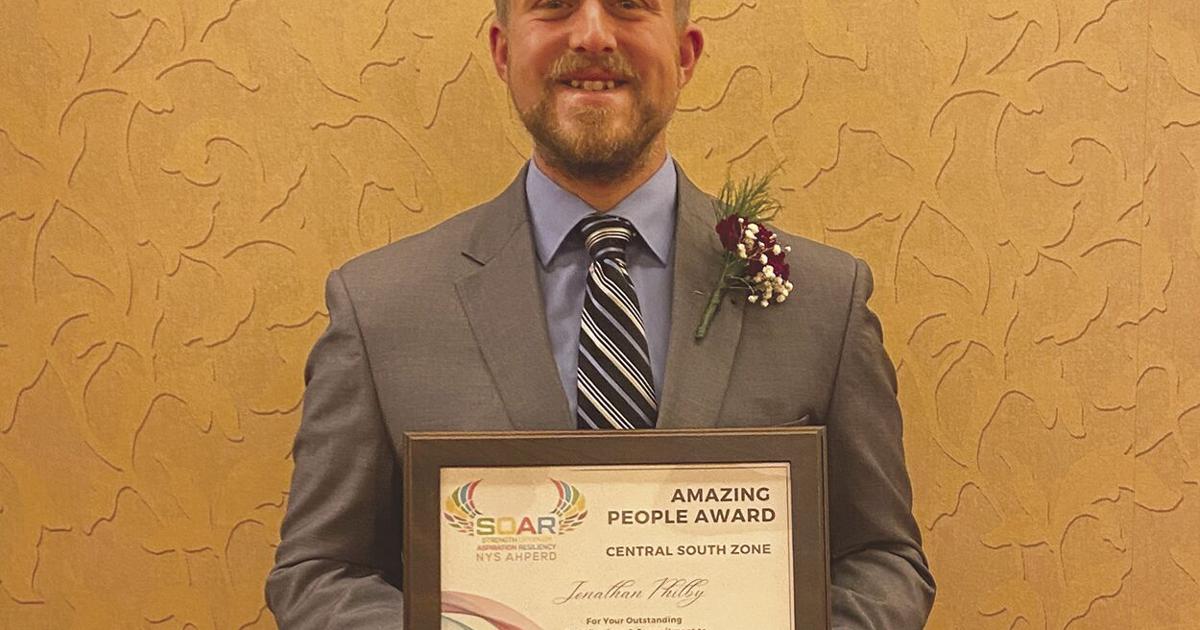
Jon Philby been given the Central South Zone Wonderful Man or woman Award by the point out Association for Wellness, Actual physical Schooling, Recreation and Dance on Nov. 17 at the association’s 84th Yearly Convention at Turning Stone in Verona, a media release said. Rachel Scoones, a recreation therapist at the faculty, also attended the conference. Philby was elected for the Wonderful Individual award by his peers in the Central South Zone.

“I felt honored and surprised,” Philby explained about getting the award.

Philby reported he teaches in between 40 and 50 students at Springbrook “to slide in love with actual physical exercise and get fascinated in something they were being unfamiliar with or awkward with prior.

“I enjoy what I do. My greatest purpose as an adapted physical education and learning instructor is to build abilities with our college students that when they go property to their people, they can be a element of activities with their siblings, and/or mom and dad irrespective of whether it is shooting a basketball in the driveway to kicking a soccer ball or enjoying capture in the backyard,” he mentioned.

In addition to becoming the tailored physical education instructor, Philby is the school’s co-coordinator for the Unique Olympics software. Philby said he coached although he was a pupil instructor and as a teacher at a community faculty, so when he began functioning at Springbrook in 2011, he desired to continue to mentor. He said his co-workers Nicole Sokolowski-Valentine and Ralph Benett introduced him to Distinctive Olympics. He and Sokolowski-Valentine are the co-coordinators of the application. He claimed the college gives keep track of, basketball, soccer and cross country, and is establishing new applications.

“It’s open to any one in the location, not just Springbrook pupils,” Philby mentioned. “Not a good deal of individuals realize that.”

He mentioned if persons are fascinated in Particular Olympics, they can electronic mail him at philbyj@springbrookny.org.

According to the launch, the Remarkable Man or woman award “is supplied to a member of NYSAHPERD who has made remarkable contributions to the profession of health, physical education, tailored actual physical instruction, well being instruction, recreation, and dance.” As perfectly as an individual who has “displayed excellence in instructing and overall functionality in these disciplines.” Every single 12 months, virtually 1,800 specialists and potential experts all over the state show up at the convention that provides programming on subject areas of bodily and well being schooling and functions.

Not too long ago, Philby secured a grant, with the aid of Barb Hein, the grant writer for Springbrook, as a result of NYSAHPERD to provide new adaptive tools to the pupils at the college, the release mentioned. The gear is tailored to learners with autism spectrum condition “to reduce rigidity, concentration consideration, and boost overall body consciousness,” Philby explained in the information launch about the gear. “All of these are essential goals that get ready a student for even more growth of their energy, coordination, social interaction, and activity-distinct skills.”

As an energetic member of the NYSAHPERD, Philby represents the Central South Zone, of which he is the Adapted Bodily Education and learning Chairperson, the release explained.

On the shelf: Here are some of the e-books that you may find interesting

The Speaking Structure
KG Kannabiran
HarperCollins
Pp 340, Rs 699

The Speaking Constitution normally takes a shut glance at the operating of the Structure and the development of the notion of justice via the courts, mapping in the process a authorized geography of civil liberties in India. An edited translation of the oral memoir narrated by human rights activist KG Kannabiran (1929–2010), this e-book is reflective of his lifelong fight with the point out and his do the job in the civil liberties motion.

Lifeless in Banaras
Ravi Nandan Singh
Oxford College Press
Pp 184, Rs 1,495
Ethnographies fatefully depend on prospect encounters and mysteriously so these encounters occur true. Dead in Banaras is an occasion of just such a fateful opportunity come upon. In its inception, it set out to comply with the ‘dead’ across numerous social places of crematoria, healthcare facility, morgue and the aghorashram, in get to assemble a contemporary moment in the funerary iconicity of the effectively-recognized north Indian town of Banaras.

Also Browse: ‘With digitalisation, literacy expansion, adoption of self-publishing will rise’

As Superior as My Term
KM Chandrasekhar
HarperCollins
Pp 312, Rs 599

In an illustrious job spanning around 40 decades in public services and culminating in the best office in Indian bureaucracy— Union cabinet secretary—KM Chandrasekhar has viewed, and performed, it all. He is just one of all those scarce IAS officers who has held a huge vary of senior positions in state federal government, the Centre, and community sector undertakings. In this autobiography, he paints an personal photo of the UPA govt through 1 of its toughest phases, amongst other folks.

The Hijab
PK Yasser Arafath & G Arunima
Simon & Schuster
Pp 272

This selection of essays complicates the connection concerning Muslim ladies and the hijab. Shifting absent from predictable interpretations that see the hijab just as an instrument of Muslim women’s oppression, the essays below demonstrate that not only have Muslim ladies coated/ or uncovered their heads for distinct reasons, but the head cloth by itself has had diverse varieties dependent on the region or period of background.

Mansur: A Novel
Vikramajit Ram
Pan Macmillan
Pp 176, Rs 599
Saturday, the 27th of February, 1627. The grasp artist Mansur need to complete his painting of a dodo and prepare for an imminent journey to Kashmir when he is interrupted by Bichitr. An innocuous remark from this visitor—first to Mansur and a very little later to the portraitist Abu’l Hasan—has dire consequences as far more people at the imperial atelier, the library and the women’s quarter are drawn into a internet of secrets and half-truths.

All textbooks obtainable as e-textbooks

St. Cloud schools to offer state’s first Somali language immersion program

Kindergartners in the St. Cloud faculty district will before long be equipped to find out equally English and Somali by a dual language immersion software.

College students in a twin language immersion application will acquire instruction half the working day in Somali, and 50 percent the working day in English. In recent exploration, the dual language immersion product is emerging as the very best alternative for students no subject what language they talk at property, reported Lori Posch, executive director of discovering and teaching. 

The system will be provided starting next drop at two elementary universities in the district. It’s considered to be the first Somali language immersion software in Minnesota, and perhaps in the country.

“We know that being bilingual — trilingual, in some of our students’ conditions — really is a big profit in conditions of mind advancement,” said Posch.

There are also several English speakers in the neighborhood and educational facilities who have expressed interest in discovering the Somali language, Posch ongoing. 

“So this is a wonderful way for us to commence that at a definitely young age, when we know that brains are eager and hungry for language development,” she claimed.

Ahead of you keep looking through, consider a second to donate to MPR News. Your monetary support guarantees that factual and trustworthy information and context continue to be accessible to all.

Growing variety

The language program’s enlargement reflects the escalating variety of the St. Cloud faculty district, exactly where about 56 percent of college students are non-white. About 40 {af0afab2a7197b4b77fcd3bf971aba285b2cb7aa14e17a071e3a1bf5ccadd6db} of this year’s kindergartners communicate a language other than English at home.

“In central Minnesota, we are special,” Superintendent Laurie Putnam claimed. “We’re really committed to embracing and loving and serving the families that are in the St. Cloud college district. No matter who you are, we want all people to be ready to discover a location below and to be able to have rich educational alternatives.”

When many learners in St. Cloud are Somali American, they may possibly not have had formal education and learning in their indigenous language, especially how to study and create it, Posch stated.

“We also know that it truly is critical for us to not shed language and the connections in between elders and concerning mom and dad and grandparents,” she stated. “Being equipped to value and honor the language, and remaining in a position to preserve that language alive and developing is critical to us.”

Demand for language courses

In 2020, the St. Cloud district started offering an elective yearlong Somali language training course for native Somali speakers. Because of to need, the training course was expanded to both equally high schools and just one junior higher in 2021.

The St. Cloud district also presently offers total immersion packages for elementary students in Spanish and Chinese. In class they find out math, studying, creating, social research and other subjects, all in the language they are researching.

Commencing with kindergartners in the tumble of 2023, the district plans to changeover its Spanish immersion program to dual, or two-way, immersion product.  

The district also plans to broaden the Spanish method to a next elementary school in west St. Cloud in hopes of achieving a lot more pupils, Putnam explained. 

“We are particular that there are people in bordering faculty districts that also benefit that type of schooling and that international point of view,” she said.

District officials think the benefits of immersion schooling are significantly reaching. It increases educational overall performance in the two languages, improves cognitive mind advancement and social psychological advancement, they claimed.

“There are reports that present actual physical alterations in the brain in conditions of attention and issue resolving, and locations of the brain that fireplace differently when people can speak more than 1 language,” Posch claimed.

Registration for the immersion packages for fall 2023 will open in January.

Digital Academy creates online Native language courses

On a clear day in April, Anna East hopped in a truck with Mike Geboe, who drove to the nearest sweet grass enclosure on the Rocky Boy Reservation. The sun was warm, but there was still snow on the ground.

Together, they stood in a field, as Geboe told East all about sweet grass. He spoke of its cultural uses. He repeated the Cree word for the plant: “Wikwahskwah.” East listened, photographed the plant and recorded Geboe speaking. A dog trotted by and sat on her feet. The dog basked in the sun as the meadowlarks sang.

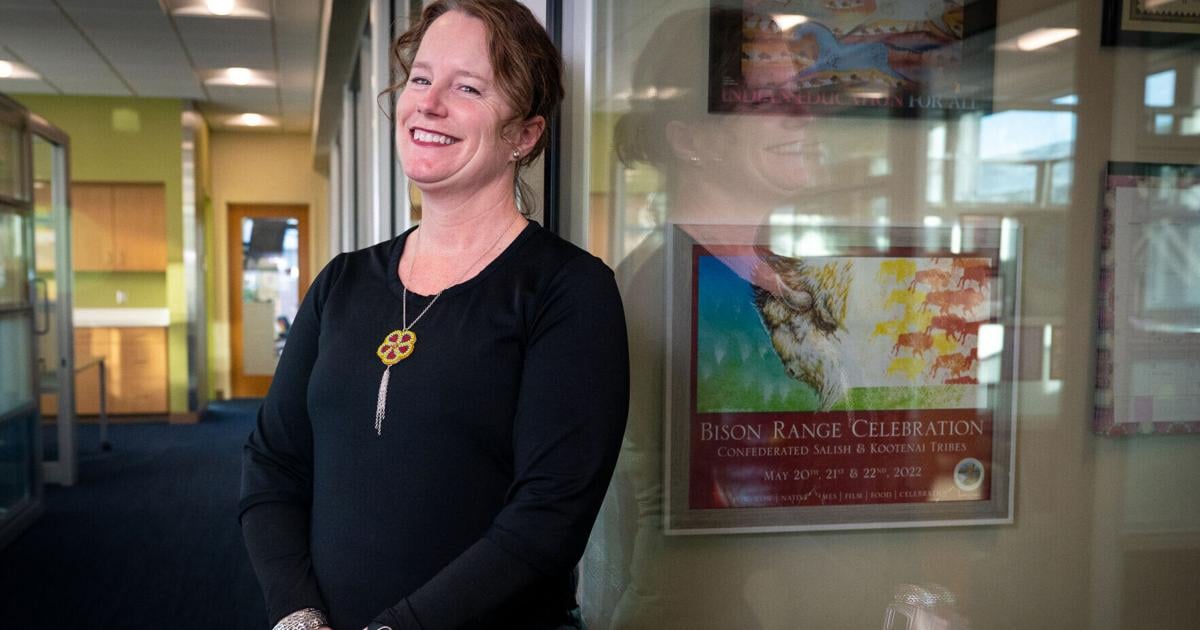
Anna East, tribal relations and education fellow with the Montana Digital Academy, talks about her work with the Digital Academy and Montana’s tribes creating digital language courses. Over the past year, East has been designing courses for each Native language in Montana.

Antonio Ibarra


Geboe is a Class 7 Cree language instructor, meaning he is licensed to teach in public K-12 schools statewide. And East, who was an educator on the Flathead Reservation for 22 years and the 2014 Montana Teacher of the Year, is a tribal relations and education fellow at the Montana Digital Academy.

People are also reading…

In 2021, the Digital Academy was allocated funds through an education committee to design and offer digital Indigenous language courses for the tribes that want them. Rep. Jonathan Windy Boy, a Democratic lawmaker who represents Box Elder, guided the initiative.


Jonathan Windy Boy-02

Rep. Jonathan Windy Boy, a Democrat from Box Elder representing HD 32, guided the initiative for the creation of digital Indigenous language courses for tribes around Montana.


Antonio Ibarra


“For me, (language preservation) is important because I do not want to be in a generation that witnesses the extinction of a language that’s been here from the beginning,” Windy Boy said. “It’s important because if language and culture and ceremony are no longer here, we’re just going to be like the rest of the nation — soulless.”

From the 1800s to the 1970s, many Native children were forced to attend government-funded Christian boarding schools, where they were emotionally, physically and sexually abused. The explicit mission of these schools was cultural genocide, and tribes have suffered language and culture loss as a result. The Montana Budget and Policy Center in 2018 reported that of the more than 300 tribal languages once spoken in the U.S., 175 remain.

The Rocky Boy Reservation is home to 3,770 people, and Geboe said he thinks about 25 speak Cree as their first language.


Rocky Boy Reservation

View of the Bears Paw Mountains where a vast majority of the Rocky Boy Reservation is situated, which is home to about 3,770 people and is comprised of more than 170 square miles of hilly terrain.


Antonio Ibarra


Through the initiative, East was tasked with building online courses for each Native language in Montana. She started with Cree.

East traveled from Missoula to the Rocky Boy Reservation — more than 500 miles roundtrip — six times in seven months. During these visits, Geboe toured East around the sprawling and hilly reservation. They drove through the tribe’s new buffalo range, flew drones, examined plants and animals and harvested sage. They, and others, had countless conversations about what content should and should not be included in the class.

“Capturing some of that cultural knowledge in the place is so important,” East said. “Everyone talks about the importance of culture and language together to each other, and there’s just no way to teach it well without including that context.”

But the work didn’t stop there. As East began building the course online, Geboe sent her voice messages, recording himself saying words in Cree. East would upload the audio files to her laptop, trim and edit them, and then insert them in the back end of the course.

East, Geboe and other cultural and language leaders also discussed how best to “Indigenize” the course. Where Western education is based on individual achievement, compliance and penalty, Native education has long been centered on community, culture and family. When Geboe teaches on the reservation, for example, one of his favorite activities to do with students is create family trees.

“It’s an empowerment thing,” he said. “We can see how people are related. And you see that some of them are descendants of chiefs. I could see (the students) were really engaging with it. They were thirsty for it.”

East, who is non-Native, said for her, Indigenizing the course meant, in part, working “with full, 100{af0afab2a7197b4b77fcd3bf971aba285b2cb7aa14e17a071e3a1bf5ccadd6db} guidance from the tribe.”

“I’m only putting in the course what they want in the course,” she said, adding that the course is not owned by the Digital Academy but rather by the Chippewa Cree Tribe.

East also tried to avoid letter grades. While the course includes due dates and has to be graded in some ways, per public school requirements, East centered the course on language proficiency. To foster community, students are also invited to reflect on their sessions, and each session opens with the phrase, “mah-mo-wi-neyia-wi-tahk,” meaning, “Let’s all speak Neyio (Cree)!”

East was also careful to explain her process to educators. She wanted them to understand the intention behind the course, so they wouldn’t incorrectly assume that because it wasn’t centered on grades, the class was less serious than others.

After eight months of work, the Cree language course is complete. It’s an 18-week course, offered to public school students for credit. The class is highly interactive. Students can participate in activities where they match the audio version of the word to its meaning. They can record themselves speaking Cree and receive verbal or written feedback from their teachers. They can click various pictures of plants and animals and match the photo to the corresponding Cree word, and much more. The Digital Academy has a cost-sharing fee with schools of $123 per enrollment, so the course is free for students.

Three students — located in Eureka, Shelby and Forsyth — are currently enrolled in the online course. They spend four to seven hours each week learning Cree, and the Digital Academy has two full-time employees who reach out to the parents, students and schools to make sure the program is running smoothly.

Geboe said that while many tribal communities have language instructors and learning opportunities, not all Native people live on reservations.

“The target population is the Natives that are not living on the reservation,” he explained. “This matters because for people who live away from the community, it’s a way to keep them connected. They want to know who they are, where they came from and where they’re going.”

Geboe grew up on the Rocky Boy Reservation. He said he learned to speak Cree by participating in ceremonies, reading stories and using apps on his phone. He said language and identity are intertwined.

“If you connect with your relatives and ancestors, you learn where they lived, who they interacted with and what they did for their livelihood.” he said. “It connects you with your tribal identity.”

Learn more about the Cree language course, and the soon-to-be available Crow course, at montanadigitalacademy.org/programs/indigenous-language.

You must be logged in to react.
Click any reaction to login.