Education Secretary Wants to Change the Way Funding for English Learners Is Managed

U.S. Secretary of Schooling Miguel Cardona is proposing to go the federal plan that supports the nation’s English learners back into the hands of the Training Department’s workplace of English language acquisition, or OELA.

Federal method grants for English-language acquisition, known as the Title III method, are at present managed by the business office of elementary and secondary education and learning, or OESE, within just the section. In his proposed 2024 spending budget, President Joe Biden is on the lookout to mature that software funding to $1.2 billion, a $305 million enhance.

Advocates for English learners have very long called for OELA to take care of the money due to the office’s expertise in ideal procedures for these students.

“I know this will improve the administration, ability, and complex help of the Title III method which you and all of our learners are worthy of,” Cardona claimed of his proposal introduced at a Countrywide Affiliation for Bilingual Education and learning convention in late February.

Why advocates want OELA to oversee Title III

Title III formulation grant funding was shifted to OESE from OELA in 2008 under the rationale that one business office need to oversee the two it and Title I funding, researchers claimed. English learners also profit from Title I-funded providers.

Within just the last 15 many years, even so, if states and districts experienced concerns above investigate on finest educational designs for English learners, or desired suggestions on how to expend federal grant funding to ideal assistance these college students, they would go to OELA, explained Julie Sugarman, a senior coverage analyst for PreK-12 Training at the Migration Coverage Institute believe tank.

Sugarman and other folks see sensible and symbolic rewards to creating a just one-halt store for federal English learner help.

“It is not as even though bringing Title III more than into the relaxation of the elementary and secondary instruction part experienced drastically outstanding results for Title III by itself as a plan or our English learners as a pupil team,” said Conor Williams, a senior fellow at The Century Foundation, a progressive believe tank.

Williams hopes that centralizing a majority of federal language-similar funding in a single silo will draw in far more interest from Congress to boost funding to OELA’s current competitive national expert improvement grants, as well as Title III.

While some advocates are pleased to see a proposed enhance in Biden’s spending plan, other folks are declaring it is even now not adequate for significant adjust, with a $2 billion complete being a superior starting place for the following fiscal 12 months, according to Sugarman.

“This volume demonstrates the amplified need to have to support multilingual learners that had a disproportionate amount of disruption to their educations all through the pandemic and to reflect the years of flat funding that did not retain up with inhabitants development,” Sugarman reported.

In the meantime, supplying OELA command more than Title III formula funding could lead to desired variations a lot quicker.

Exploration has discovered that bilingual or dual-language programming greatest satisfies the educational and linguistic needs of English learners. With OELA taking care of Title III, Williams mentioned, there could be a larger countrywide awareness of these instructional models as well as far more funding place toward constructing them out.

OELA by now has staff performing with English learners, instructors, and administrators, as perfectly as a long time of operating webinars and qualified progress grants. But in the previous, when they managed Title III method grants, they lacked the methods to greatest help states with these cash, mentioned Diane August, an schooling specialist with consulting agency D. August and Associates and a co-principal investigator at the Center for the Good results of English Learners.

Shifting these bucks back to OELA would also involve equipping the business to meet up with this aspect of the occupation.

“It would make feeling to shift [Title III] back again, but also to offer OELA with added sources for this so that they really can offer states with assist they have to have to make certain that the districts are in compliance and the districts have the form of info they have to have to do a very good job educating,” August said.

Why moving most EL-associated grants under one particular roof can perform

While the shift has broad charm amid English-learner advocates and researchers, questions continue being on what this sort of a move indicates in phrases of who is dependable for English learners.

For a long time now, scientists and advocates alike have been pushing to assure all educators and directors at the federal, condition, and area stages watch English learners as everyone’s duty, and not as a team siloed off to a separate authorities agency or a district’s English-as-a-2nd-language division.

But obtaining the Title I and Title III components grants less than the similar agency and even as part of the identical accountability plans—a necessity of the Every Scholar Succeeds Act—didn’t shift the needle considerably for English learners.

“There’s been problem of ‘we’ve distributed leadership for English learners, dispersed duty, but it form of will get shed in everybody’s responsibilities’,” Sugarman claimed.

Acquire accountability measures as an illustration.

Under ESSA, language proficiency accountability turned a subset of states’ Title I accountability actions. In principle, this meant that the academic and linguistic achievements of English learners would be just as significant as people of all other pupils. In observe, English-language proficiency only accounts for a little aspect of most schools’ accountability plans—perhaps 5 {af0afab2a7197b4b77fcd3bf971aba285b2cb7aa14e17a071e3a1bf5ccadd6db}, Williams reported.

What’s required, Sugarman concluded, is a balancing act involving spreading the responsibility of English learners across various organizations and educators, but also acquiring a centralized location to go to for specialized awareness and methods.

Relocating Title III funding in excess of to OELA, researchers mentioned, can assist meet up with that stability.

“The bringing of these formulation grants closer to the OELA office environment suggests that the folks who are the most knowledgeable on the language acquisition exploration and linguistic programming analysis should really be the kinds who are then in charge of Title III pounds,” Williams explained.”


Professional Development Tips for Supporting English Learners

The English learner population is expanding but the amount of specialized instructors for them and training for common schooling teachers who do the job with them is lagging.

Researchers and educators say qualified progress for all instructors and faculty leaders rooted in finest methods for English learners is wanted to fill in the hole.

But, if a district or faculty have been to invest time and revenue into establishing these types of teaching, where by would they get started, and what are some of these best procedures that really should be protected to make sure the very best return on investment decision?

Diane Staehr Fenner, the president and founder of SupportEd, a consulting business targeted on English learners’ education and learning, and Rebecca Bergey, a senior researcher at the nonprofit American Institutes for Research, give some recommendations.

What to do just before commencing skilled enhancement

Here’s a sample of what to go over ahead of rolling out specialist enhancement throughout a faculty or district.

Accept that educational institutions and students are distinctive

Each individual English learner is one of a kind, just as educational institutions can be exclusive in how very best to serve their learners.

“So you want to [first] look in classrooms and see what’s occurring, what is heading very well, and what may possibly want to be improved,” Staehr Fenner claimed.

Use classroom observations and data

A demands evaluation, that commences with college leadership, must involve observations of numerous, diversified lecture rooms. Depending on the university, that could suggest a 3rd quality English/language arts class, a 7th grade math course, and a specialized English-as-a-second-language course time period.

In these observations “typically you’re searching for scaffolding, peer-to-peer interactions, [use of] oral language, tutorial language, formative assessment, culturally responsive training,” Staehr Fenner said.

In the desires evaluation, you also have to have to evaluation facts this sort of as how pupils are doing on English language proficiency exams, and break down material place info by English learner subgroups.

Get teacher input

This preliminary evaluation stage need to also include inquiring lecturers where they feel they want additional assistance and even hosting scholar target groups for their input as properly, Staehr Fenner additional.

Having trainer input is a important aspect of how university leaders can cultivate “a lifestyle of continual improvement and steady mastering inside their site” said Bergey with AIR.

With that mindset in area, standard education or articles region instructors, even other staff members users this sort of as arts lecturers and P.E. coaches, can have a lot more get-in to schooling and much more quickly see English learners as their shared responsibility and not the sole obligation of specialists.

Roll out specialist progress in phases

When the demands evaluation is entire, university leaders ought to agree on what matters will need to be lined in college extensive skilled progress.

The next stage must invite a team of equally basic instruction and English as a next language instructors, already invested in going the needle at their faculty, to pilot the experienced advancement. From there, a small team of academics can endure the teaching and then it gets rolled out throughout the whole college, Staehr Fenner stated.

Very best procedures that ought to be covered in instruction

Even though each individual school’s demands could be distinctive in conditions of what matters should be lined in experienced development on doing the job with English learners, in this article are a couple that normally must be accounted for based mostly on most effective procedures rooted in research:

Scaffolding: Make certain that all instructors know how to scaffold instruction, specifically in the educational information spots, to assure that English learners can have interaction with grade-degree get the job done alongside their non-English learner friends.

Tutorial conversations: Teachers will need to be capable to established up English learners with the appropriate chances for training academic discussions in course. “[Teachers] just cannot just say ‘Hey, switch and talk,’ that’s not truly going to perform with our English learners, you’d have to provide them support so they’re coming to discussions prepared,” Staehr Fenner explained. That could contain presenting structured discussion guides for learners to use with peers.

Academic language: Tutorial language—distinct from day-to-day, social language—isn’t restricted to vocabulary. It necessitates college students to fully grasp how sentences and discourse perform in a given area of examine such as the educational language of conveying a math dilemma as opposed to that of a debate in record class. Education needs to protect how to very best help English learners’ enhancement of educational language in course.

Culturally responsive educating: All instructors must operate to make relationships with English learners at their university and aid them experience welcome. 1 way to do that is to ensure that instruction for these students is infused with culturally responsive teaching, Staehr Fenner reported. Broadly talking, culturally responsive teaching is a form of training that uses students’ customs, properties, ordeals, and views as applications for instruction. Training need to support teachers comprehend how to use this educating method with their English learners.

Collaboration: Training really should emphasize alternatives for collaboration in between English learner experts and all other educators in a faculty. This would ensure that these students are appropriately supported in all classrooms with grade-degree articles.

“Ten or 20 decades ago, there was the considered that students discover English initial, so place them in the ESL classes, when they get sufficient English, then let’s start off teaching them written content, let us force them out,” Bergey explained. “And we know now that which is not the situation, that pupils are studying both equally English and material at the same time.”

Universities with English learner professionals must leverage their know-how by offering them time and opportunities for collaborative discussions to choose spot, she extra.

Interim casual examine-ins by teachers observing other teachers to see how the expert progress is heading, and other types of coaching along the way could help lecturers integrate new approaches in their instruction as instruction carries on, Staehr Fenner mentioned.

Formative evaluation: Language improvement is a process and a way to enable all teachers comprehend this is by producing confident they 1st know what English learners are analyzed on in language proficiency tests, Bergey mentioned. The Accessibility for ELLs exam for instance, employed in 36 states, assessments college students in 4 language domains: studying, crafting, listening, and talking.

Studying much more about the check and how students are scored can assistance instructors ideal know how to assistance students in class. For occasion, they might have an English learner who listens nicely and actively participates by speaking in course, but they could use added guidance and possibilities to practice their reading through and producing expertise.

In standard, lecturers should have strategies and instruments at their disposal to see how their English learners are accomplishing, and then be equipped to consider the info and adapt their instruction appropriately, Staehr Fenner explained.

Governor Lamont Proposes Establishing the English Learners’ Bill of Rights To Safeguard the Provision of Bilingual Education

Press Releases

Governor Ned Lamont

&#13
02/27/2023

Governor Lamont Proposes Creating the English Learners’ Bill of Legal rights To Safeguard the Provision of Bilingual Education and learning

(BRIDGEPORT, CT) – Governor Ned Lamont these days held a information conference in Bridgeport to announce that he has submitted a legislative proposal to the Connecticut Typical Assembly setting up the English Learners’ Invoice of Rights in Connecticut state statutes to make it distinct to learners, dad and mom and guardians, educators, and college administrators the legal rights of English learners to get a high-quality education and learning in Connecticut community universities.

English learners are students who have been identified as possessing a dominant language other than English.

“I think there is almost nothing extra essential to a child’s education than an engaged and supportive mum or dad or guardian, and the English Learners’ Bill of Rights will promise that they have the information important to do so,” Governor Lamont explained. “Several weeks back, a team of mothers and fathers, students, legislators, and advocates held an function exterior my business to suggest the creation of this regulation and make clear its importance. Soon after hearing their tales and the relevance of this bill to their people, I comprehended. Their voices were being read in my workplace, and I hope we can all hear them.”
“In Connecticut, far more than 50{af0afab2a7197b4b77fcd3bf971aba285b2cb7aa14e17a071e3a1bf5ccadd6db} of our student populace now identifies as non-white. Additionally, much more than 45,000 or 8.8{af0afab2a7197b4b77fcd3bf971aba285b2cb7aa14e17a071e3a1bf5ccadd6db} of our learners are recognized as English learners. This is why an English Learners’ Bill of Legal rights is so critical at this time,” Education Commissioner Charlene M. Russell-Tucker explained. “The Connecticut State Department of Instruction thanks the governor for introducing this legislation as it further more solidifies our historical motivation to making sure educational accessibility and fairness. It is crucial that we empower all of our English learners and families throughout the state to be energetic and engaged members of our school community.”

The laws directs the Point out Board of Training to draft a published English Learners’ Monthly bill of Legal rights that evidently and succinctly compiles present federal and point out laws and needs that safeguard and secure the provision of bilingual instruction. This invoice of rights must include things like, but not be confined to:

  • The proper of an English learner university student to attend community faculty regardless of immigration position
  • The appropriate of an English learner student to have a translator present at essential interactions with lecturers and administrators, these as mum or dad-trainer conferences and meetings with administrators
  • The right of an English learner college student to participate in a method of bilingual education and learning when there are 20 or more suitable students labeled as dominant in a language other than English
  • The appropriate of a father or mother or guardian of an English learner scholar to acquire written notice, in each English and their dominant language, that these types of scholar is qualified to take part in a plan of bilingual instruction
  • The suitable of an English learner scholar and their mum or dad or guardian to get a substantial-high quality orientation session in their dominant language
  • The appropriate of the father or mother or guardian of an English learner scholar to obtain data about the development of such student’s English language development and acquisition and meet up with with university staff to explore these issues
  • The proper of an English learner scholar to be put in a application of bilingual instruction or English as a new language, if available by the school district
  • The appropriate of an English learner pupil to have equal accessibility to all quality-level university programming and all core grade-stage subject issue
  • The right of an English learner student to obtain once-a-year language proficiency testing
  • The right of an English learner college student to obtain aid products and services aligned with any intervention approach that the faculty or school district delivers to all students
  • The right of an English learner pupil to be continually and each year enrolled in a plan of bilingual education or English as a new language while these kinds of college student continues to be an qualified scholar and
  • The ideal of a mother or father or guardian of an English learner pupil to make contact with the Condition Department of Education with any queries or worries about these kinds of student’s correct to receive English learner products and services or accommodations.

Additionally, the laws demands that each and every neighborhood and regional board of education supplying a software of bilingual training or English as a new language deliver the mother and father and guardians of suitable pupils with a duplicate of the English Learners’ Bill of Rights in the dominant language of such dad and mom and guardians, and make these files obtainable online.

The laws is Household Monthly bill 6663, An Act Developing the English Learners’ Bill of Rights. It currently staying thought of by the Schooling Committee.

&#13

Twitter: @GovNedLamont

&#13

Facebook: Workplace of Governor Ned Lamont

&#13
&#13

Microcredentials confuse employers, colleges and learners

Reskilling. Upskilling. Certificates. Certifications. Badges. Licenses. Microcredentials. Substitute credentials. Digital qualifications.

So lots of terms. So small agreement on what they signify, the very least of all in increased ed.

“Employers say, ‘It’s fantastic that this personal has these capabilities, but we’ll check with our own inquiries to confirm the learner’s expertise,’” Kyle Albert, assistant investigate professor at the George Washington University Institute of General public Coverage, claimed. “It’s a trust-but-validate predicament.”

However, demand in the significant, rising microcredential current market is powerful, but learners also battle to make sense of offerings. By a person count, the United States is house to a lot more than one million unique instructional credentials, which represents a a lot more than threefold enhance due to the fact 2018. (Some are presented by nonacademic providers.)

“Digital credential selections are fairly effortless to come across on the internet exactly where websites explain the curriculum,” Albert claimed. “But some [learners] say that they simply click on the first few that come up … and they rely on anecdotal evaluations on Reddit, Yelp or Indeed.com,” presented the mostly absent info and evaluation on application high quality.

And colleges struggle to supply what companies want.

Inside Higher Ed Careers

Look for in excess of 40,000 Profession Possibilities in Better Training
We have assisted far more than 2,000 institutions hire the best larger schooling expertise.

Look through all task openings »

“With the financial state shifting … we want workforce education and learning education a lot quicker and greater,” explained James Fong, chief investigate officer at the College Experienced and Continuing Schooling Affiliation (UPCEA).

A few studies on different credentials were being printed recently, and all level to employers’, colleges’ and students’ confusion about microcredentials. But there is good information, also. Plentiful nomenclature aside, all events look keen to get the job done collectively to supply or go after high quality, verifiable, bite-measurement, minimal-priced, nondegree on line choices focused to distinct industries. Here’s a spherical of insights from the three experiences.

Businesses Have Inquiries

Most employers (69 percent) are knowledgeable of nondegree credentials—they are possibly “extremely familiar” or “very familiar” with them—but most (65 percent) would also like to see evidence of their performance, in accordance to a 2023 report from UPCEA.

When a career applicant lists a nondegree credential on their résumé, shut to fifty percent of companies do not know what to make of the program’s good quality (46 percent) and the obtained expertise and competencies (42 percent), according to the report.

“It has been the desire of quite a few entrepreneurs, foundations and coverage leaders that microcredentials will turn into the substitute for high priced degrees,” Sean Gallagher, govt professor of educational policy at Northeastern University, claimed. “But there is nonetheless very minimal proof that microcredentials will necessarily land somebody a career in the same way that a degree will.”

The analyze surveyed 510 people who employ, prepare or offer improvement to employees inside of organizations that spanned financial services, overall health care, production, company training and other fields. Respondents documented task titles which include senior manager, senior director, CEO, government vice president and human methods supervisor or director.

The employer respondents laid bare their need to have interaction with colleges on curriculum structure for these non-credit score-bearing offerings. That is, around two-thirds (65 percent) explained they would collaborate with faculties to establish workforce credentials and obtain facts about software usefulness. Close to fifty percent (53 percent) deemed employer engagement a necessity.

“Employers want to be on advisory committees,” Fong claimed. “They want to be able to say what expertise are important … School cannot push everything.”

This dynamic presents troubles and prospects for schools. Some in increased ed be concerned that option credentials may cannibalize their degree plans, professionals say. But they also counsel that microcredentials could bolster colleges’ standard choices.

“We have 39 million people today in the U.S. with some school but no degree,” Fong claimed, adding that this populace grew by one more two or three million throughout the pandemic. “We could reverse [that trend] by giving them instructional products and solutions that will get them reconnected, that will benefit their prior finding out, that will get them to that diploma.”

But success in this realm may possibly have to have schools to consider further than degrees, in accordance to Fong.

“Gen Z and millennials are applied to having lesser, bite-dimensions items,” Fong stated. “The 120-credit diploma is these kinds of a major chunk, contemplating the way they grew up. They were being offered rewards at before phases and milestones. [Higher ed] can have cake and eat it, far too, with a degree, but we’ve also received to reward individuals for accomplishments alongside the way.”

To notice that vision, bigger ed gurus may well look at communicating extra with businesses, according to the report. Almost half of the survey’s employer respondents (44 percent) mentioned that no faculty has approached them with an invitation to collaborate on creating nondegree or alternate qualifications. Far more than two-thirds (68 percent) of companies want to be approached by a college to collaborate on such initiatives.

Element of the interaction problem lies in the abundance of conditions for non-credit-bearing offerings. An earlier (2022) poll of UPCEA customers discovered that increased ed industry experts most usually use the expression “microcredentials” (31 percent) but that “alternative credentials” (26 percent), “nondegree credentials” (19 percent) and other terms are greatly used as properly. (Be aware: An previously version of this short article outlined an incorrect 12 months for this UPCEA poll for nomenclature for non-credit rating-bearing choices.)

“This total alternative credential, microcredential, nondegree credential factor is pretty essential to employers,” Fong reported. “They want to be in a position to say what competencies are crucial. Nomenclature is an problem but so is the relationship” among employers and greater ed.

Learners Undervalue Results

Learners who attained MicroMasters credentials from edX and Specializations from Coursera vastly underestimated how significantly they would understand in these pursuits, according to an EdResearcher examine. Several (27 percent) thought that they would study a little something upon beginning a software, but almost all (94 percent) described having realized something new. EdX’s MicroMasters systems give school-supplied, graduate-degree programs for creating job skills or earning graduate credit rating. Specializations on the Coursera system are university-provided classes concentrated on job expertise.

“That’s great news,” claimed Fiona Hollands, senior researcher at Instructors College at Columbia University, founder and handling director of EdResearcher, and co-author of the report, introducing that students’ factors for pursing education change. “I’ve normally been a little bit of a skeptic in the earlier that a great deal of increased education and learning offerings are additional credentialing autos than they are really teaching any one nearly anything new.”

Most of the learners (75 percent) experienced already earned an undergraduate diploma, and two out of five experienced now gained a graduate degree, which helps make the results on understanding obtained specially striking, Hollands extra.

The study viewed as 25,891 survey responses from learners who begun the courses among February 2017 and September 2021. The review also adopted up with 2,288 of the learners who accomplished the programs among April 2018 and November 2022. The programs included topics associated to business, advertising, expert advancement, finance and facts science.

The most regularly pointed out expected positive aspects for program completion have been: improving upon job performance (41 percent), improving upon job applications (28 percent) and studying a thing new (27 percent). In distinction, the most regularly described rewards have been: mastering anything new (94 percent), improved occupation general performance (38 percent) and improved English language expertise (23 percent).

The advantages, though applicable to personnel, are noteworthy but largely uncompensated. That is, somewhere around 66 percent of the course completers paid for the programs themselves, and the vast bulk studied in the course of unpaid leisure time.

“Employers must be shelling out interest and supporting learners’ participation if the subject matter is appropriate to their organization,” Hollands explained, introducing that the learning could help employers’ productiveness and retention endeavours. “Learners feel they’re enhancing position overall performance, and they price tag quite very little.” MicroMasters completers spend on regular 412 hours and pay out $900 to $1,300, in accordance to the report. Specializations completers take an typical of 42 hours and price $325.

If companies created self esteem in better ed’s microcredential offerings, they might assist their employees’ pursuits. But these types of a win would call for improved interaction involving businesses and schools, Fong explained, and involving learners and businesses, Hollands stated.

Colleges Ignore Outreach to Businesses

Global learners interested in science, technological know-how, engineering and arithmetic lack consciousness of electronic credential profession training alternatives, in accordance to a the latest IBM analyze. Even if they recognized their alternatives, they be concerned that this sort of qualifications may well be costly to attain.

The research, performed by Morning Check with on behalf of IBM, regarded as a lot more than 14,000 interviews of task seekers, college students and career changers throughout 13 nations around the world.

Approximately 50 percent (40 percent) of respondents described that their finest barrier is not recognizing the place to start off on the electronic credential landscape. Most respondents (60 percent) have been anxious that the cost would be out of attain. Yet entry and price information would be well timed, as most respondents (60 percent) are possibly presently on the lookout for a new position or be expecting to in the future year.

“There’s nevertheless very tiny evidence that microcredentials will necessarily land an individual a occupation in the very same way that a degree will,” Gallagher reported. But a sizable percentage of EdResearcher survey respondents (40 percent) said that these choices improved their job efficiency, so the deficiency of evidence does not look to constrain demand from customers.

Microcredential suppliers typically market place on social media platforms these as TikTok, Facebook and Instagram, in accordance to Albert.

There, “they can get to the population of youth who are normally genuinely directionless,” Albert said. “Let’s be straightforward: the point out of occupation advising for youthful persons in the U.S. universities is not excellent, and the moment you’re out of large faculty, it’s really abysmal.”

But here’s some good information. Most of these learners (90 percent) have self esteem that they can produce capabilities or discover in an on-line software, the IBM analyze says. If they could make feeling of electronic credential options, they could construct on their solid assurance.

Listed here, faculties need to walk a high-quality line, specialists say, as microcredential offerings are not a panacea.

“Microcredentials are a area the place accomplishment stories are really noticeable, but the failures are mainly hidden,” Albert claimed. “When a microcredential is unsuccessful, it just type of disappears from the institution’s site.” That can necessarily mean sunk expenses if a university invests in a method that does not finally do well. Even now, these offerings, when constructed on higher ed–industry partnerships, can be marketed as stackable qualifications that could feed into undergraduate or graduate degree packages.

“Faculty simply cannot just say no,” Fong explained. “They can issue the good quality, just like they did with online. But in terms of an institutional survival, these new instructional credentials are likely to be crucial if an establishment wishes to survive and prosper.”


33 Energizing Physical Education Activities For Elementary Learners

Physical education is the best part of the day for many children! They love moving around and getting a break from sitting in the classroom. Physical education classes should be fun and allow some creative options for students that offer alternatives to sedentary behavior. Physical education teachers can really add some variety to their fitness lessons by incorporating everyday items. Check out these 33 energizing ideas to enhance the activity time in your elementary physical education classes! 

1. Noodle Hockey 

Give each student a different color pool noodle and allow them to play a safe game of noodle hockey. Choose a grassy area and provide a small ball for them to try to get and get into goalposts. 

Learn More: My Baba

2. Ninja Warrior Course

Creating a ninja warrior course in your gym may be the highlight of the day for your physical education classes. This is a smart addition to your physical activity program because it includes many different skills and can help improve agility, flexibility, and friendly competition. 

Learn More: SSWW

3. Balloon Tennis 

If you need a quick and easy idea to use with your physical education classes, try this one! You can create this game with paper plates, balloons, and a plastic spoon. Simply hit the balloons up with the makeshift paddle and keep them in the air.

Learn More: Pinterest

4. Fitness Dice

This activity is ideal for younger students like kindergarten-2nd grade. As they are improving the development of motor skills, they can make it into a fun game to practice these activities. When they roll the dice, they will do the corresponding exercise. 

Learn More: Homeschool Here

5. Survivor Tag

Always a fun game for students, this is a twist on the classic game of tag because if a student gets tagged, they will sit down in that spot. They must watch the person who tagged them and if that person is tagged, then they can stand up and run again. This will become a favorite recess game as well! 

Learn More: Pinterest

6. Rock, Paper, Scissors Tag 

Rock, Paper, Scissors Tag game. A fun, fast-moving game for kids 7 to 15

This is an enjoyable game for a physical education class. You play rock, paper, scissors. The loser remains frozen while the winner runs to the next person. Once you play and win, you are unfrozen and you get to run to find someone else to play with again. 

Learn More: Grade Onederful

7. Race to the Galaxy Game 

If you include this game in your lesson plans, students will have the opportunity to play a fun, racing game. They will have to run and find their matching bean bags and beat the other teams to get all the items. The trick is that they must avoid stepping in “lava” and getting caught in hula hoops along the way. 

Learn More: SSWW

8. Plant the Trees Agility Game 

Plant the trees, warm up games for kids, warm up, free warm ups, gross motor, movements, co-ordination, elementary, school, class, exercise

This is a fun game for improving agility. Classroom teachers may even have students play this at recess. When the whistle blows, students will run to the opposite side and pick up bean bags; bringing them back to their side. Students cannot throw them and are only allowed to pick them up one at a time. 

Learn More: Prime Coaching Sport

9. Fruit Salad Dodge Ball 

Fruit salad, Prime Coaching sport PE sport warm up games, grades 3-6 ideas, sports teaching warm ups, warm up ideas for kids, fun warm ups, free warm ups,

This is a survival game of dodgeball where some students are placed in the center and must try to avoid being hit with the ball. If they are hit, they must move outside the circle. This is a great game to play with class sizes of at least ten students. 

Learn More: Prime Coaching Sport

10. Heads or Tails 

Give pairs of students a coin and have them toss the coin to determine which activities to do during class time. This is a perfect idea for an elementary PE teacher to use on a day when you don’t have time to prep for other fitness lessons. This is also a good way to get students warmed up at the start of activity time. 

Learn More: Pinterest

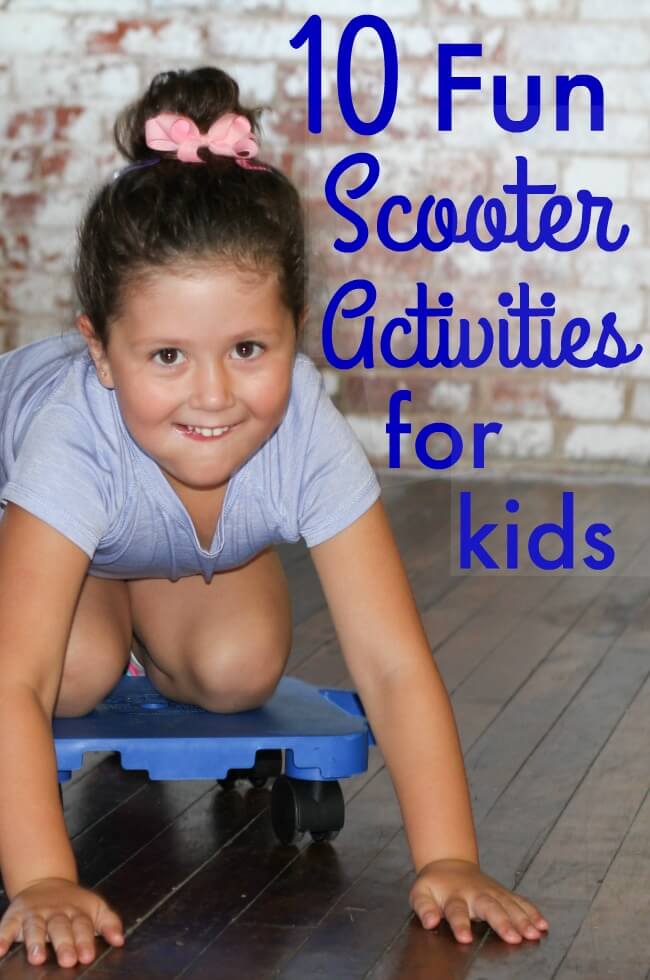
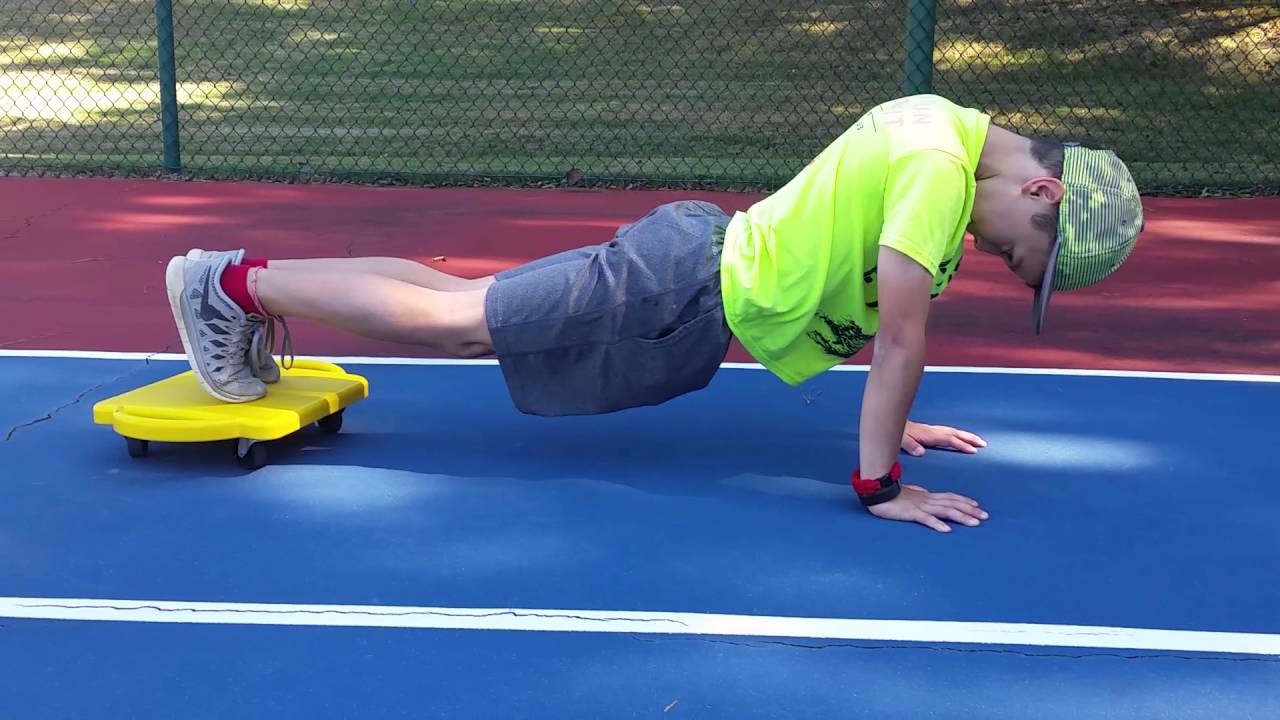
11. Scooter Obstacle Course

11 Scooter Board Activities | Looking for fun occupational therapy ideas to do at home or in the classroom to develop a child’s gross motor skills, improve focus for greater learning, reduce stress and anxiety, and help with self-regulation? From awesome ideas children can do independently, to obstacle course inspiration for teachers and therapists who have access to a gym, these heavy work activities for kids are so much fun! #scooterboard #grossmotor #grossmotoractivities

Kids love scooters! This is a physical activity that students will love! Design an obstacle course that students can participate in while riding their scooters. The location for this activity must be in the gym so that the scooters are able to slide across the floor. 

Learn More: Meraki Lane

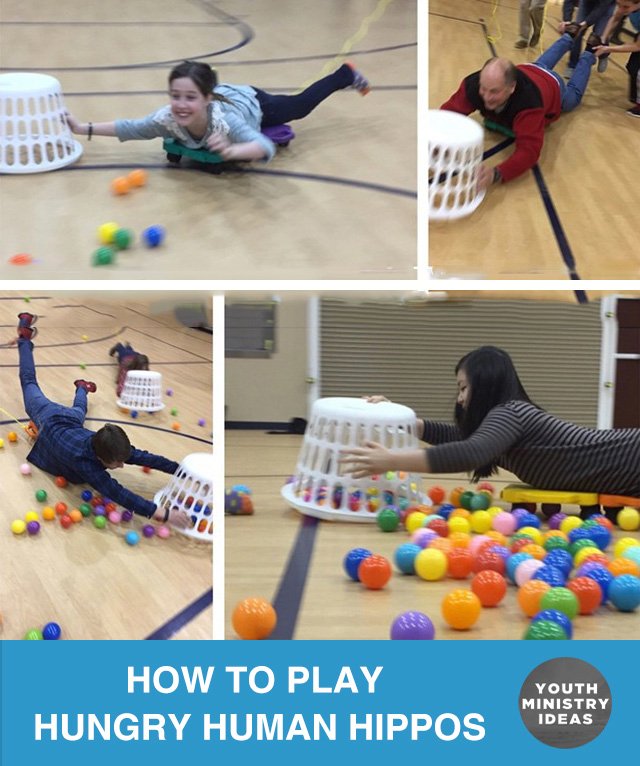
12. Hungry Human Hippos 

If your class goal is to have fun, you must include this activity! Give students a scooter, have them lie on their bellies, and use a laundry basket to collect balls in the center of the gym floor!  

Learn More: The Chaos and the Clutter

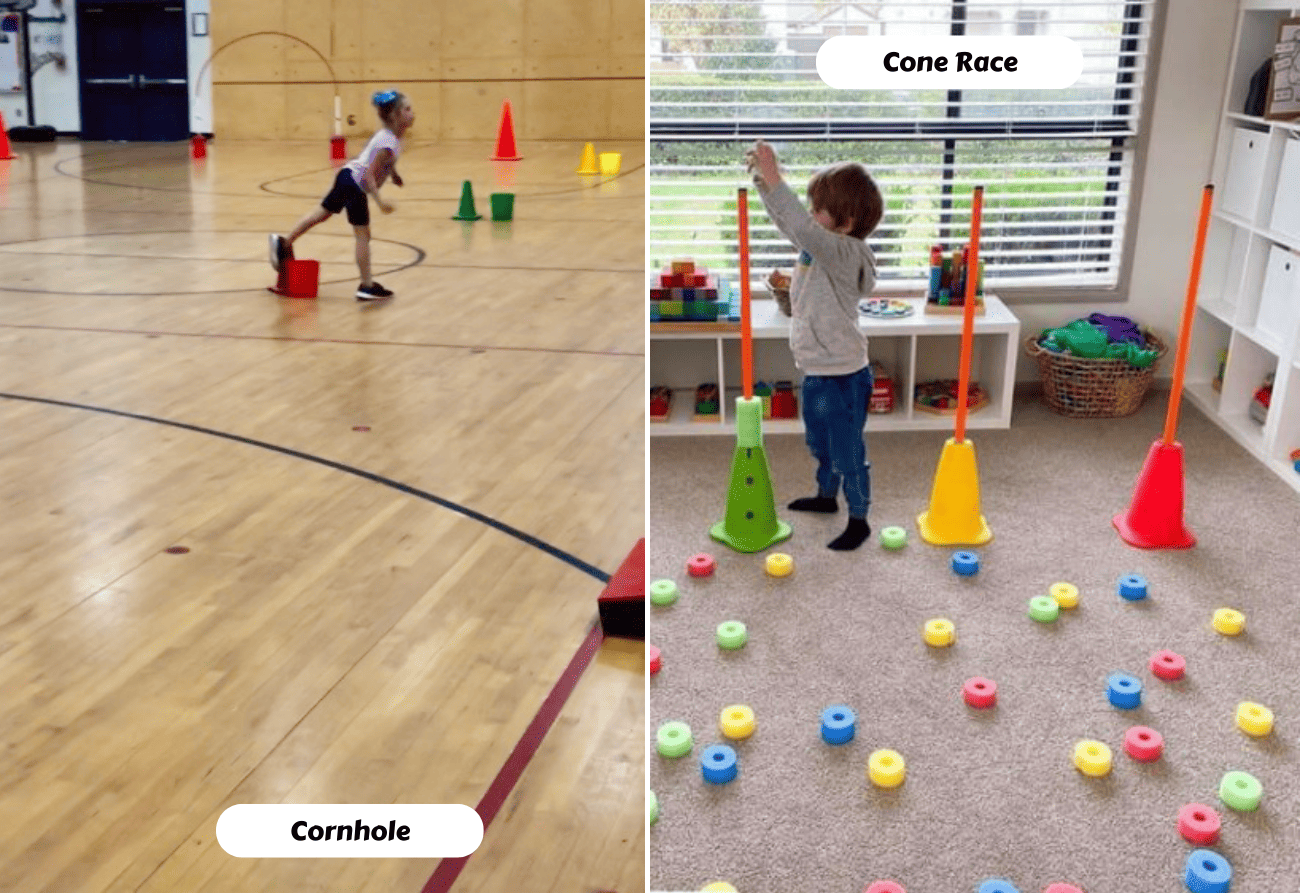
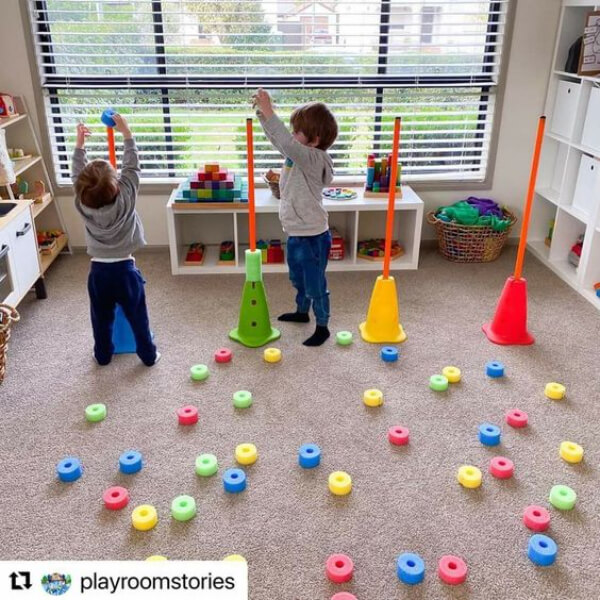
13. Cone Race

This activity is geared toward kids in 1st grade and younger. They will work on motor skills as they try to place cut-up pool noodles over tall plastic pipes or broom handles placed into cones to hold them steady. This will also help with color recognition as students place the coordinating colors together. 

Learn More: Kids Art & Craft

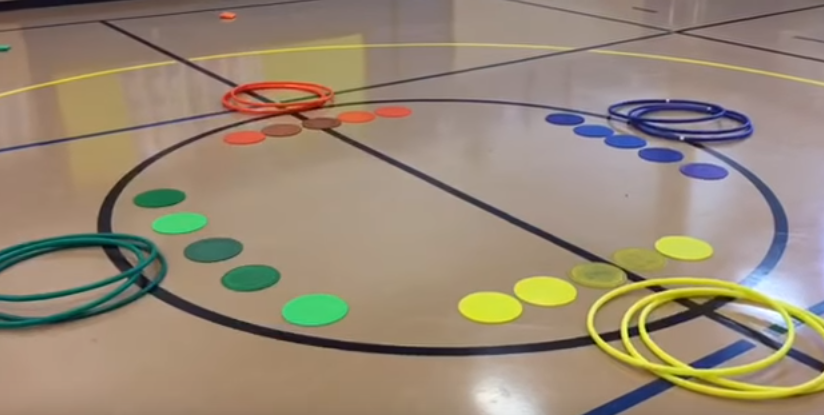
14. Musical Hoops

This musical movement activity is a variation of musical chairs, but when the music stops, students must rush to stand inside a hula hoop. The teacher continues to take them away as the students progress through the rounds. Add a new level of difficulty by having students do a specific locomotor movement or stand inside the hula hoops in a specific pose. 

Learn More: The Physical Educator

15. The Caterpillar Scooter Game 

The Inspired Treehouse - These fun scooter activities for kids are great for upper body strengthening, core strengthening, coordination, endurance, and more!

A great game for improving teamwork and listening skills; this caterpillar game is fun for all! Have students use their coordination skills to join together and form a long line while staying on their scooters. Then, they must figure out how to keep moving the line toward a goal point. 

Learn More: The Inspired Treehouse

16. Spider Web Scooter Crawl 

The Inspired Treehouse - These fun scooter activities for kids are great for upper body strengthening, core strengthening, coordination, endurance, and more!

This activity will require some setup ahead of time. Create a spider web out of yarn and have students use coordination skills to work their way through the maze. They must lift the yarn and duck underneath it to make their way through the maze and stay on their scooters. 

Learn More: The Inspired Treehouse

17. Jump Rope

Jumping rope is a favorite for kids of all ages! Even your 3rd-grade and 4th-grade students will enjoy this. You can even make this a music movement activity by adding some songs to this center for students to chant as they jump. Allow students to wear a pedometer to keep an accurate step count of their activity! 

Learn More:  Pinterest

18. Parachute Fun 

Little ones love playing with parachutes! You can encourage students to work together and hold the handles of the parachute to move it up and down to go under and back out or move together to keep a monster ball in the air!  

Learn More: Mom Junction

19. Scooter Board Relay

Divide your class into teams for this relay activity! Have students use the scooters under their feet and get to a checkpoint where they will pass off the scooter to the next student in line. The team who makes it to the finish line first will win! 

Learn More: Keeping Kids in Motion

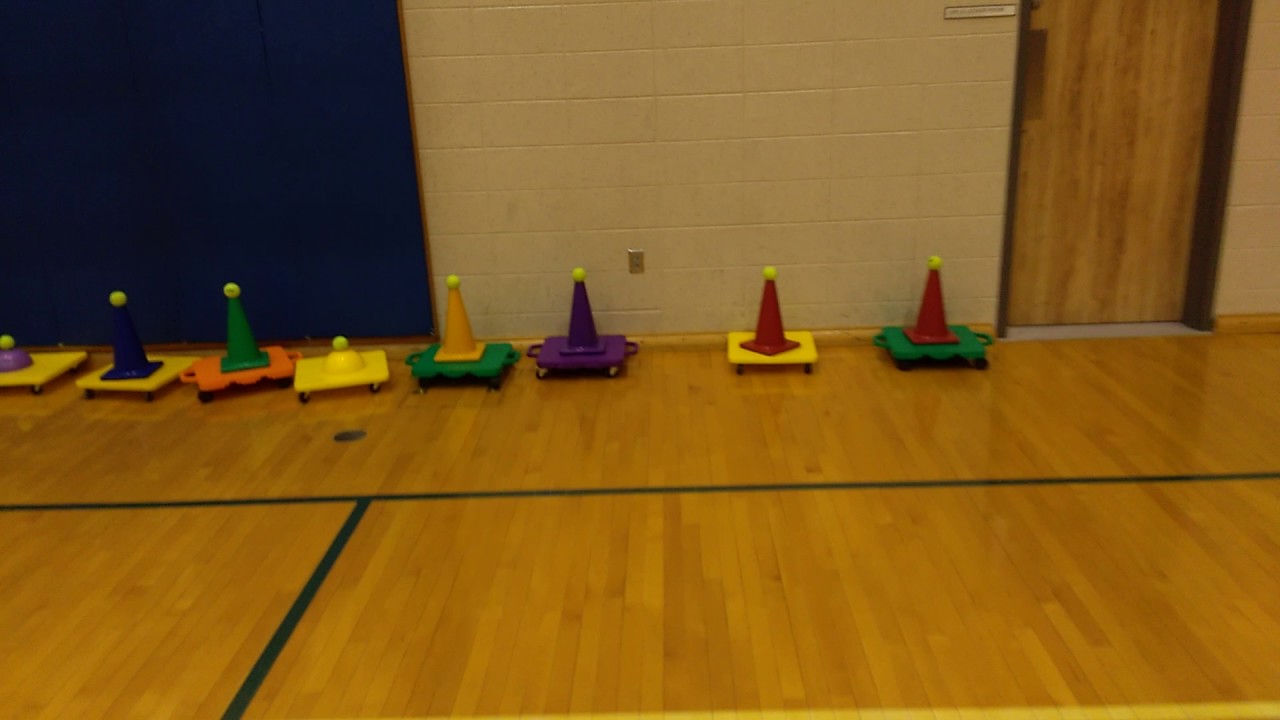
20. Mario Kart Battle Boards

If you want a fun and crazy ball game for students to enjoy and request again, introduce this game of Mario Kart Battle Boards. Students creep around mats that are standing upright. The “villains” try to hit the good guys’ battle boards and knock off a tennis ball sitting atop a cone on top of a scooter. 

Learn More: PE Universe

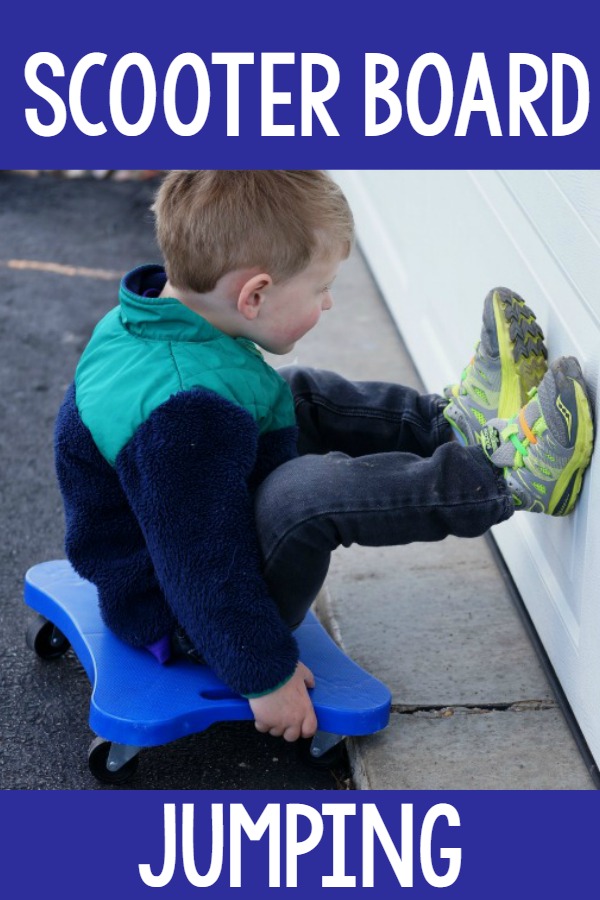
21. Scooter Board Jumping 

Using a scooter board is a fun way to practice the skill of jumping! A great jumping practice idea!

This is a good activity for preschool through 1st grade. Students will use the scooter to move around and push their feet against a wall to help them jump from a sitting position. This is a good way to strengthen leg muscles and practice using scooters. 

Learn More: Pink Oatmeal

22. Wall Ball 

Wall ball is a favorite activity of 4th and 5th-grade kiddos! Simply throwing the ball onto the wall and catching it to throw it back again is appealing to them. They can also enjoy this activity by kicking the ball instead of throwing it. 

Learn More: Pink Oatmeal

23. Topple Tube 

This game involves two teams each trying to flip cups to their color. This can also be done using wooden blocks with different colors on each end. The teams run around, flipping the color of their team so that it’s on top of the other team’s color. This is a difficult task, as the other team is also doing this. The team with the most of their color flipped up by the end of the game is the winning team! 

Learn More: Gopher

24. Soccer 

Try a game of soccer. This will help with running and coordination as they are learning to control the ball while moving down the field. Two teams will play against each other, each team heading for the other’s goal, using only their feet to kick the ball toward the goal. 

Learn More: ABCDee Learning

25. Portable Balance Games

This is perfect for all physical activity levels! It will incorporate balance and gross motor skills as students walk along the upside-down buckets. Be sure to line them up in a way that is more difficult than just a straight line.   

Learn More: Sleeping Should be Easy

26. Table Top Tennis 

Table top indoor ball battle game.

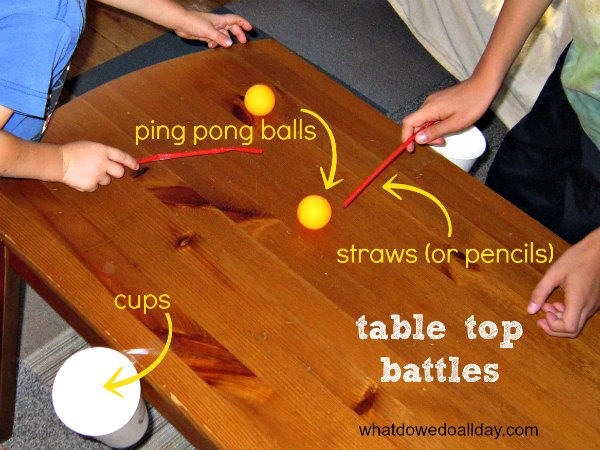
This activity will be great for older students in elementary school or middle school. This will require more advanced motor skills and hand-eye coordination. Physical education lessons like this are a break from the typical activities they may be used to. They can simply play ping pong with straws and cups. 

Learn More: What Do We Do All Day

27. Cornhole

cardio cornhole PE

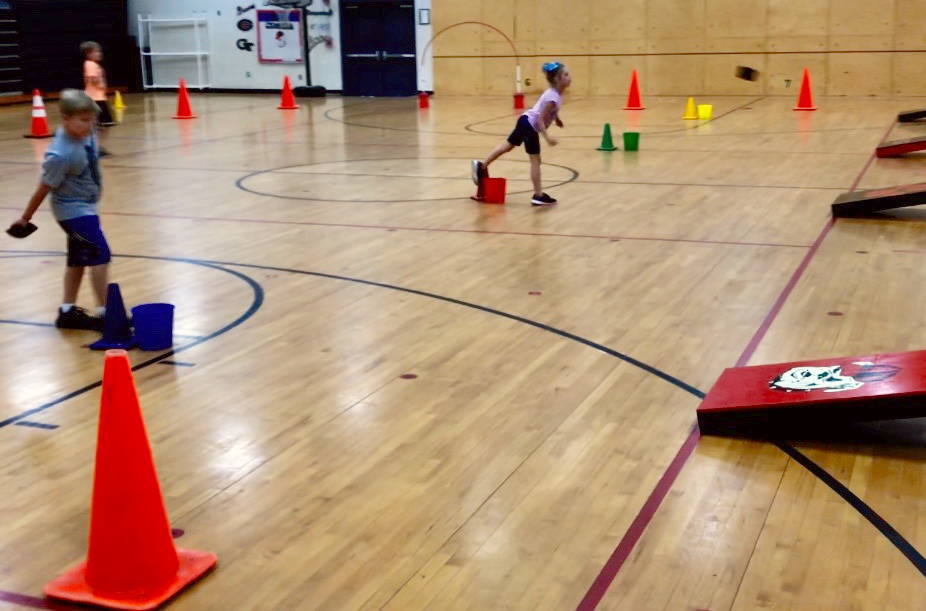
Cornhole is a great physical activity for elementary students. This helps students learn how to use hand-eye coordination and gross motor skills. Students will toss the beanbags onto the game board; aiming for the cutout. This is good for physical education lessons that will progress to throwing and catching. 

Learn More: SSWW

28. Cops and Robbers Tag 

A list of 16 tag games for PE.

Elementary school physical education wouldn’t be complete without the game of tag! This is a good game to play at the start of the year to help teach physical activity behaviors. Use this cops and robbers version of the tag to teach students how to do a soft touch and not hurt others when playing. Cops simply chase the robbers! 

Learn More: Kid Activities

29. Dizzy Kickball 

TCC0002427

This is a fun and funny game to play! With a twist on the traditional game of kickball, students will close their eyes and spin around a few times before they have their turn to kick a ball. Then, they must run to their base just like in traditional kickball. 

Learn More: Scholastic

30. Air Pong 

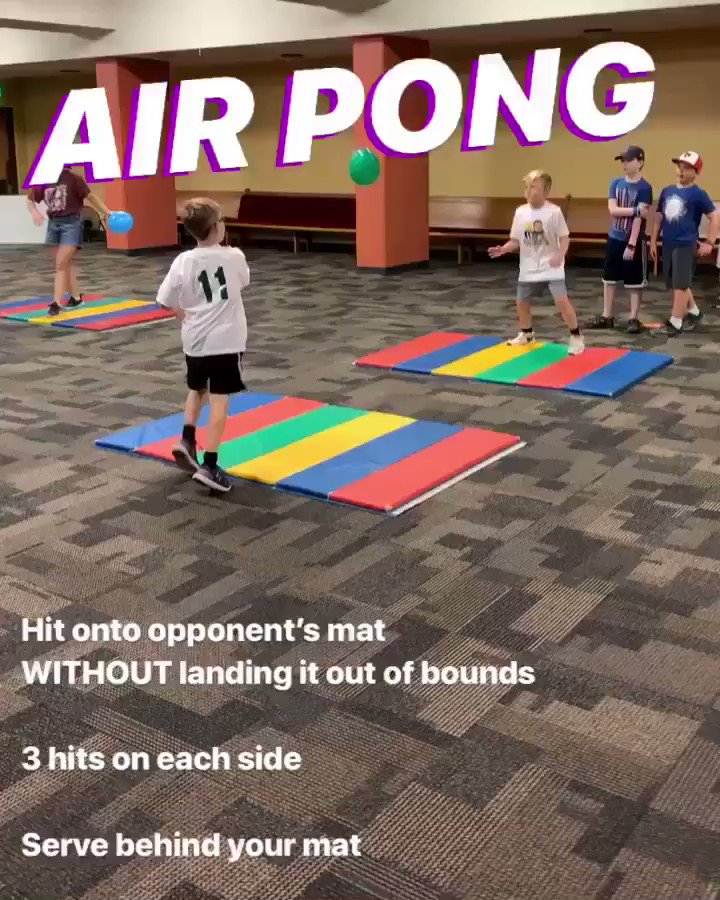
Physical education lessons that can combine many skills are the best! This game of air pong is a fun way to use coordination skills and motor skills. Students must hit the ball onto their opponent’s mat. They must be careful to not hit it out of bounds. 

Learn More: Be Well Played

31. Rabbit Hole

This game is ideal for any physical activity level. Students will enter into the space of a hula hoop; being mindful to avoid knocking down the hula hoop balanced on top of cones. Then, students will sneak out; pretending to be rabbits and making sure they aren’t captured by the fox. 

Learn More: The Inspired Treehouse

32. Jellyfish Scooter Tag 

Scooter

Scooter tag is a fun game for all ages! Students can be separated into teams and sit on different colored scooters as they zip around the court, tagging the opposite teams. Tagged team members must then retire to the side of the court. The team with the most members at the end of the game wins! 

Learn More: Gopher

33. Throw and Catch Tic-Tac-Toe

Screen Shot 2021-02-15 at 12.37.32.png

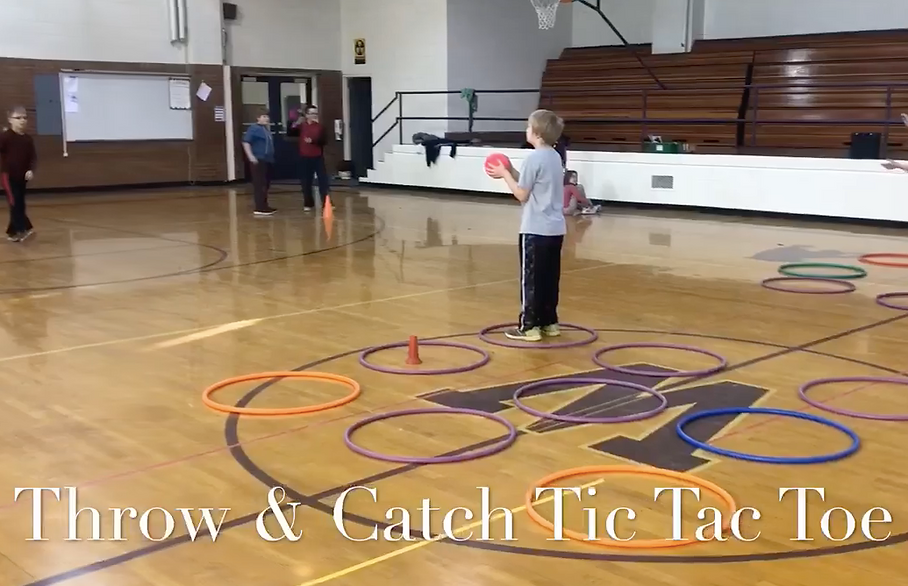
This is a fun game of catch and tic, tac, toe. Students must work in pairs as one stands in a hula hoop and waits to catch the ball from their teammate. If they catch it, they add their color to the tic-tac-toe board. If they drop it, the other teams go. The first team to get three in a row wins! 

Learn More: The PE Shed


Expand competency-based education to support adult learners

Pupils enrolling in increased training are additional varied in age, race, and earnings than any preceding generation. Contrary to the total-time common pupil, they are juggling multiple tasks, which includes comprehensive and element-time perform, little one or elder care, army, and local community support.

Emerging study demonstrates that immediate assessment, competency-based instruction (CBE) may possibly be an successful way to meet their academic requires a lot quicker. While its adoption in bigger training has steadily amplified in modern decades, we can and should do a lot more to accelerate its adoption.

About Competency-Primarily based Learning

CBE makes it possible for college students to get and reveal understanding, skills, and professional tendencies by partaking by learning workout routines, activities, and ordeals that align with plainly outlined and pre-determined programmatic results.

Its versatile learning design permits learners to get paid credentials by demonstrating mastery via several sorts of assessment. The best competency-primarily based packages are also developed to establish and measure significant-desire techniques, enabling graduates to plainly reveal their capabilities to employers.

About Immediate Evaluation

Capella University delivers a immediate evaluation, CBE design called FlexPath. This model allows the learner to exhibit mastery of a topic and move straight away on to the following training course, relatively than depend on credit rating hours or seat time as the foundation for awarding credit. In addition, direct assessment plans like Capella’s present even larger flexibility for students, making it possible for them to complete a program and move on to the next when they are prepared. This is specially advantageous for adult learners, whose occupied schedules may necessitate paying out extra time in a study course or completing a course immediately to obtain the capabilities and credentials they might will need for vocation development.

The Data

A demanding examination of the outcomes of students collaborating in FlexPath indicated that the immediate assessment approach to CBE can enable speed up completion and enhance discovering results for all adult learners.1

In this article is what we identified:

  • The median time to full for FlexPath bachelor’s programs was 50{af0afab2a7197b4b77fcd3bf971aba285b2cb7aa14e17a071e3a1bf5ccadd6db} speedier than identical learners in equivalent Capella credit history-hour bachelor’s programs.
  • The median time to entire for FlexPath master’s courses was 36{af0afab2a7197b4b77fcd3bf971aba285b2cb7aa14e17a071e3a1bf5ccadd6db} speedier than identical learners in equivalent Capella credit rating-hour master’s systems.
  • The median federal economical aid borrowed by a bachelor’s FlexPath learner was 58{af0afab2a7197b4b77fcd3bf971aba285b2cb7aa14e17a071e3a1bf5ccadd6db} considerably less than for identical borrowers in the equal Capella credit rating-hour packages.
  • The median tuition billed to a bachelor’s FlexPath learner was $11,550. This is 65{af0afab2a7197b4b77fcd3bf971aba285b2cb7aa14e17a071e3a1bf5ccadd6db} much less than a identical learner in an equal Capella credit-hour software.
  • The median tuition billed to a master’s FlexPath learner was $14,400. This is 45{af0afab2a7197b4b77fcd3bf971aba285b2cb7aa14e17a071e3a1bf5ccadd6db} fewer than a comparable learner in an equivalent Capella credit rating-hour software.

Importantly, in a independent assessment using related statistical solutions, we found that both equally Black and white learners are benefiting from FlexPath.

Accelerating CBE

These new findings demonstrate that immediate evaluation, CBE can have a substantial effect on the results of all learners. Though bigger education and learning has a lengthy way to go to totally embrace this promising innovation and deliver it to scale, there is a developing excitement all around it.

In point, previous U.S. Office of Schooling Undersecretary and existing American Council on Education and learning President Ted Mitchell termed CBE “the one-most-essential innovation in bigger schooling.” And, a 2020 survey from the American Institutes for Exploration and the Competency-Based Education and learning Community observed that a lot more than 82{af0afab2a7197b4b77fcd3bf971aba285b2cb7aa14e17a071e3a1bf5ccadd6db} of bigger instruction industry experts surveyed envisioned CBE to increase nationally in excess of the up coming five a long time.

Underneath are 5 recommendations on how practitioners and policymakers can accelerate the adoption of direct assessment, CBE whilst guaranteeing its position as an powerful instrument to much better provide all learners.

  1. Reimagine Monetary Assist – Classic money support procedures, developed on outdated metrics like credit history several hours and seat time, typically rule out immediate evaluation programs based on CBE. We require to reimagine the funds of better schooling to make it possible for for additional flexible, very affordable, individualized plans.
  2. Release and Examine Information – To completely gauge the impact direct assessment, CBE applications can have on closing attainment gaps, we want far more knowledge. Other establishments should examine their courses and launch individuals conclusions to further increased education’s shared being familiar with of the legitimate possible of immediate assessment, CBE.
  3. Few with Guidance – Self-paced doesn’t suggest pupils need to be remaining to navigate their education and learning on their have. The greatest programs are supported by a robust method of college student companies and assets. Direct assessment, CBE packages really should be paired with hyper-personalised advising, coaching, and other guidance providers. Importantly, these assets should be conveniently obtainable wherever and whenever fast paced learners will need them most.
  4. Align with DE&I Initiatives – The activities of the final two a long time have galvanized higher instruction, and schools and universities are doubling down on variety, equity, and inclusion initiatives. Establishments really should placement CBE packages as express and critical elements of this operate. When carried out thoughtfully, direct assessment, CBE packages can aid stay away from the implicit bias plaguing a lot of larger schooling, main to more robust outcomes for all pupils.
  5. Broaden Credit for Prior Finding out – Immediate assessment applications exist together a continuum of answers that assistance learners exhibit competency. Main among the these is credit rating for prior learning (CPL), which seeks to recognize higher education-level discovering that college students have obtained ahead of enrolling at an institution, such as from their professions and military services schooling. CPL has prolonged been connected with better college student outcomes for grownup learners, including greater credential completion and charge and time price savings, nonetheless it is even now vastly underused.

Immediate evaluation, CBE is continue to in its early days, and the analysis of its affect is only just emerging, still the proof is obvious: It’s time to clear away barriers and decide up the pace on rolling out CBE so that a lot more adult learners can gain from it.


Source:

[1]. Capella employed a propensity rating matching methodology in comparing FlexPath and GuidedPath learners, adhering to prevailing benchmarks for dependability. See site 10 for aspects on how this information was calculated. Although this info demonstrates the common practical experience of a FlexPath scholar, competency-centered, immediate-evaluation applications are inherently flexible, allowing for a vast range of student encounters. Capella is cautious to teach future college students that their have experience in the system will depend on a wide variety of things, together with how a lot of transfer credits they convey and how speedily they transfer through their coursework. Consequence metrics are measured for college students who begun and accomplished their program in between 2015 and 2021.