Listen to English learners on education bill

Opinion editor’s note: Star Tribune Opinion publishes a mix of national and local commentaries online and in print each day. To contribute, click here.

•••

Minnesota has the nation’s worst disparities in educational outcomes between students of color and white students.

For years, legislators have lamented that they lacked the necessary votes and funds to make real changes to our educational system. This year they have a trifecta and the money — a $17.5 billion surplus.

And yet, the Minnesota Legislature’s failure to incorporate and adequately fund certain proposals in the education omnibus bill render English-language learners (ELL), the fastest-growing student population in the state, virtually invisible.

Currently, three proposals before the Legislature could have a profound impact on academic outcomes for English-language learners: 1) Incorporating accountability into ELL funding formulas; 2) increasing teacher diversity through the Increase Teachers of Color Act, and 3) preserving teacher licensure pathways proven effective in recruiting teachers of color and teachers from low-income backgrounds.

Our organizations represent a diverse coalition of parents, teachers, educators and businesses strongly supporting these three proposals.

First, we partnered with legislators to add accountability measures to the Learning English for Academic Proficiency and Success (LEAPS) Act. Yet the LEAPS Act, passed by the Legislature several years ago, never received the funding for its implementation. The LEAPS Act would enhance professional development for teachers and administrators, recognize the diversity of multilingual learners, and engage the voices of parents, students and the community in the design and implementation of ELL programs.

Unfortunately, these measures were not included in the education omnibus bill. Funding is critical, but best practices and accountability are fundamental to changing education outcomes. More funding without accountability will preserve the status quo and widen existing gaps.

Second, we know that all students benefit from teachers of color in the classroom. Yet, our teacher workforce has not kept pace with the growing diversity of our students. The disparity is staggering. In Minnesota, there is one white teacher for every nine white students, but one BIPOC teacher for every 90 BIPOC students.

Despite this, the Legislature has underfunded critical programs within the Increase Teachers of Color Act. The Senate, for example, has proposed no new funding for the Underrepresented Student Teacher Grants program, while neither the House nor the Senate has proposed new funding for the Minnesota Aspiring Teachers of Color Scholarship program. Both programs would provide grants and scholarships for teachers of color to enter the profession.

If we can’t fully fund the Increase Teachers of Color Act now — with the historic surplus and the trifecta of supportive leadership in the House, Senate and the governor’s office — it is hard to imagine when we ever will be able to do so.

Third, amid widespread teacher shortages, Minnesota is hurtling toward a reversal of hard-fought advances in the teacher licensure system, impacting nearly 800 teachers, a disproportionate number of whom are teachers of color.

Provisions in the omnibus bill would eliminate the pathway to permanent licensure for educators with demonstrated success as Tier 2 licensed teachers (defined as three years of experience and a positive summative evaluation) — thus making a master’s degree in the content area, completing a teacher preparation program or being currently enrolled in a preparation program the only ways to stay in the profession regardless of a school’s need or the teacher’s impact.

Students, parents, teachers and school administrators are not asking for this. The Minnesota School Boards Association has voiced opposition to this bill, as have 16 other education advocacy organizations. This bill moves teacher diversity, teacher recruitment and the teacher shortage in the wrong direction.

Our children depend on our legislators to make decisions that advance equity and better our educational system. The time is now to support fully funding the Increase Teachers of Color Act, keeping and improving current tiered licensure pathways and attaching increased accountability to English Language Learner funding as outlined in the LEAPS Act. There are no more excuses.

Katya Zepeda is legislative and policy director — education at Minnesota Council on Latino Affairs. Irma Márquez Trapero is executive director at LatinoLEAD. Paula Cole is executive director at Educators for Excellence-Minnesota.

Governor Lamont Proposes Establishing the English Learners’ Bill of Rights To Safeguard the Provision of Bilingual Education

Press Releases

Governor Ned Lamont

&#13
02/27/2023

Governor Lamont Proposes Creating the English Learners’ Bill of Legal rights To Safeguard the Provision of Bilingual Education and learning

(BRIDGEPORT, CT) – Governor Ned Lamont these days held a information conference in Bridgeport to announce that he has submitted a legislative proposal to the Connecticut Typical Assembly setting up the English Learners’ Invoice of Rights in Connecticut state statutes to make it distinct to learners, dad and mom and guardians, educators, and college administrators the legal rights of English learners to get a high-quality education and learning in Connecticut community universities.

English learners are students who have been identified as possessing a dominant language other than English.

“I think there is almost nothing extra essential to a child’s education than an engaged and supportive mum or dad or guardian, and the English Learners’ Bill of Rights will promise that they have the information important to do so,” Governor Lamont explained. “Several weeks back, a team of mothers and fathers, students, legislators, and advocates held an function exterior my business to suggest the creation of this regulation and make clear its importance. Soon after hearing their tales and the relevance of this bill to their people, I comprehended. Their voices were being read in my workplace, and I hope we can all hear them.”

“In Connecticut, far more than 50{af0afab2a7197b4b77fcd3bf971aba285b2cb7aa14e17a071e3a1bf5ccadd6db} of our student populace now identifies as non-white. Additionally, much more than 45,000 or 8.8{af0afab2a7197b4b77fcd3bf971aba285b2cb7aa14e17a071e3a1bf5ccadd6db} of our learners are recognized as English learners. This is why an English Learners’ Bill of Legal rights is so critical at this time,” Education Commissioner Charlene M. Russell-Tucker explained. “The Connecticut State Department of Instruction thanks the governor for introducing this legislation as it further more solidifies our historical motivation to making sure educational accessibility and fairness. It is crucial that we empower all of our English learners and families throughout the state to be energetic and engaged members of our school community.”

The laws directs the Point out Board of Training to draft a published English Learners’ Monthly bill of Legal rights that evidently and succinctly compiles present federal and point out laws and needs that safeguard and secure the provision of bilingual instruction. This invoice of rights must include things like, but not be confined to:

  • The proper of an English learner university student to attend community faculty regardless of immigration position
  • The appropriate of an English learner student to have a translator present at essential interactions with lecturers and administrators, these as mum or dad-trainer conferences and meetings with administrators
  • The right of an English learner college student to participate in a method of bilingual education and learning when there are 20 or more suitable students labeled as dominant in a language other than English
  • The appropriate of a father or mother or guardian of an English learner scholar to acquire written notice, in each English and their dominant language, that these types of scholar is qualified to take part in a plan of bilingual instruction
  • The suitable of an English learner scholar and their mum or dad or guardian to get a substantial-high quality orientation session in their dominant language
  • The appropriate of the father or mother or guardian of an English learner scholar to obtain data about the development of such student’s English language development and acquisition and meet up with with university staff to explore these issues
  • The proper of an English learner scholar to be put in a application of bilingual instruction or English as a new language, if available by the school district
  • The appropriate of an English learner pupil to have equal accessibility to all quality-level university programming and all core grade-stage subject issue
  • The right of an English learner student to obtain once-a-year language proficiency testing
  • The right of an English learner college student to obtain aid products and services aligned with any intervention approach that the faculty or school district delivers to all students
  • The right of an English learner pupil to be continually and each year enrolled in a plan of bilingual education or English as a new language while these kinds of college student continues to be an qualified scholar and
  • The ideal of a mother or father or guardian of an English learner pupil to make contact with the Condition Department of Education with any queries or worries about these kinds of student’s correct to receive English learner products and services or accommodations.

Additionally, the laws demands that each and every neighborhood and regional board of education supplying a software of bilingual training or English as a new language deliver the mother and father and guardians of suitable pupils with a duplicate of the English Learners’ Bill of Rights in the dominant language of such dad and mom and guardians, and make these files obtainable online.

The laws is Household Monthly bill 6663, An Act Developing the English Learners’ Bill of Rights. It currently staying thought of by the Schooling Committee.

&#13

Twitter: @GovNedLamont

&#13

Facebook: Workplace of Governor Ned Lamont

&#13
&#13

English CEGEPs to get help with database in continuing fight over Bill 96

The schools were frustrated to learn the database that lists which applicants have a right to English instruction was unworkable.

Article content

Quebec’s English CEGEPs will get help sorting out which of their thousands of applicants hold English eligibility certificates, Quebec’s Higher Education Minister Pascale Déry said Friday.

Advertisement 2

Article content

English CEGEPs are scrambling to prepare for changes ushered in by Bill 96, Quebec’s newly strengthened language law that was passed last spring. As of next fall, English eligibility certificate holders studying in English at English-language CEGEPs must complete two French language-learning courses and three courses in their program taught in French, or complete five French-language learning courses. Those without English eligibility certificates will have to pass a French exam in order to graduate.

Article content

Not knowing how many of their applicants have the eligibility certificates is making it difficult for the English CEGEPs to put in place curricula and hire staff to be ready to help all students meet these new requirements.

Article content

Advertisement 3

Article content

The government had promised CEGEPs and private colleges would have access to an Education Ministry database that lists the names and permanent codes of students who have the right to an English education by March 1, the deadline for CEGEP applications.

While the English CEGEPs did finally obtain access to the database, called ANAN, on Tuesday, but when staff began using it, they discovered they would have to manually enter the permanent codes of each student applying to find out which have an English eligibility certificate.

For the largest CEGEPS, that would have meant manually entering the codes of thousands of applicants to find out which students have eligibility certificates.

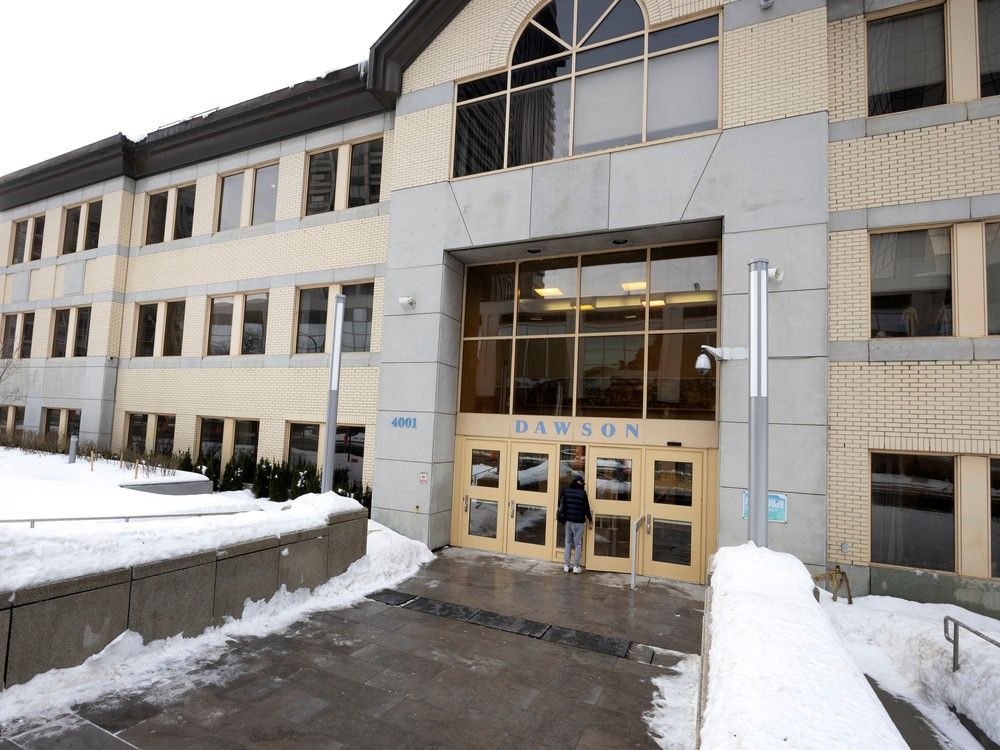
“We’re not going to work that way; it’s not possible,” Diane Gauvin, Dawson’s director general told the Montreal Gazette on Wednesday. “There’s risk of making a mistake. Thirteen thousand is not a reasonable number to do by hand.”

Advertisement 4

Article content

The alphanumeric student code is composed of four letters and eight numbers.

CEGEP administrators from several institutions publicly expressed concern about the database this week and some, including Gauvin, contacted the education ministry to say the process was unacceptable. Ministry officials promised a solution by midnight Wednesday but that deadline came and went.

“It’s March 1 and we don’t have the information on who (has English eligibility) in an acceptable way,” Gauvin said

Late Friday afternoon however, Higher Education Minister Pascale Déry issued a statement reassuring CEGEPs they will get the help they need, from the regional admissions office, to sort out which students have the certificates.

Advertisement 5

Article content

“The Minister of Higher Education has been informed and confirms that there is no technical problem with the database,” she said in a written statement. “However, considering the limits of the system and the high volume of admission applications received by the colleges, the (Higher Education department) has established a partnership with the Service régional d’admission du Montréal métropolitain (SRAM) in order to support (the colleges).

“All establishments that request it will be offered a service to verify the eligibility of future students to learn in English in order to facilitate and speed up the process. This service is available to all institutions, whether public, subsidized private or non-subsidized private.”

mlalonde@postmedia.com

With files from Katherine Wilton

Comments

Postmedia is committed to maintaining a lively but civil forum for discussion and encourage all readers to share their views on our articles. Comments may take up to an hour for moderation before appearing on the site. We ask you to keep your comments relevant and respectful. We have enabled email notifications—you will now receive an email if you receive a reply to your comment, there is an update to a comment thread you follow or if a user you follow comments. Visit our Community Guidelines for more information and details on how to adjust your email settings.

Join the Conversation

Advertisement 1

Missouri bill would ban critical race theory in schools and offer teacher training in ‘patriotism’


Washington
CNN
 — 

Missouri lawmakers are taking into consideration new laws aimed at prohibiting the instructing of so-called essential race principle in its community quality educational facilities – even nevertheless the state’s biggest teachers’ union states the thought is not presently a element of schools’ curricula – and requiring the state to establish a teaching plan to teach American patriotism.

Important race principle is a concept, ordinarily taught in higher education, that seeks to have an understanding of and address inequality and racism in the United States, particularly no matter if racism is systemic and continues to be pervasive in the course of American culture. Despite the fact that CRT is commonly not portion of community quality university curricula, proponents and opponents of CRT disagree on the extent to which its tenets are distribute in American community faculties, and it is grow to be a widely politicized difficulty.

The proposed bill in the state Senate would prohibit lecturers from instructing that “individuals of any race, ethnicity, coloration, or nationwide origin are inherently remarkable or inferior and that people, by advantage of their race, ethnicity, coloration, or countrywide origin, bear collective guilt and are inherently accountable for steps committed in the previous by other individuals.”

Exclusively, “No university shall offer a course on essential race principle in kindergarten by 12th grade.”

The laws also phone calls on the Missouri Section of Elementary and Secondary Schooling to produce a education program to “prepare lecturers to train the rules of American civics and patriotism.” Academics who total the coaching would get a a single-time bonus of $3,000.

If handed, the invoice would develop a “Bill of Rights” for parents that would allow for them obtain to their child’s school curriculum together with looking at materials. It would prohibit a school from necessitating a nondisclosure arrangement for a dad or mum to review curricula and existing felony prices from a instructor or school worker.

Both equally Missouri’s point out Home and Senate are managed by Republicans.

Spokesmen for the state’s biggest teachers’ unions condemned the proposed laws.

“If you were to glimpse at curriculum for Missouri educational facilities, you would not see any point out of vital race idea,” Todd Fuller, a spokesperson for the Missouri State Instructors Association, instructed CNN. “CRT debate usually takes absent from the real issue Missouri is experiencing: how do we maintain and keep good quality instructors? If we don’t have academics to instruct, curriculum will be the the very least of our challenges.”

Mark Jones, a spokesman for Missouri’s affiliate of the National Education and learning Association, claimed the invoice would deny pupils accessibility to crucial mastering.

“We want students to have an understanding of the total background of our nation, superior and bad, so they can find out from the earlier to remedy today’s problems,” Jones said. “Unfortunately, politicians who oppose students’ flexibility to find out a real telling of American historical past are pushing these thoughts to protect up for their failures to assist students, academics, and our local neighborhood educational facilities.”

CNN has attained out to Republican condition Sen. Andrew Koenig, the bill’s sponsor, for remark.

The proposed legislation is between a collection of nationwide moves, pushed largely by Republicans, in modern many years to curtail or form public university instructions about race.

Considering the fact that January 2021, 42 states have released expenses or taken other techniques aiming to location constraints on how issues of race and sexism are taught, and 18 states have imposed these limitations, according to an Training Week analysis.

This week, Florida Republican Gov. Ron DeSantis’ administration blocked a new African American Superior Placement course for large faculty learners, saying the course is “inexplicably contrary to Florida law and noticeably lacks academic benefit.”

Espaillat reintroduces loan forgiveness bill for bilingual teachers, teachers of English learners

Kellie Griffith Tanaka knew from a younger age she desired to be a teacher. The Very long Island indigenous is now in her eighth 12 months of teaching bilingual schooling for kindergartners at P.S. 212 in Jackson Heights, Queens. And whilst Griffith Tanaka gets to train in both equally Spanish and English for “the very best class of individuals,” it will come at an great charge: She owes $35,000 in scholar financial loans for her undergraduate and graduate instruction.

“I believe it’s prison that we enable pupils that are 17- and 18-yrs-outdated to choose out financial loans for tens and countless numbers of bucks,” Griffith Tanaka said. “I did not understand what it intended to consider on a personal loan so huge.”

There could be some aid in the upcoming for instructors like Griffith Tanaka, nevertheless. On Jan. 26, Reps Adriano Espaillat (D-NY) and Raúl M. Grijalva (D-AZ) reintroduced the SPELL Act, which would permit elementary and secondary university academics who teach English learners, bilingual pupils, or dual-language immersion learners to get up to $17,500 of university student personal loan forgiveness and mortgage cancellation. The monthly bill also aims to address the lack of multilingual lecturers throughout the nation.

Beneath present law, if a hugely-qualified math, science, or particular training teacher is employed for 5 many years in a high-need elementary or secondary school, they are suitable for up to $5,000 in university student personal loan forgiveness. If the SPELL Act is passed, these instructors, including lecturers of English learners and bilingual instructors, would be qualified for an greater reward of $17,500 in mortgage forgiveness. 

When Griffith Tanaka, who also is an adjunct lecturer at the Metropolis College or university of New York, began teaching, she was earning $50,000 a 12 months. That is when the truth and tension of having to pay her financial loans all hit. Whilst she explained was privileged to acquire an tutorial scholarship for undergraduate education at Wagner College on Staten Island, the non-public, liberal arts school came with an enormous value tag. Her loans compounded when she ongoing on to the CCNY for her master’s degree. 

“That strain was felt a great deal much more greatly when payments started out,” Griffith Tanaka said. “Right now, I’m just in this headspace that it is all likely to be forgiven and that almost everything is likely to perform out.”

She was equipped to get $5,000 in financial loans forgiven through a federal application, and was able to bring her complete of $45,000 in financial loans down to what it is nowadays. But there have been seemingly unlimited tests to go, even additional so mainly because she was preparing to educate bilingual training.

“Specifically, to get bilingual certification, you need to have to pass a bilingual language evaluation,” Griffith Tanaka claimed. “Maybe bilingual academics will need to get much more revenue.”

Although only very-competent lecturers are eligible for this personal loan forgiveness software, Laura Baecher, a Hunter College professor who offers instruction for instructors like Griffith Tanaka, claimed there is a number of points to look at.

Baecher would like to see additional very-competent instructors in classrooms, in particular for college students from under-resourced communities. The two Baecher and Griffith Tanaka have found higher turnovers in universities of higher want, and hope to see a lot more teachers keep for more time than five many years — the selection of years at the moment viewed as to be remarkably certified — in their teaching environments.

“Highly competent indicates you’re certified,” Baecher said. “People can get classes that are at lousy colleges, no offense, and they get a swift and soiled diploma. They’re regarded remarkably experienced, but they are seriously not.”

“I comprehend there has to be some variety of parameter in position,” Griffith Tanaka stated. “There are fast flip-around premiums in universities of better want and teachers that stick all-around for 5 yrs gain a lot of working experience. But I’m satisfied as prolonged as there is personal loan forgiveness for all academics.”

Most states, 32 to be precise, are encountering a scarcity of teachers for English-learning learners, according to the U.S. Office of Schooling. New York is no exception, and there is a persistent scarcity of academics for bilingual instruction and English as a next language, amid other individuals. 

Baecher has taught at Hunter for practically 20 yrs and has witnessed some of the least expensive enrollment throughout the city’s educational institutions of training. She said it is turning into harder to bring in men and women to the occupation.  

“When you serve English learners, you are likely to work in the poorest faculties in the region,” Baecher stated. “English language academics and bilingual lecturers are operating in our most underneath-resourced communities. They are likely to make the least expensive salaries far too.”

But there is a fantastic need to have for these kinds of academics: Five million college students, or 10{af0afab2a7197b4b77fcd3bf971aba285b2cb7aa14e17a071e3a1bf5ccadd6db} of all general public-college students nationwide, are English language learners. English-learning college students are the fastest increasing group of students, in accordance to the Countrywide Training Affiliation. By 2025, the populace of English-mastering learners is approximated to grow to 25{af0afab2a7197b4b77fcd3bf971aba285b2cb7aa14e17a071e3a1bf5ccadd6db} of community college students.

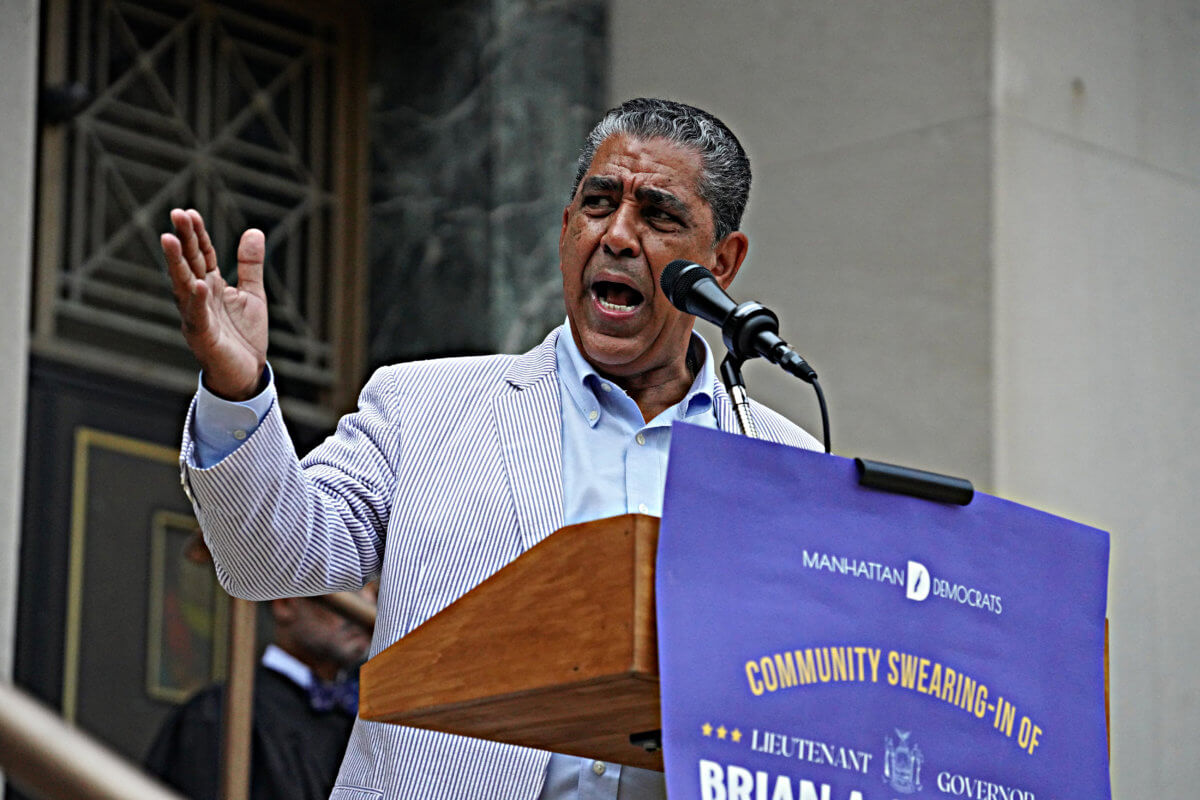
“By incorporating this incentive and assisting EL instructors in repaying their university student loans, we can address the instructor lack and assure our nation’s ELs have the opportunity to do well,” Espaillat reported. “While teacher shortages are not one of a kind, the requires of ELs are.”

“The fantastic point of incorporating ESL is that it recognizes our knowledge, our place of teaching as equivalent to any other specialised spot,” Baecher stated. 

Baecher herself graduated Columbia University with a lot more than $100,000 in financial loans. She will make considerably less teaching at Hunter Faculty than she did educating in general public schools. Baecher explained the SPELL Act delivers her hope, and that she is content to see economical aid coming for lecturers. She’s in a considerably greater location, fiscally, than when she graduated.

“Thanks to being married, my husband and I have been ready to shell out off my loans,” Baecher stated. “But consider me, I would not want somebody to have to go as a result of that. I want points to be better for other individuals.”

Bill Maher roasts failing educational system: Kids learn ‘nothing,’ just ‘rot their brains’ on social media

Invoice Maher sounded alarm bells about a failing educational system, warning that college students understand “very little” in a fashionable classroom mainly because culture is afraid to “stigmatize” them. 

On his hottest “Club Random” podcast, the host talked to comedian Sebastian Maiscalo about the risks struggling with his two little ones, declaring, “I really don’t know what you assume your youngsters are understanding in faculty. But I’m just about certain it’s practically nothing. I mean, they do still instruct them how to go through, scarcely.”

He also lashed out at smartphones and social media, decrying them for “rotting” the brains of younger men and women currently. 

Maher contrasted what he observed as training today and his own.

Monthly bill MAHER SLAMS WOKE University CAMPUSES: ‘THERE IS A ROT, AND IT Arrives FROM ACADEMIA’

“They didn’t enable you out the doorway of significant college unless of course you experienced a kind of essential comprehension of the globe and our put in it and simple points,” he reported. 

The host mentioned that he worked difficult in subjects like math and biology due to the fact “we have been scared that if we did not do effectively, there would be terrible repercussions like getting left again.” But in 2023, “They would hardly ever use that phrase because… ‘Oh my God! You’re stigmatizing individuals!’ Sure! I was anxious about remaining stigmatized!’”

Maher concluded, “And that was superior. It’s not terrible to be a minimal scared.”

The “Club Random” host, who has no kids himself, prompted Maiscalo: “You ought to be worried about what the f—ing phone, the portal to evil, and social media and TikTok and how that is rotting – and is rotting the brains of our youth.” 

Monthly bill MAHER SKEWERS WOKE Still left FOR NOT Comprehending Liberty: ‘FREEDOM Really should BE A LIBERAL THING’

"Real Time" host Bill Maher  on the set of his HBO show.

“Authentic Time” host Invoice Maher  on the set of his HBO clearly show.
(HBO)

Maiscalo stated that his goal was to keep smartphones away from his kids until finally “they get a [drivers] license.” Maher shot back again that this sort of ambitions are “going to be very tough to keep the line” for mother and father. 

“When that child goes to school and the other young children have phones. Which is what I’m speaking about! This is heading to pit you versus the horror of in which The united states is now with this variety of nonsense,” Maher explained.

In December, Maher slammed youthful environmentalists for blaming more mature generations. 

“You’re not driving? Right. You’re just with Greta on a sailboat all the time. You are working with automobiles as considerably as we did. So, shut the f— up!” he explained.

Simply click Here TO GET THE FOX Information App

Photo of a person on TikTok. The app tracks all of your personal information.

Photo of a particular person on TikTok. The app tracks all of your individual details.
(Fox News)