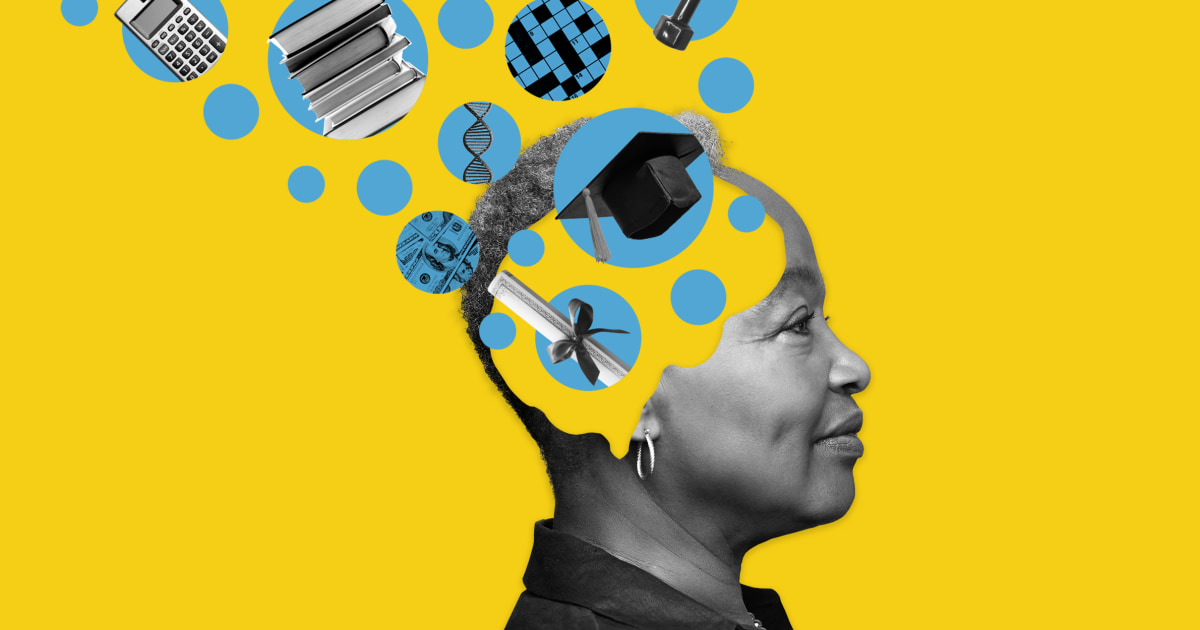
A handful of variables, these types of as training, income and career type, may possibly increase the chance that men and women in their mid-50s will nonetheless be mentally sharp, a new study finds.
An analysis of details from a lot more than 7,000 U.S. grown ups showed that these factors could demonstrate virtually 40{af0afab2a7197b4b77fcd3bf971aba285b2cb7aa14e17a071e3a1bf5ccadd6db} of the variations in the sum of cognitive capacity men and women experienced shed by age 54. Schooling, in individual irrespective of whether a human being had completed higher education, produced the major change in cognitive abilities such as memory, judgment and emphasis, Ohio Point out University researchers noted Wednesday in a scientific journal.
The scientists analyzed data from the University of Michigan’s wellness and retirement analyze, which has been monitoring more than 20,000 individuals for much more than 20 yrs. The study’s databases features info on participants’ revenue, occupation and schooling, alongside with private facts these types of as marital historical past, faith, depression and cognitive capabilities, as perfectly as human body mass index, exercise concentrations, cigarette smoking background and other bodily wellbeing aspects.
The data the researchers integrated in their analyses came from a solitary established of 7,068 grown ups who have been 54 to 65 many years old in 1996 and then 20 a long time later on.
Analyze co-writer Hui Zheng, a professor of sociology, suspects that the cause people today with a college diploma do better cognitively in their 50s is they are much more probable to conclusion up with a job that would make them use their brains.
“If you have a position that is mentally stimulating, you are fortunate, because you are utilizing your mind all the time,” he explained. “The additional mental troubles in your position, the greater.”
Even now, going to university in our 20s isn’t the only way to stay away from cognitive declines prior to people today hit their mid-50s. Former investigate has shown that obtaining hobbies and pursuits that encourage the mind, these kinds of as discovering a new language, painting and crafting, can also be protecting.
While the researchers analyzed a vast variety of points that affect our mind health as we age, the study didn’t tackle the affect of genetics, which could engage in a sizeable part in cognitive perform, professionals say.
There has been former exploration demonstrating that education, family prosperity and accessibility to wellbeing treatment are connected to the brain’s resilience, saidDr. Thomas Wisniewski, a neuropathologist and the director of the NYU Langone Alzheimer’s Disorder Study Middle and its Center for Cognitive Neurology.
Continue to, aside from genetics, the acquiring that factors that individuals can largely control may reveal as significantly as 40{af0afab2a7197b4b77fcd3bf971aba285b2cb7aa14e17a071e3a1bf5ccadd6db} of the discrepancies in the reduction of cognitive qualities at age 54 is “good news,” he reported.
The Ohio review indicated that lifestyle aspects — these types of as keeping a wholesome fat, averting using tobacco and taking part in vigorous physical exercise — had minimal impression on the rate of cognitive drop soon after age 54. Even so, Wisniewski, who was not included in the analyze, is not confident that “there’s absolutely nothing you can do about it.”
“That’s not true in my expertise as a clinician and it is not what is been proven in other research,” he explained.
A lot more on mind overall health and memory
When it will come to slowing cognitive decline, physical exercise and a healthful diet regime can be extremely valuable, Wisniewski claimed. Taking care of professional medical problems this sort of as obstructive rest apnea, diabetic issues, hypertension and cholesterol are also protecting.
To illustrate the power of vigorous actual physical exercise even in people in their 70s, he points to one particular of his recent papers that explained two sufferers who had been diagnosed with delicate cognitive impairment and who also experienced organic markers that prompt they would create Alzheimer’s illness.
Once the individuals both retired or cut the time invested on the position, they had additional time for vigorous exercising. And both of those upped the total of time used working out. Above the course of 15 a long time in a single individual and 18 in the other, there had been no indications of cognitive decrease. In fact, 1 of the patients’ cognition enhanced somewhat.
“What’s good for the heart is excellent for the brain,” Wisniewski said.
A new paper adds to the mounting proof that faculty-age children throughout the world experienced significant setbacks in their discovering development in the course of the Covid-19 pandemic.
Learners “lost out on about 35{af0afab2a7197b4b77fcd3bf971aba285b2cb7aa14e17a071e3a1bf5ccadd6db} of a ordinary college year’s value of learning” when in-person understanding stopped all through the public well being disaster, according to a paper released Monday in the journal Nature Human Conduct. The faculty closures have been meant to sluggish the distribute of the coronavirus, but the new paper suggests that understanding deficits emerged and persisted in excess of time. The paper included knowledge from 15 diverse nations around the world.
“Schoolchildren’s discovering development slowed down significantly during the pandemic. So on normal, kids misplaced out on about a single-3rd of what they would have normally uncovered in a usual university calendar year, and these discovering deficits arose really early in the pandemic,” reported Bastian Betthäuser, an writer of the paper and researcher at the Sciences Po Centre for Analysis on Social Inequalities in France and the College of Oxford in the United Kingdom.
“Children however have not recovered the studying that they dropped out on at the commence of the pandemic,” he claimed. Also, “education inequality between little ones from unique socioeconomic backgrounds increased during the pandemic. So the learning crisis is an equality disaster. Little ones from deprived backgrounds were disproportionately afflicted by faculty closures.”
The scientists reviewed and analyzed data from 42 scientific studies on understanding progress during the pandemic throughout 15 international locations: Australia, Belgium, Brazil, Colombia, Denmark, Germany, Italy, Mexico, Netherlands, South Africa, Spain, Sweden, Switzerland, the Uk and the United States. The scientific tests have been revealed among March 2020 and August 2022. The researchers executed an original search for the research in April 2021 and supplemental queries in February and August 2022.
“We systematically reviewed all of the present exploration on faculty children’s mastering development in the course of the Covid-19 pandemic,” Betthäuser explained. “And it is significant to note that most of the present investigate comes from superior- and middle-profits international locations, whereas there’s a couple of experiments from very low-profits countries.”
The knowledge showed that understanding deficits in the course of school closures and lockdowns in the early times of the Covid-19 pandemic were probable to have been “particularly pronounced” for youngsters from lower socioeconomic backgrounds, and finding out progress slowed far more for arithmetic than for reading abilities.
Data specifically from the United States and the United Kingdom was “pretty equivalent,” Betthäuser said, and translated to a little bit additional than a third of a faculty calendar year value of discovering progress missing, on common.
The paper reveals that the intercontinental proof of discovering reduction throughout the early days of the pandemic mirrors the US knowledge, Thomas Kane, faculty director of the Centre for Instruction Plan Study at Harvard College, said in an e mail.
“One vital variation is that remote schooling had a disproportionately adverse result on high-poverty learners in the U.S. It was not just the pandemic. Gaps widened a lot less in school districts that returned to in-individual studying extra rapidly,” wrote Kane, who was not included in the new investigation. “If we do not act decisively now, discovering loss will be the longest-long lasting and most inequitable consequence of the pandemic.”
Kane suggested that university districts take methods these as incorporating tutoring and studying time through expanded summer time applications or lengthier college a long time.
Whilst this knowledge on discovering decline during the pandemic is not itself new, the new paper shows how the conclusions have been regular, Susanna Loeb, professor at Stanford University’s Graduate Faculty of Education, said in an electronic mail.
“Students, on typical, are much guiding exactly where they would have been without the need of the pandemic and this minimized learning is considerably higher for groups of students who were already extra most likely to be battling in school,” wrote Loeb, who also was not included with the paper.
In October, effects from the 2022 US Nationwide Evaluation of Academic Development tests, typically named the “Nation’s Report Card,” showed that fourth- and eighth-graders fell powering in looking through and had the greatest ever drop in math in the United States. It was the initially national evaluation of scholar achievement in three yrs given that Covid-19 emerged, and uncovered the devastating effect of the pandemic on studying.
Benefits from a Pew Investigate Centre survey, revealed in Oct, counsel that about 61{af0afab2a7197b4b77fcd3bf971aba285b2cb7aa14e17a071e3a1bf5ccadd6db} of parents of K-12 college students say the very first yr of the pandemic had a destructive outcome on their children’s education 7{af0afab2a7197b4b77fcd3bf971aba285b2cb7aa14e17a071e3a1bf5ccadd6db} say it experienced a favourable impact, and 28{af0afab2a7197b4b77fcd3bf971aba285b2cb7aa14e17a071e3a1bf5ccadd6db} say it experienced neither a beneficial nor unfavorable impact.
Amongst people who say the pandemic experienced a negative impact on their children’s instruction, 44{af0afab2a7197b4b77fcd3bf971aba285b2cb7aa14e17a071e3a1bf5ccadd6db} claimed that was however the situation, whilst 56{af0afab2a7197b4b77fcd3bf971aba285b2cb7aa14e17a071e3a1bf5ccadd6db} mentioned the impression was only momentary. The survey involved 3,251 moms and dads.
“I do believe that that dad and mom ought to be concerned about their children’s skipped finding out as a end result of the pandemic,” Loeb reported. “We have tons of evidence that what students discover in university contributes markedly to their later on accomplishment – substantial university graduation, school heading, even labor market options and their lengthy-expression effectively-becoming. Moms and dads can support by encouraging their little ones to reengage with classmates and lecturers and with beneficial understanding routines.”
Because physical activity is associated with a significant reduction in depression symptoms, physical education programs in primary and secondary schools can play a key role in improving the mental health of children and adolescents.
Online health guidance from Harvard Medical School calls exercise “an all-natural treatment to fight depression” and says antidepressants aren’t the only solution.
Research found that for adults, even relatively small doses of physical activity are associated with substantially lower risks of depression.
Strong evidence points to physical activity as effective treatment for depression – the challenge is getting people to do it.
The evidence that physical activity is effective medicine for mental health is robust; now we need to find ways to get people to take it.”
— Eduardo E. Bustamante, PhD, University of Illinois Chicago
WASHINGTON, DC, US, January 5, 2023 /EINPresswire.com/ — A rigorous, new study has confirmed a link between physical activity and significantly reduced depression symptoms in children and adolescents, with a greater benefit derived by teenagers and by those more severely depressed. A separate study last year found a similar association between exercise and depressed adults.
Citing the fact that current clinical guidelines for treatment of depression in children and teens call for psychotherapy and psychiatric drugs, which have proven unworkable for many young patients, researchers from Hong Kong and the U.S. addressed what they termed “an urgent need to explore novel treatment approaches that can be safely, feasibly, and widely implemented in the daily routine of children and adolescents with depression.”
They conducted a systemic review and meta-analysis of a wider range of studies than any previous study on the association between physical activity and depression in children and adolescents. They found that getting depressed kids to exercise more – three activity sessions a week for up to 12 weeks – was associated with a significant reduction in depression symptoms compared to those in control groups who did not receive the physical activity interventions. [1]
The study findings, published in JAMA Pediatrics, also indicate that increased physical activity has greater benefits for more severely depressed children and adolescents and for depressed teens aged 13 years or older, an age range in which physical activity levels have been found to decrease and depressive symptoms increase.
“The available evidence supports physical activity interventions as an alternative or adjunctive approach to alleviate depressive symptoms in children and adolescents, substantiating the beneficial influence of physical activity on the mental health of pediatric populations,” wrote lead author Francesco Recchia, MSc, of the School of Public Health at the University of Hong Kong.
Most of the studies reviewed by the researchers involved increasing students’ participation in physical activities at school, ranging from simple aerobic exercises, such as running and jumping, to playing sports. The researchers suggested that schools could look to their physical education programs as a means to improve students’ mental health.
“The findings of this systematic review and meta-analysis strengthen the role of physical activity for depressive symptom management and highlight the potential of structured physical education programs in primary and secondary schools for improving the mental health of children and adolescents,” the researchers wrote. They called for further investigation of the frequency, duration, and supervision of physical activity associated with this improvement.
A companion editorial in JAMA Pediatrics urged research to find how to make physical activities more widely available and engage more children and teens in them, which is key to getting widespread public health benefits. “The evidence that physical activity is effective medicine for mental health is robust; now we need to find ways to get people to take it,” wrote Eduardo E. Bustamante, PhD, of the Department of Kinesiology and Nutrition at the University of Illinois Chicago. [2]
Other research findings have found similar links between exercise and depression in adults. A 2021 systematic review and meta-analysis, published in JAMA Psychiatry, found that adults who are physically active have a lower risk of depression than those who do not exercise at all and that “relatively small doses of physical activity were associated with substantially lower risks of depression.” [3]
Similar results were found when researchers analyzed data from 1.2 million American adults who took the Centers for Disease Control and Prevention’s Behavioral Risk Factors Surveillance System survey in 2011, 2013, and 2015. The 2018 study, published in The Lancet Psychiatry, found that all types of exercise – even walking – for an average duration of 45 minutes three times a week were “significantly and meaningfully” associated with fewer days of poor self-reported mental health by survey participants as compared to those who did not exercise. [4]
Online health guidance from Harvard Medical School calls exercise “an all-natural treatment to fight depression.” “Pills aren’t the only solution. Research shows that exercise is also an effective treatment,” according to the Harvard Health Publishing website. [5]
Currently, 45 million Americans are prescribed antidepressant drugs, whose side effects include sleep problems, emotional dulling, sexual dysfunction, anxiety, irritability, hostility, aggressiveness, loss of judgment, and the impulsiveness and mania that can lead to violence and suicidal thoughts and actions.
Worse still, those who want to stop taking antidepressants risk serious withdrawal symptoms that can persist for a year or more. [6]
The longer antidepressants are taken and the higher the dose, the more severe and prolonged the withdrawal symptoms may be, causing an untold number of users to give up trying and instead remain on a drug they no longer want.
Even the rationale for prescribing antidepressants – to correct a supposed chemical imbalance in the brain – has been questioned by researchers who conducted a comprehensive review, which for the first time integrated all relevant research, to evaluate whether scientific evidence supported the theory that a low level of the brain chemical serotonin caused depression.
“The serotonin theory of depression has been one of the most influential and extensively researched biological theories of the origins of depression,” wrote lead author Joanna Moncrief in Molecular Psychiatry in July. “Our study shows that this view is not supported by scientific evidence. It also calls into question the basis for the use of antidepressants.” [7]
The Citizens Commission on Human Rights (CCHR) continues to raise public awareness of the risks of serious side effects and withdrawal symptoms from antidepressants and other psychiatric drugs, so that consumers and their physicians can make fully informed decisions about starting or stopping the drugs. CCHR supports safe and science-based non-drug approaches to mental health.
CCHR also recommends a complete physical examination with lab tests, nutritional and allergy screenings, and a review of all current medications to identify any physical causes of depression or other unwanted mental and emotional symptoms, which might otherwise be misdiagnosed and incorrectly treated as a psychiatric disorder.
WARNING: Anyone wishing to discontinue or change the dose of an antidepressant or other psychiatric drug is cautioned to do so only under the supervision of a physician because of potentially dangerous withdrawal symptoms.
The Citizens Commission on Human Rights was co-founded in 1969 by members of the Church of Scientology and the late psychiatrist and humanitarian Thomas Szasz, M.D., recognized by many academics as modern psychiatry’s most authoritative critic, to eradicate abuses and restore human rights and dignity to the field of mental health. CCHR has been instrumental in obtaining 228 laws against psychiatric abuses and violations of human rights worldwide.
The CCHR National Affairs Office in Washington, DC, has advocated for mental health rights and protections at the state and federal level. The CCHR traveling exhibit, which has toured 441 major cities worldwide and educated over 800,000 people on the history to the present day of abusive and racist psychiatric practices, has been displayed at the Congressional Black Caucus Foundation Annual Legislative Conference in Washington, DC, and at other locations.