Few speak Ojibwe as a first language. This ‘nest’ is teaching kids to in Cloquet

Persia Erdrich’s son had just turned 2 years old when he spoke his first sentence in Ojibwe. 

The pair were visiting the Minnesota Zoo as part of a group of babies, toddlers, parents and elders in a program to teach Ojibwe to young children and their parents. Erdrich, whose Ojibwe name is Netaa-niimid, said it happened when her son Patrick Linehan, whose Ojibwe name is Ogimaagaabaw, pointed at a bear in an enclosure.

“Mokwa nibaa,” he said. The bear is sleeping.

This was possible for Erdrich’s son because they attend a language nest in Cloquet, Minn., on the Fond du Lac Reservation called Gookonaanig Endaawaad, or “Grandma’s House.” The program started in 2020, and now seven families learn Ojibwe traditions and language from elders who speak it as their first language.

What does that mean? The news, analysis and community conversation found here is funded by donations from individuals. Make a gift of any amount today to support this resource for everyone.

Grandma’s House is not like a drop-off daycare or an immersion school where only the children learn. Through a grant from the Blue Cross and Blue Shield of Minnesota Foundation, parents get paid to learn alongside and speak with their children in Ojibwe five hours a day, four days a week.

elder, parent, and child pick strawberries and place in a birch bark bucket

From top, Niigaanibines Don Jones, Zoongwegiizhigook Liz Zinsli and toddler Waase pick strawberries at summer camp using a birch bark bucket made that week when birch was peeling at Grandma’s House, an Ojibwe language nest in Cloquet, Minn., on the Fond du Lac Reservation.

Courtesy of Grandma’s House

Don Jones, whose Ojibwe name is Niigaanibines, is one of the elders who teaches at Grandma’s House. He said the language nest got its name because “a lot of young Anishinaabe people always went to Grandma’s house for food, company, legends, and stories.”

The word Anishinaabe refers to the Indigenous people of this area of the U.S. and Canada, and Ojibwe is a specific subgroup, so some use the terms interchangeably.

Jones has been learning and speaking Ojibwe since he was born. No Ojibwe native speakers remain in Fond du Lac Reservation, according to several people with Grandma’s House. All of the elders sharing their teachings at Grandma’s House travel to Cloquet from places like Ontario, Manitoba, and Wisconsin.

For instance, Jones travels from Nigigoonsiminikaaning First Nation, which is on the Canadian side of the border from International Falls, Minn.

“Even in our community on the Canadian side, I grew up in that kind of environment. I appreciate the love and kindness from grandmothers and what they provide: love and caring and sharing. So, that was the whole idea about recreating that kind of concept here.”

The beginning of language revitalization

Grandma’s House wouldn’t have been possible a little more than a generation ago. 

In the late 1800s, the U.S. government created a policy that banned speaking or teaching in any language other than English in schools. This was standard practice in Native American boarding schools. For generations, Native children were taken from their families, banned from speaking their native language or engaging in traditional religious practices, and often abused if they didn’t comply.

Hundreds of Native children died in these schools. Counts vary, but there were at least a dozen of these boarding schools in Minnesota. 

“It wasn’t until the passing of the Native American Languages Act in 1990 that we saw a federal policy that allowed the use of Native American languages in the classroom,” said Deidre Whiteman, director of research and education for the National Native American Boarding School Healing Coalition, which is based in Minneapolis.

several children and adults forage for tobacco in winter

A group looks for materials to make asemaa, a traditional form of tobacco used for ceremonial purposes, at Grandma’s House.

Courtesy of Grandma’s House

“When Indigenous communities lose their languages, they also lose thousands of years of stories and traditions,” Whiteman stated. “Everything we know about ourselves as Native peoples is found in our languages — our songs, our stories, and our ceremonies. Our connection to our lands is rooted in languages. It’s what makes us who we are.”

A study led by The Australian National University and published in 2021 found that, worldwide, “The loss of language diversity results from a complex network of factors, particularly those associated with colonization, globalization, and social and economic change.”

Ojibwe is endangered and there were only an estimated 678 first-language Ojibwe speakers in Minnesota in 2009, according to the University of Minnesota.

The “language nest” model of language revitalization began in New Zealand, where a movement to revive the Maori language began in the 1970s. In the 1980s, the government there began funding language nests, or Te Kōhanga Reo, which brought elders together with children and their parents. 

The program flourished there. By 1991, a year after the U.S. lifted the ban on learning Native languages, New Zealand had “630 kōhanga reo operating, with a total enrollment of 10,451 children and about 4,000 staff”, according to an essay from Maori scholars Tania Rei and Carra Hamon. 

Language nest models now exist worldwide, but only a few exist in the United States. Commonly cited reasons include a lack of fluent speakers, financial challenges, and loss of language diversity.

Likely the oldest equivalent to a language nest in the U.S. is ‘Aha Pūnana Leo, meaning “nest of voices,” in Hawaii.

There also is a history of language revitalization programs including language nests in Minnesota. Eni-gikendaasoyang, or the Enweyang Ojibwe Language Nest, was an elementary school that taught Native and non-native children common core subjects in Ojibwe at the University of Minnesota, Duluth. The school ran from 2009 to 2014.

Minnesota is also part of several Native ancestral homelands, such as Lakota and Dakota people. In South Dakota they have a Lakota Language & Education Initiative, and in North Dakota the Lakȟól’iyapi Wahóȟpi Lakota Language Immersion Nest. And last fall in 2022, the University of Minnesota began a Dakota language nest program.

Other language nests are still forming across the U.S. today: Saad K’idilyé Diné Language Nest (SKDLN) opened in August in New Mexico. 

How Grandma’s House came to be

The seed that bloomed into Grandma’s House started more than a dozen years ago with Erdrich. She said she learned some Ojibwe from her mother and grandmother, but went to school to learn Ojibwe.

child processes sunflower seeds

Dibishkoobinesiikwe Grap-Gahbow processes sunflower seeds from the nest garden at Grandma’s House.

Courtesy of Grandma’s House

“When she was just graduating college she approached the Fond du Lac Tribal College to create the program that had adults participating in a camp with first language speakers and elders,” said Nicole Kneeland, who is the grant manager for Grandma’s House. 

That became Ojibwemotaadidaa, an Ojibwe Immersion academy for adults. It was there that discussions began about making an Ojibwe language nest for the adults at the academy who were planning or starting to have children, including Erdrich. 

“I was actually living in Wisconsin but I moved back here because I wanted him to learn how to speak Ojibwe,” she said about her son. 

Many minds went into the creation of Grandma’s House. Families from Leech Lake, Bad River, and even Ontario attended these adult language camps where part of the brainstorming of Grandma’s house took place. 

When Grandma’s House was developing, the group did a pipe ceremony. Jones said they requested “guidance from the Spirits, for the program to be looked after and funded, and to provide spiritual guidance in the way this unfolds in the future.” Putting his faith in that ceremony, Jones stated Grandma’s House would “come about the way it should come about.”

“It was prophesized that a new generation would come in and bring back what was lost. And I really feel like the people in the language revitalization movement are that generation,” said Kneeland, whose Ojibwe name is Gaagigegiizhigookwe. Kneeland helped secure the grant that financially supports parents in Grandma’s House. 

Blue Cross and Blue Shield of Minnesota Foundation got involved because it is “committed to increasing access to early childhood care and education in a way that advances racial and health equity. The efforts of Fond Du Lac Tribal College and their creation of Grandma’s House is a great example of that intersection,” stated Bukata Hayes, chair of the Blue Cross and Blue Shield of Minnesota Foundation board.

Due to distance, some families who helped develop Grandma’s House can’t attend. From elders to parents to Fond du Lac Tribal and Community College, to the newest and youngest first-language Ojibwe speakers at Grandma’s House, the program’s foundation is still growing.

“Learning Ojibwe in college and pursuing learning the language and teaching the language, I hadn’t really thought about babies speaking it as their first language,” Erdrich said. 

“It seemed like this impossible thing because of how much work it would be, how hard it would be to have a whole community and other babies to be speaking Ojibwe, but it’s happening! And it’s amazing because it’s the peer language here so the kids are speaking Ojibwe to each other,” she said. 

‘Language is healing’

Even though it falls under the Fond du Lac Tribal and Community College, Grandma’s House is not like other college language programs. Learning a Native language in an academic setting is beneficial for language revitalization, but academic learning does not usually include learning the traditions, heritage, or spirit within a Native community.

boy snowshoeing

Ogimaagaabaw Patrick Linehan snowshoes at Grandma’s House, an Ojibwe language nest in Cloquet, Minn., on the Fond du Lac Reservation.

Courtesy of Persia Erdrich

A regular day at Grandma’s House begins with a snack and casual interaction while the kids, parents, and elder or elders arrive. Then, depending on the season, they head outside for activities.  In winter the group will snowshoe along trails or set rabbit snares; other times they will tap trees for syrup and sugar. 

A lot of the work is in noticing and identifying when things are changing in nature and telling the kids about it. For example, now is the season when rabbits are pregnant, so parents and elders teach the kids not to kill animals that carry young. After, everyone heads back inside to eat lunch. Sometimes they teach the little ones to process and eat wild rice, or eat what’s harvested from their garden.

Language diversity provides different ways of thinking and listening. Jones described that when he hears stories in Anishinaabe, “the words are very beautiful.” He said he can see a picture developing as other elders talk, as opposed to when he hears something in English and has to listen carefully to see what’s being said. 

He said his teaching style at Grandma’s House relies more “on the legends, the stories, and what my grandparents and my parents taught me to speak the language.”

two children water three sisters

One of the many daily activities in the summer at Grandma’s House is caring for the garden. Adalynn Wilson (left) and Waase water the three sisters, which are corn, bean, and squash.

Courtesy of Grandma’s House

Grandma’s House is set to expand soon. It recently got notice of funding to start an extended program this fall for children ages 3-5 to learn Ojibwe, taught by Erdrich, according to Kneeland.

“We’re working with the Fond du Lac Tribe to find a licensed space. Families that are currently in the program will shift their children into that program which will open up more family spots in our Grandma’s House,” shared Kneeland. It will continue Ojibwe language learning when children leave the language nest.

“There will be applications soon, but we’re still working on it right now. This summer will be a big application period for us because we’re going to go through two programs: Grandma’s House and the new preschool classroom,” she said. 

several ojibwe adults and children watch an elder prepare a fire

Elder Don Jones, left, whose Ojibwe name is Niigaanibines, demonstrates how to start and care for fire at Grandma’s House. He is joined by, from left, Niizhoodewii Denomie, Ningaabii’anookwe Grap, Dibishkoobinesiikwe Grap-Gahbow, Gabrielle Farrell, Ogimaagaabaw (Patrick Linehan), and Netaa-niimid Aamookwe (Persia Erdrich).

Courtesy of Grandma’s House

Waking up a sleeping language 

Although it’s common to refer to a language no longer commonly spoken as a “dead language,” some people in the language revitalization movement instead refer to them as “asleep.” The idea is that sleeping languages can be awakened through family and community efforts. 

Waking up Native languages can also bring intergenerational healing.

“There’s a tremendous amount of healing in everything that we do around Grandma’s House. Once they get to a certain age, they can pass on that knowledge later on if they’re in their 30s and 40s. Then they can share what we passed on to them so it continues, it lives on,” Jones said. 

“We all need each other to heal,” Whiteman said. “Our elders are our knowledge keepers and carry the memories of our ancestors. In our communities, elders are revered. When the youth are able to hear stories from elders, they are able to make that connection to who they are.”

Native people learning their language is not only changing families but healing them. 

“Language is healing. When you speak your language, you have your Anishinaabe name, and your clan, and can introduce yourself and where you’re from. So we always tell people that the spirit is always listening to us, not just the Great Spirit, but everything has spirit — the trees, the plants, all these are healing,” Jones said.

Whiteman explained that some elders are “hesitant to re-learn their Native languages because of shame and guilt. Many struggle with their identities and feel robbed of that connection to their cultures that they felt they should have had. There were also many families who converted to Christianity and assimilated to survive.”

child smiling at elder making bannock

Elder Nancy Jones, whose Ojibwe name is Ogimaagwanebiik, teaches how to make and enjoy bannock while Miles Trimble, whose Ojibwe name is Giiwitaagiizhig, smiles and watches at Grandma’s House.

Courtesy of Grandma’s House

However, the elders and families at Grandma’s House are motivated to “break the cycle,” Kneeland said. 

“We do have situations where elders are hesitant to do this work due to the effects of being at boarding schools. It can be a really lonely trail doing this. We have to build that community and support each other, and now the language line is back in families. We have seven families that will have the language back since the last speaker two to three generations ago. This is changing families,” Kneeland said. 

Jones appreciates the lightness that can come with speaking and learning Ojibwe. 

“The spiritual language has a lot of humor. There’s a lot of humor in our language, stories, directions, and mostly, what we call ‘Gizhewaadiziwin,’ which is love and kindness, that’s ingrained in the language,” Jones said. 

A woman talks with her son

Persia Erdrich (with her hands out) talks with her almost 2-year-old son Patrick Linehan in Ojibwe while teacher Gabby Farrell (right) looks on, Feb. 1 at Grandma’s House.

Derek Montgomery for MPR News

Erdrich is “fluent enough to keep a conversation but waiting to know enough to tell a good joke in Ojibwe.”

“I can’t believe it’s happening: my little boy is speaking Ojibwe as his first language. The last person to speak it was my great-grandfather. It’s a full circle of healing,” Erdrich said. 

Her son is now beginning to dream in Ojibwe. He recently shared with her a dream about a small bird flying high. It was eating, resting, and sleeping. 

“It was just this powerful moment because he was talking about his dream in Ojibwe and usually, in my experience, I only hear people speak about their dreams in Ojibwe when we are at ceremonies or there is some special important, maybe sacred, occasion. But, for him, he was speaking because that’s the language he has.”


Learn Arts and Crafts – 14 Free Online Courses in 2023

“The world always seems brighter when you’ve just made something that wasn’t there before,” – Neil Gaiman.

We all had art and craft classes in our schools, which we utterly enjoyed. And this definition of enjoyment was distinguished into three categories of students. First were the ones who enjoyed creating new art and craft. Second were those who wanted to learn but needed more of the x-factor. And lastly, those who only enjoyed the class as a free period. Honestly, I was in the second category. I liked making paper craft but somehow missed that razzle-dazzle. But this never made me quit. Indeed it led me to be more creative.

For all my friends still under the clouds of dilemma and doubt of what and how I bring you some mind-boggling online craft courses. Get ready with your paper, scissor, and glue for some art and craft time.

A plethora of online platforms exists, like Skillshare, Udemy, Coursera, Creativelive, EDX, etc. They offer us courses that make learning and creating exciting and accessible. Among them, I have listed free art and crafts courses below for you to learn and polish your skills.

Free Online Art and Craft Courses for All

1. Modern Crochet: Essential Skills for Getting Started: Tony Lipsey

Since childhood, we have seen our grandmothers and mothers embroidering with a hook needle to form a fancy lace-like pattern, making different doily covers, patches, borders of quilts, bags, and so on. But guess what? This 19th-century artwork has again become the talk of the town. With thousands of tutorials and patterns available online and in the market, creating this free craft has become easy-peasy. Tony Lipsey’s class on crochet is among the best for those just starting with this skill.

Modern Crochet Essential Skills for Getting Started

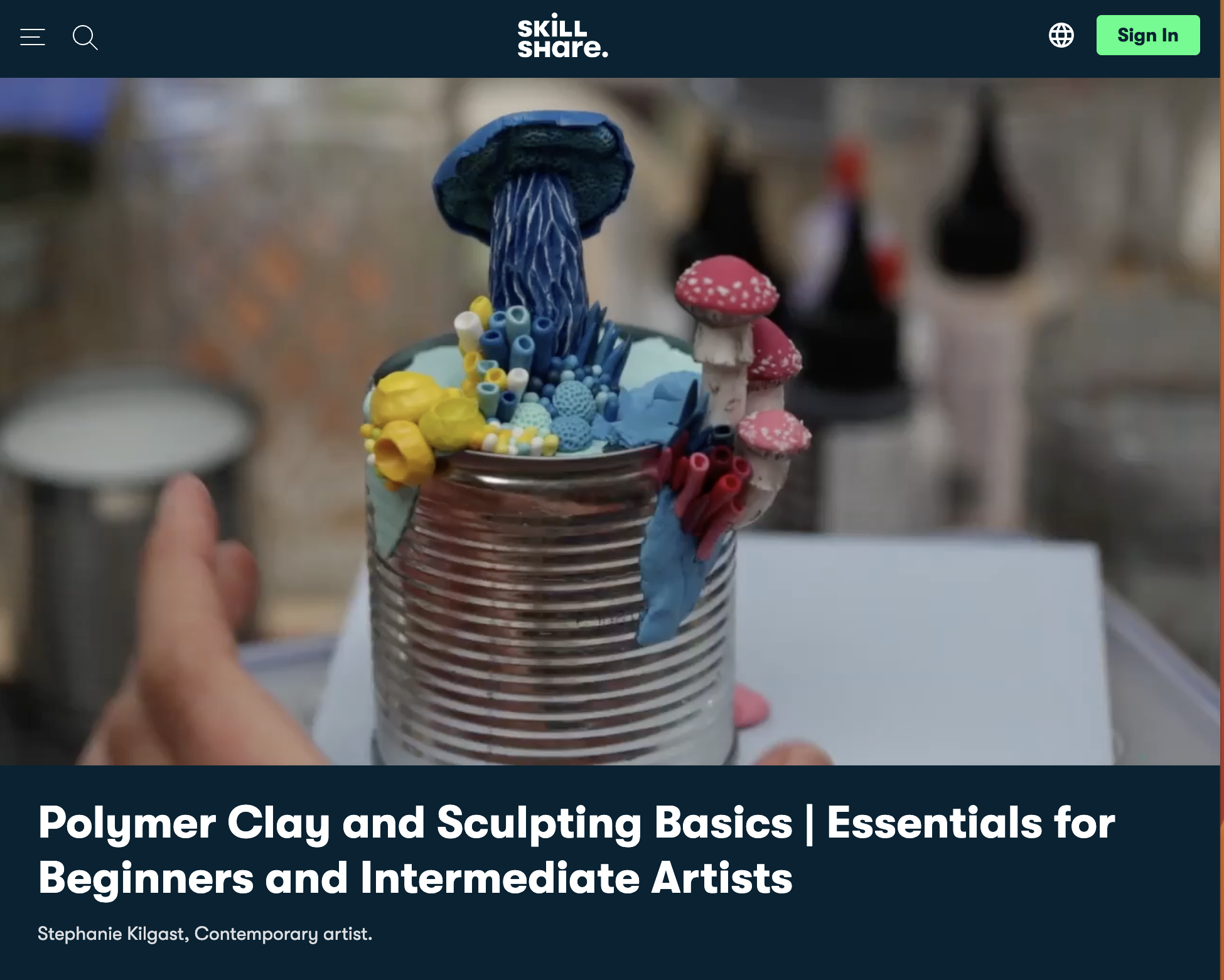
2. Polymer Clay and Sculpting Basics: Stephaine Kilgast

All of us have played with clay and made numerous patterns and structures from them. But as creativity has no end, making various crafts from this versatile material is increasing. The world is your canvas, from fridge magnets to jewelry and sculpting to making trinkets. Stephaine Kilgast, in her free paper craft course, teaches us the basics and essentials of starting innovation with clay.

Polymer Clay and Sculpting Basics

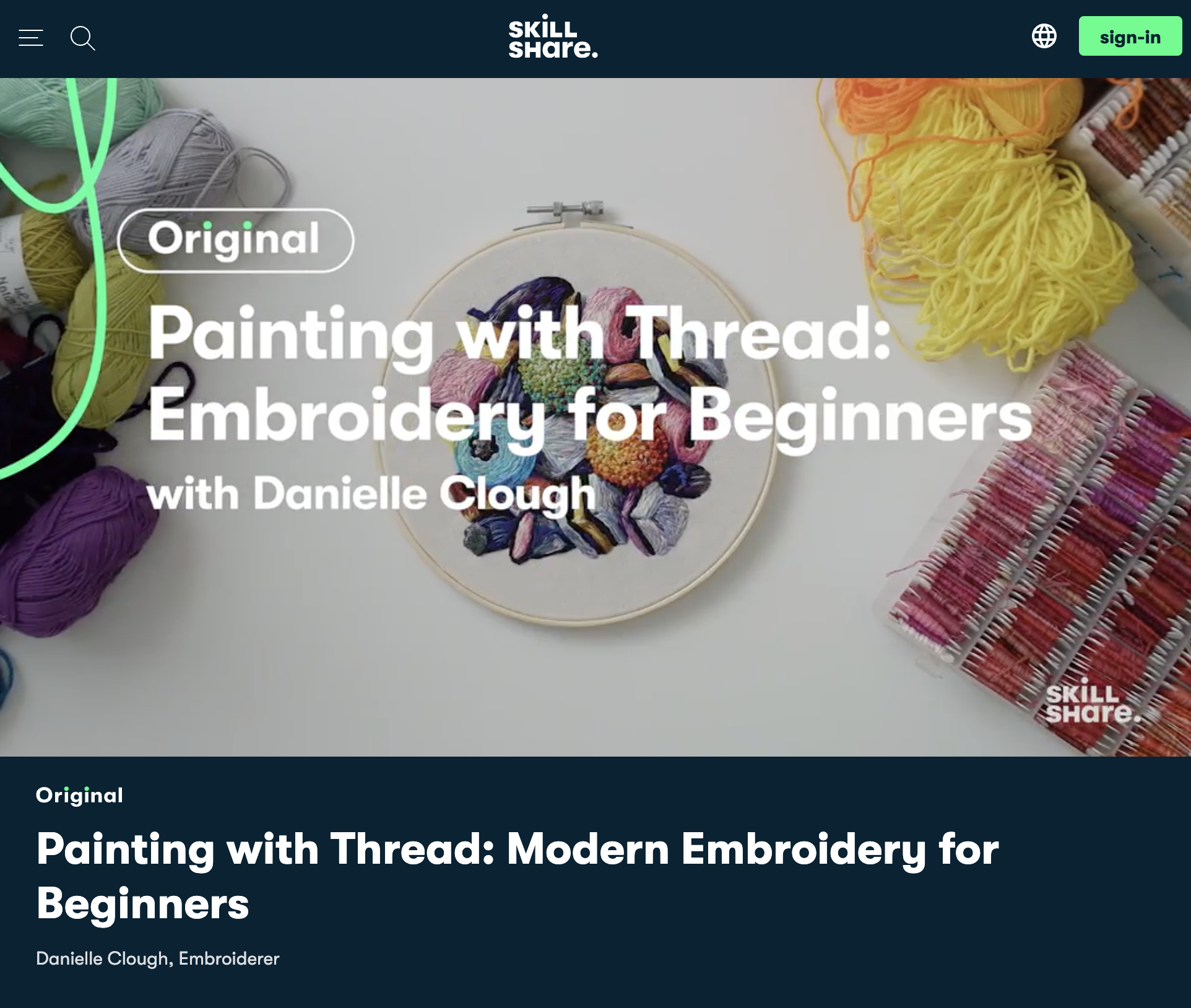
3. Painting with Thread: Modern Embroidery for Beginners: Danielle Clough

This art is often called thread craft or yarn art. This craft is based on your expertise in creating geometric patterns and playing with different strings to create a mesmerizing craft. Different colored yarns are given geometric patterns with more form and dimension. Another artistic way in which threads can be used is for embroidering pictures on paper or cloth to provide a more aesthetic and contemporary appeal to create a superb paper craft. Danielle Clough’s unique and free course is all about painting with modern embroidery.

Painting with Thread Modern Embroidery for Beginners

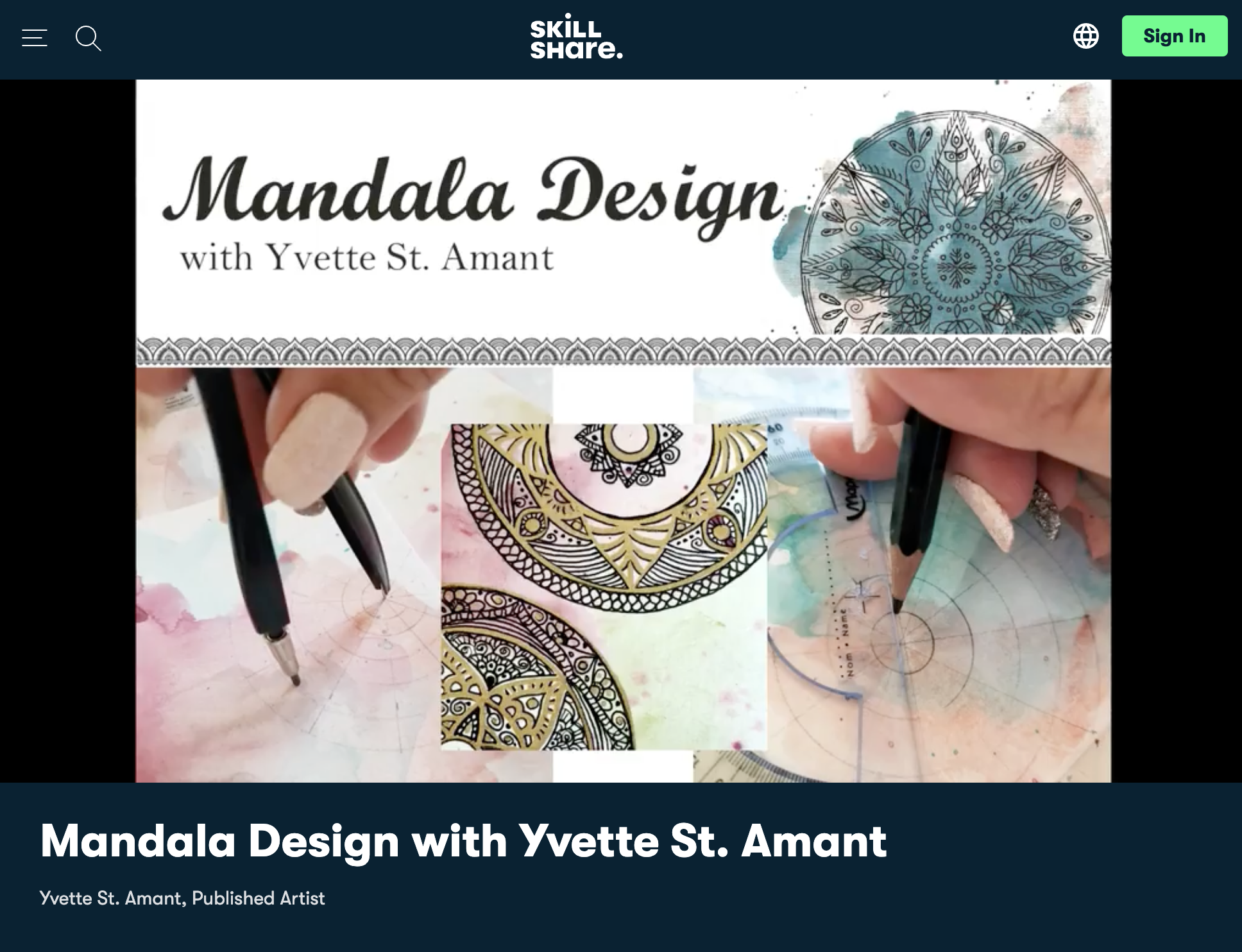
4. Mandala Art: Yvette St. Amant

An art form with symbolism and spiritualism. Mandala is considered the sphere of the universe, which holds within itself several squares and sections organized to form a soothing art. This artwork instruments meditation by offering the artist comfort and peace of mind. It is as intricate as it seems and has no boundaries or limits to its size and form. The Yvette St. Amant free online class is the best bet to learn the fundamentals of this papercraft.

Mandala Art

5. Hand Sewing Basics: Bernadette Banner

Want to create wonders just by using a needle and thread? Then, this artistry is for you. The magic is done either by sewing machine or simply by our hands. The craft is as old as the hills and will always remain as fresh as a daisy. Using this, one can create myriad pieces. But it is more challenging than it seems as it has a lot of methods and procedures to it, but once you get hold of it, it is a piece of cake. For guidance and help, Bernadette Banner and Denise Bayron’s free online classes are your best options.

Hand Sewing Basics

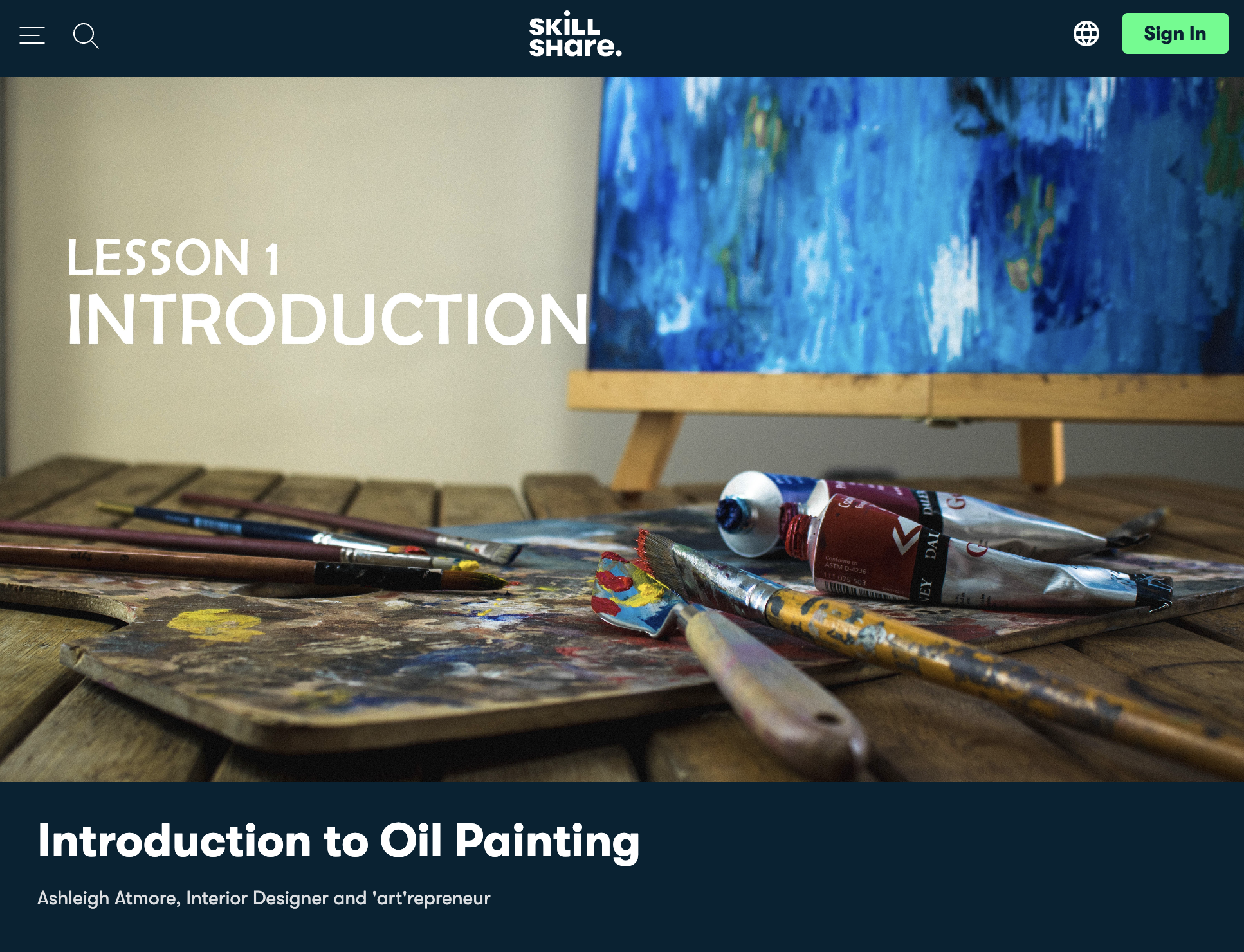
6. Introduction to Oil Painting: Ashleigh Atmore

This is the most ancient form of painting prevalent still today. Paints infused with oil bring colors to the art, which are dried up and blended to give a more polished finish. Depending upon your level of expertise, you can use oil paints from its vast range. Those just starting with oil painting and want to learn this paper art can learn from Ashleigh Atmore’s free online class.

Introduction to Oil Painting

7. Create a Macramé Wall Hanging Using 5 Easy Knots: Peggy Dean

This art is for those artists who have a phobia of needles. A façade of different knots in a series of patterns will create this beautiful art. This craft can execute various ideas, like wall hangings, planters, and key chains, and the sky is the limit. The best online course is Peggy Dean’s to learn this art form.

Create a Macramé Wall Hanging Using 5 Easy Knots

8. Resin and Alcohol Ink Art Basics: Deby Cole

This type of art is created using a liquid material called epoxy resin. Now for the next popping-up question what is epoxy resin? Is it a combination of two substances, epoxy, and hardener? When we combine these two liquids, the solution thus formed is poured over the respective elements to create the art. Because of its versatility, this resin substance can withstand any condition and can be given any form. To understand this art better, we have Deby Cole’s and Katie Krell‘s online craft courses to our rescue.

Resin and Alcohol Ink Art Basics

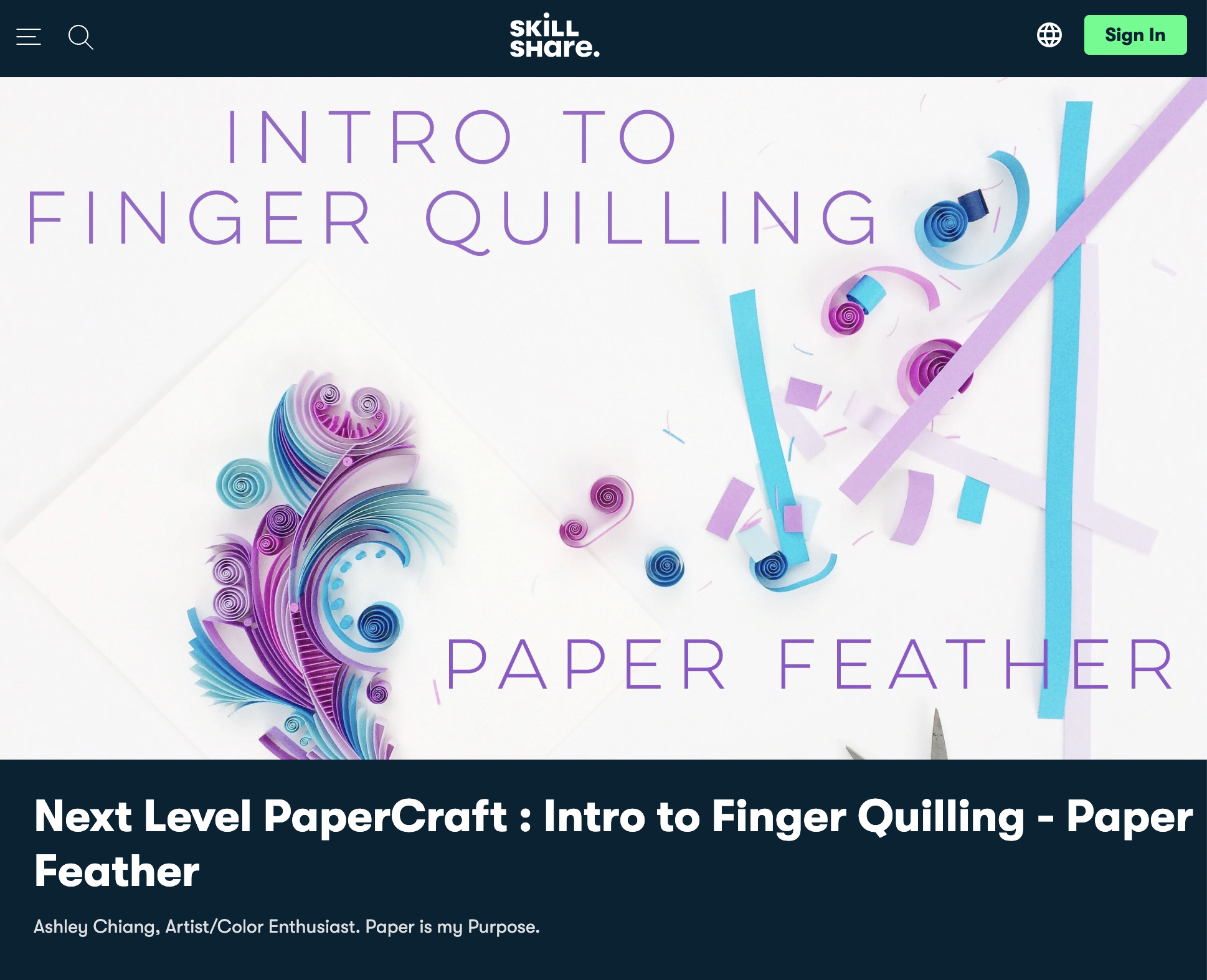
9. Next Level PaperCraft: Intro to Finger Quilling: Ashley Chiang

The craft is the same as the name defines it. Quilling means folding and rolling paper to make different designs and patterns. The true origin of the quilling is unknown; it dates back to when the paper was invented in China or around 300-400 AD when Silver and gold threads were designed in this pattern. Since then, quilling has been bestowed with love and affection from all corners. This papercraft can be used to create masterpieces and can add uniqueness to all its elements. In her free course, Colo Alonso teaches the techniques and tricks with utmost precision. And Ashley Chiang teaches next-level quilling hacks in her online class.

Next Level PaperCraft Intro to Finger Quilling

10. Candle Making: Scent Your Way to Paradise: John Norman

To bring more aesthetic and elegant appeal to your home and living space, the best option to be added is Candles. They illuminate the entire space making it livelier and warmer. I know what you all are thinking when there are tons of candles, and not just plain candles but aromatic candles available in the market; why will one take all the pains to make them at home? But imagine a candle that represents the fragrance of your home, the aroma that calls out to you and defines your home or just your personality, and, most importantly, has your personal touch to it. For these reasons, you will make candles at home, or you can even start your own small business selling customized candles. Like I always say, the world is your blank canvas. So take the hint and begin your bright journey with John Norman’s candle-making free online course.

Candle Making

11. Understanding Tone In Watercolour Painting: Arie Swanepoel

Everyone can paint in their exceptional style. I love painting and especially enjoy watching small reels of painting. But just a few months back, I learned that there are so many types of watercolors. Apart from tubes and bottles, there are watercolor pencils, markers, sheets, and whatnot. This revelation led to in-depth watercolor research, which led to color mixing techniques and then learning about undertones and strokes, finally realizing this is not my cup of tea. I am happy with using basic acrylic colors and creating a mind-boggling painting. If this information intrigues you even a little bit or makes you want to learn all the technicalities of painting and mixing, I have the perfect online courses for you. Arie Swanepoel’s online class on understanding tones and watercolors, Erika Lancaster’s everything about colors, and Ana Victoria Calderon’s paint mixing online classes are a must.

Understanding Tone In Watercolour Painting

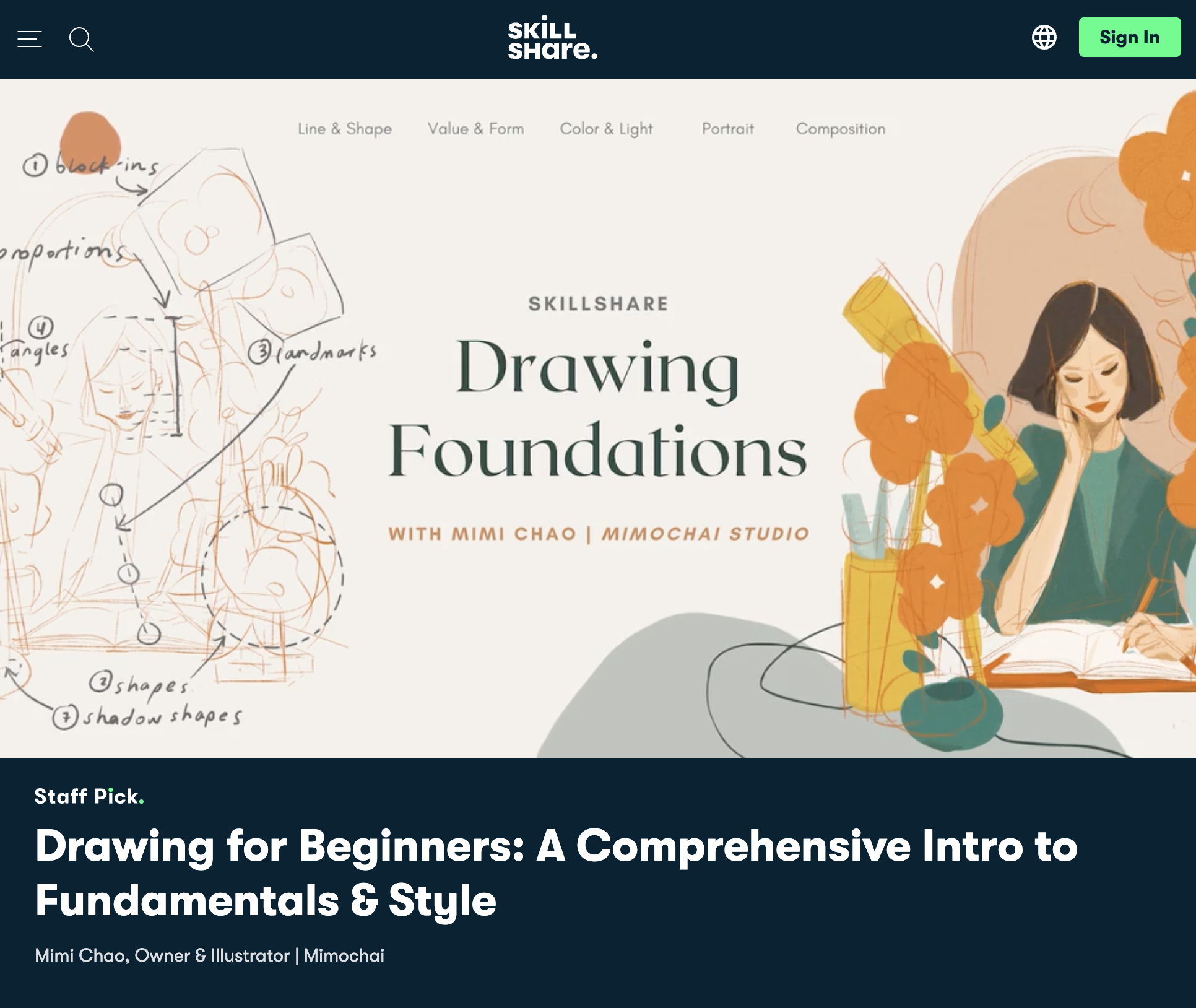
12. Drawing for Beginners: A Comprehensive Intro to Fundamentals & Style: Mini Chao

Before we paint anything, we need to draw; obviously, we are all artists. Yes, I am a superb artist; the other day, my niece asked me to draw a doll for her, and after I finished, she complimented my drawing skills by saying, “this is the most hideous-looking doll; it looks like she is ready for Halloween.” Ouch! I know kids can break your heart in pieces, but mine was only broken into a few pieces, which got glued back together after I drew an even more hideous-looking doll with utmost dedication and joy. Nothing will stop me from doing what I like even if I don’t know its ABC…. With this same dedication, I need you all to follow what your heart desires, and if your heart desires to sketch and draw, look no further Mini Chao’s online course on the fundamentals of sketching is a perfect fit for all, beginning with paper art, and Brent Eviston’s free online class will take your skill up a notch.

Drawing for Beginners

13. Mastering Illustration: Sketching, Inking & Color Essentials: Josiah Brooks

Being on the same page with drawing and painting. The next creative aspect is an illustration. An illustration is any sketch or drawing clearly explaining an idea or thought without any textual information. Seeing an illustration, one should be able to tell the story conveyed through it. There are different styles of illustration like editorial illustration, advertising illustration, fashion illustration, digital illustration, infographics, and the list goes on. Those artists interested in this form of drawing and sketching can learn from the free online course offered by Josiah Brooks.

Mastering Illustration

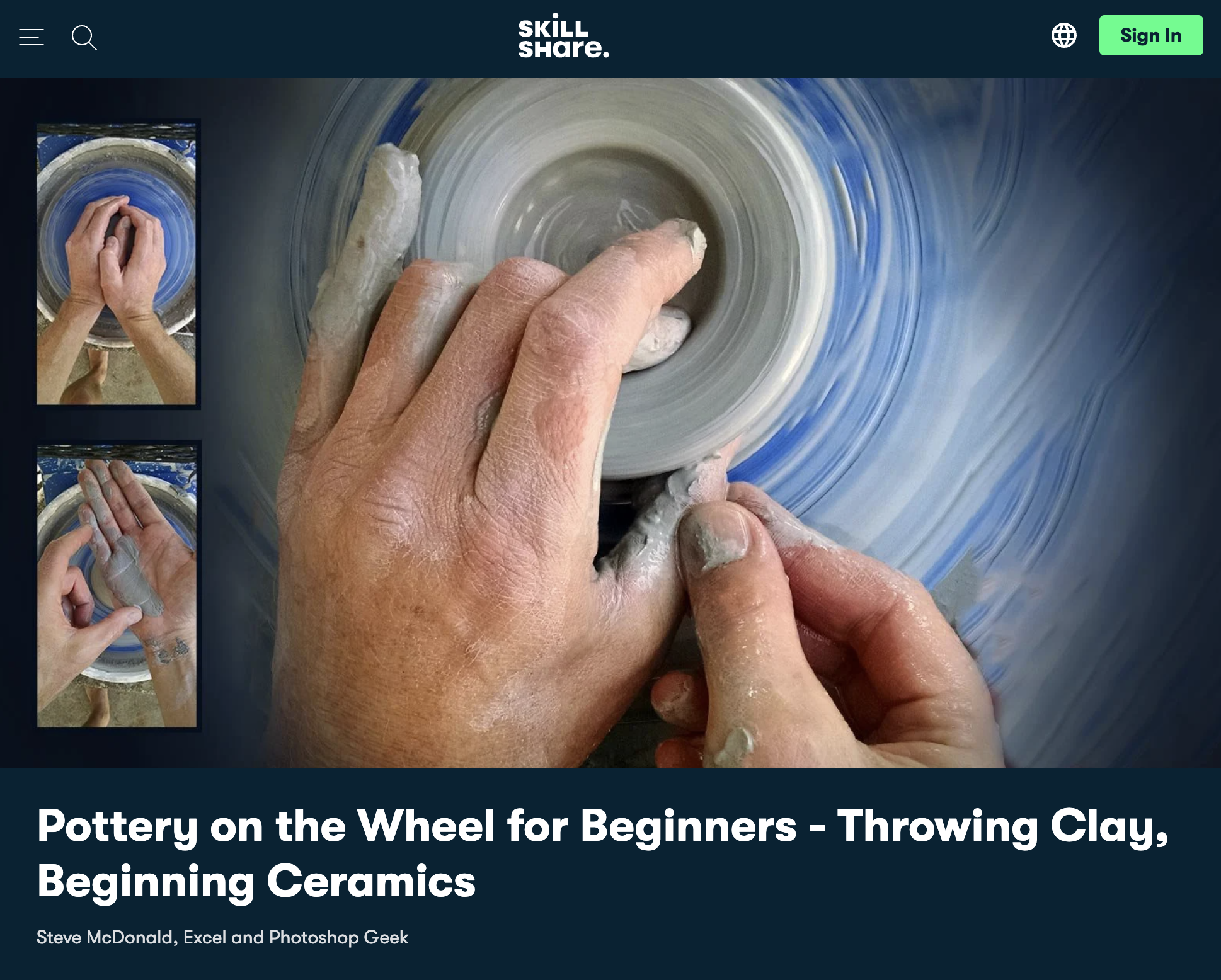
14. Pottery on the Wheel for Beginners: Steve McDonald

Pottery art dates back decades and is still relevant today in all its charm and glory. There are so many people out there who have geared up their studios and started a small pottery businesses. You can get creative with making pottery to your heart’s content. But getting hold of its basics demands a lot of patience and perseverance. If you have it, you must flaunt it with all our pottery-making. You need a small setup, and you are good to go. Steve McDonald’s online craft class is about ceramics and pottery for those just starting with this idea.

Pottery on the Wheel for Beginners

Conclusion

This brings us to the end of my listicles on being creative in the most creative way. You can make your list of art and craft classes. All the crafts listed above can be practiced in the comfort of your home.

Some might need an extra setup, but this small effort can lead to starting your own small business and give you the title of Entrepreneur, FANCY, I know! So, before I take my final leave, a small word of motivation for all, “Art is not a handicraft; it is the transmission of feeling that the artist has experienced” by Leo Tolstoy.

Art is not just about creating; it is about expressing yourself and shaping your feelings and mental set. It is not just the tools that help you define the form; adding that personal touch brings out the true artisan in you. You deliver in your art what your heart desires.

Your art is your true reflection. So never be afraid to practice the art or to make a craft by calling yourself ordinary because the most ordinary person makes the art. So start with your paper and pen to make your art and craft by learning from these best and free online courses.

Free tutoring programs will tackle COVID learning loss, prioritize early grades in N.J.

As New Jersey universities reckon with one more yr impacted by the world-wide pandemic, a sequence of new plans the state announced Friday will handle COVID-19-linked finding out decline.

The “High Effect Tutoring” system, which the condition has started to request distributors for, will prioritize 3rd and fourth grades. 1-on-a person or little group periods will be held at minimum twice a week for as a lot of as 10 months when the application launches, the New Jersey Section of Education mentioned Friday.

Two other plans, Studying Acceleration Skilled Integrated Progress (Speedy) and “RAPID-Plus,” will offer instruction and other progress possibilities for educators.

The tutoring and expert advancement courses will be welcome in Camden, among the the state’s approximately 600 community school districts, where by about 6,800 college students discover — most of whom are Black and Hispanic, officers there stated.

“There is an component, specifically for the younger grades, of time that demands to be made up,” Keith Benson, the teacher’s union president in Camden, claimed Sunday.

“I consider all college students can use some kind of extra aid,” he added, “but specially in the decrease grades.” Tutoring throughout the school working day “can be possibly transformational.”

In accordance to a November 2021 report from Boston-primarily based education and learning analysis agency, Curriculum Associates, extra pupils had been two or more quality levels at the rear of, when compared to before the pandemic begun.

The state Section of Education and learning reported faculty districts will be in a position to use to be reimbursed from a pot of at least $17 million in federal income from the Governor’s Crisis Education Reduction Fund.

An additional $2 million from the state’s fiscal yr 2023 finances will fund the Immediate program. And about $3.7 million in federal Elementary and Secondary College Unexpected emergency Relief cash will also help both the Rapid and Fast-Furthermore applications. Speedy-Moreover will explore how faculties and universities may perhaps be in a position to coach instructors in strengthening literacy for fourth and fifth graders.

“The educational difficulties going through New Jersey college students replicate all those confronted by students during the nation as a end result of the worries posed by the COVID-19 pandemic,” Angelica Allen-McMillan, acting commissioner of education, claimed in a assertion Friday. “These Large Impact Tutoring and Fast educator training packages are tactics that will accelerate our students’ mastering and assistance them reach bigger academic success as we move forward.”

To find out additional about the packages click right here.

Our journalism wants your guidance. Remember to subscribe now to NJ.com.

Steven Rodas might be achieved at srodas@njadvancemedia.com. Adhere to him on Twitter @stevenrodasnj.

Importance of action research in teacher education programs

Motion analysis can help teachers to place the concentration of their exploration on area wants and reality. Here’s all you require to know from the qualified.

Importance of action research in teacher education programs

Value of action investigation in teacher education and learning plans

By India Today Education and learning Desk: Questioning the unquestionable has under no circumstances been a sleek experience. In the modern day world of disruption and ongoing transition, academics are anticipated to analyse existing academic units with the intention of increasing the top quality of educating-understanding methods connected to them.

  • Each classroom is unique. Investigation (as a course of action of understanding developing) evokes private growth and development in persons and teams. In most of the scenarios a trainer gets restricted alternatives to interact in critically reflective pursuits about their training-studying techniques.
  • In an significantly complex and tech-pushed innovation, there is a developing need to have for lecturers to go as a result of action analysis projects which can immensely assist them in reflecting and reorienting on their existing techniques.

The time period “action research” was coined by Kurt Lewin in 1944 to describe the process of investigation and enquiry that happens as action is taken to address a problem. Nowadays we use the time period to describe a follow of reflective enquiry undertaken with the purpose of strengthening being familiar with and apply.

Evidence appears to point out that if aspiring academics are not released to study jobs in the course of their preliminary instructor schooling, it receives challenging for them to obtain research abilities in the course of their purpose as classroom teachers.

In his reserve – The Resources of a Science of Education and learning- renowned educationist John Dewey has argued that a single of the most crucial roles of a teacher should really be to look into pedagogical challenges via inquiry. He additional provides that investigate is a cardinal tenet of helpful instructing. Terrific Indian Instructional Thinker J Krishnamurti also thought in marketing study-dependent knowledge of learners’ conduct and evidence-based mostly answer to their studying requirements.

Great importance of motion investigation in teacher schooling packages

Much more than at any time, in the existing occasions, it will be critical to focus on strengthening the fabric of our training program in purchase to realize expected discovering outcomes— especially by an increased emphasis on knowledge-pushed selection-earning.

We have noticed a renewed thrust on distinct forms of information that are essential to boost outcomes, this sort of as serious-time overall performance knowledge, which enable instructors to study course-change to the wants of learners and to sufficiently assistance their educational journeys. Additionally, higher-high-quality software cost data are desired for selection makers to strategy, price range and choose the most charge-helpful interventions.

Globally, there is developing thrust for integrating action exploration in trainer enhancement packages. Finnish instructor educators’ analysis knowledge allows them to build a handy nexus among research & their educating observe and encourage investigation-primarily based trainer training. They use the learnings and competencies acquired from study in classroom teaching and in making crucial choices.

Extra than 60{af0afab2a7197b4b77fcd3bf971aba285b2cb7aa14e17a071e3a1bf5ccadd6db} Australian instructors have interaction in some type of motion investigate. Considering that the introduction of Understanding Circles, action study has grown to come to be relatively ubiquitous in Faculties of Singapore. United kingdom introduced ‘think-do-feel-do’ system in educational facilities to encourage action investigation. Germany is engaging with massive range of instructors with their ‘action investigate community’ plan.

In India much too, National Schooling Coverage (NEP) has emphasised on the subsequent points:

  • Advertising and marketing investigation-pushed teacher education.
  • Highlighting motion study as an powerful exercise to produce reflective training-understanding procedures
  • Improving instructional procedures
  • Creating contextualised assessment programs

Some of the important spots of action investigate could be:

  • Pedagogical Innovation
  • Technologies Integration
  • Pupil Engagement & Assessments
  • Integrating Vocational Training
  • Strengthening Finding out Results.

When we speak about preparing college students for a VUCA entire world, integration of rising techniques like techniques wondering, collective intelligence, empathetic learning, style pondering, experiential prototyping etc., it is even much more important to adapt analysis-dependent understanding alternatives to establish ‘futuristic’ training methods.

Authored by Shiv Shukla, Advisor, Academic Council, Saamarthya Teachers Coaching Academy of Study (STTAR)

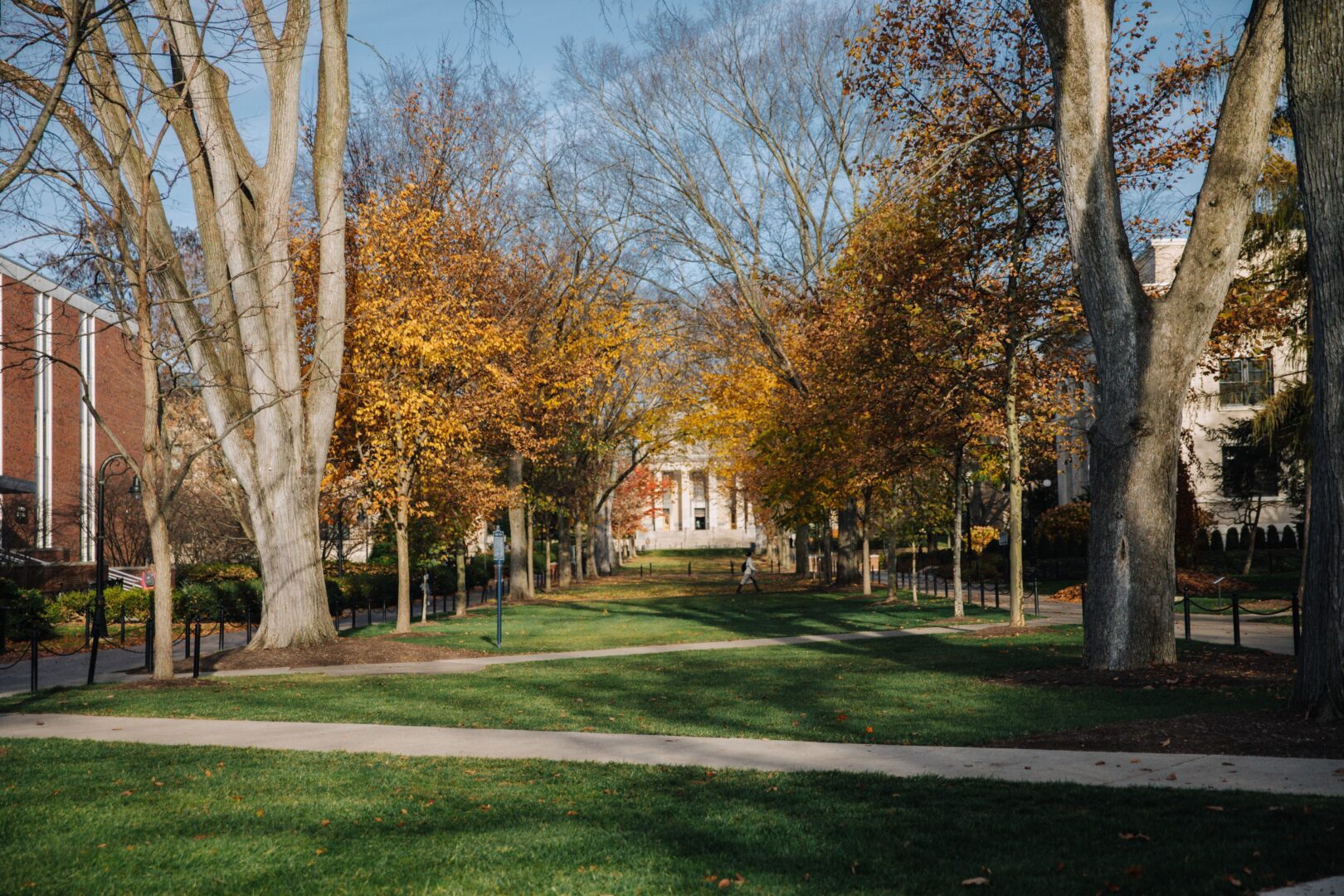
Penn State English teaching faculty say they aren’t paid a living wage


President Bendapudi pledged to address it, but the university already broke a promise to deliver merit-based raises.


  • Wyatt Massey/SpotlightPA

Penn State English teaching faculty say they aren’t paid a living wage

 Georgianna Sutherland / For Spotlight PA

President Bendapudi pledged to address the pay of Penn State English teaching faculty, but the university already broke a promise to deliver merit-based raises.

This story first appeared in The Investigator, a weekly newsletter by Spotlight PA featuring the best investigative and accountability journalism from across Pennsylvania. Sign up for free here.

A group of faculty in Penn State’s Department of English allege that they are not paid a living wage, and that they are the lowest-paid teaching unit at the university.

The group comprises faculty who do not have tenure — a permanent appointment to the school staff — and who are not eligible for it. At Penn State, these non-tenure-line employees are called teaching faculty.

Salary data collected by faculty in the department, and shared with Spotlight PA, suggest lecturers are annually paid around $35,000, assistant teaching professors earn about $38,500, and associate teaching professors make around $42,500.

The living wage for a single adult without children in State College is $37,545, according to The Massachusetts Institute of Technology. For a single adult with a child, the needed annual income jumps to $70,989.

“What you’re looking at is a university actively hacking its own legs off by exploiting its own workers,” Brendan Prawdzik, an assistant teaching professor, told Spotlight PA.

Prawdzik, who has Type 1 diabetes, took out a small loan in early 2022 to cover medical expenses, he said. Then, in January, prices of two of his prescriptions totaled about $340, but he said he could only afford one at the time and spread the cost across two paychecks.

Prawdzik — and four other faculty members interviewed by Spotlight PA — pointed out that nearly all Penn State students are required to take two English courses, which are mostly taught by teaching faculty.

Wyatt DuBois, director of university public relations, said in an email the university has worked for years to “address salary inequities in the department.”

“The College of the Liberal Arts and the provost are actively working together to find a solution that aligns with the financial goals of the university while addressing concerns about the compensation levels of non-tenure-line faculty in the Department of English,” DuBois said.

As part of the university’s two-phase salary adjustment plan, Penn State raised salaries for English teaching faculty at each rank by $3,000 in January 2022, according to faculty.

However, Penn State scrapped the second phase, merit-based raises, because of “financial challenges facing the university,” DuBois said.

The English faculty’s claims that the department is the lowest paid at the university, and the salary information they provided, are difficult to verify.

Penn State declined to provide salary ranges, or average salaries, for teaching faculty at the various ranks within the English department. Spotlight PA then shared the salary data faculty provided to offer the university a chance to comment or clarify. The university declined.

“We have nothing further to add,” DuBois said in an email.

Internal Penn State data shared with Spotlight PA suggest English department teaching faculty salaries are among the lowest in the College of the Liberal Arts. The data, available only to those with a university login, are specific only to the level of a college, not individual departments. Penn State’s special status as a “state-related” university shields it from having to release specific salary data, unlike most other public universities.

Under Penn State’s new budget model, the College of the Liberal Arts is supposed to receive a 4{af0afab2a7197b4b77fcd3bf971aba285b2cb7aa14e17a071e3a1bf5ccadd6db} budget increase in fiscal year 2024. Penn State leaders have said no unit’s budget will increase by more than 4.6{af0afab2a7197b4b77fcd3bf971aba285b2cb7aa14e17a071e3a1bf5ccadd6db} or decrease by more than 4{af0afab2a7197b4b77fcd3bf971aba285b2cb7aa14e17a071e3a1bf5ccadd6db} each year.

Penn State declined a Spotlight PA request to speak with someone at the university about the new budget model and how it could affect individual departments.

Sharon Myers, an assistant teaching professor of English, told Spotlight PA she teaches about 175 students a year and grades thousands of pages of student work. Many English teaching faculty at Penn State are on one-year contracts and often teach six or seven courses a year.

Myers said the pay and workload has led to a retention issue. She knows people who have left Penn State because other schools will pay more and require fewer courses. The $3,000 adjustment raised the salary floors, causing some new or recent hires to be paid salaries comparable to others in the department with years more experience, she said.

In December 2019, members of the teaching faculty appealed to the dean of the College of the Liberal Arts for a raise. In a letter shared with Spotlight PA, faculty recommended, among other things, a minimum salary of $56,000 for a seven-course load. The group argued Penn State has the lowest, or near the lowest, pay for non-tenure English faculty in the Big Ten.

Salary data Penn State shared with the federal Integrated Postsecondary Education Data System for the 2021-22 academic year show that Penn State faculty across all departments make less on average than Big Ten peers at all academic ranks.

Faculty who spoke with Spotlight PA said they were discouraged that the university broke its promises to improve pay, such as giving merit-based raises.

During a Jan. 24 meeting of Penn State’s Faculty Senate, Prawdzik questioned university President Neeli Bendapudi about the situation.

“I know that we will not be able to solve it overnight,” Bendapudi responded. “But if we are to truly be the place that everybody wants to come, we must address that.”


Distance education continues upward trend among regent institutions

The state Board of Regents produced the drop 2022 Distance Schooling Report, highlighting improves in course sections and enrollment for distance schooling at the UI. &#13


Length training programs at the College of Iowa continue to pattern upward, consistent with data from the past five yrs at Iowa’s general public establishments, in accordance to the drop 2022 Distance Education Report.

Across Iowa’s community establishments over the previous five many years, there’s been an 11.5 p.c improve in the range of packages with credit history presented — a 38.1 {af0afab2a7197b4b77fcd3bf971aba285b2cb7aa14e17a071e3a1bf5ccadd6db} increase in system sections of credit rating giving courses, and a 70.2 p.c maximize in the selection of scholar enrollments for credit rating presenting courses.

When introducing new length instruction courses, schools and departments at the UI appraise require and demand just before heading by way of the college and state Board of Regents plan approval procedure.

Dennis Jordan, a UI adjunct school member, teaches entrepreneurial advertising and company consulting as a result of the John Pappajohn Entrepreneurial Heart online.

“For both classes, we have a when-a-7 days get-together in the evening, and it is around Zoom,” Jordan mentioned. “There’s assignments in advance the place pupils are asked to examine information, and then throughout the classes, we deal with combination product then have broader conversations on the subjects for the week,” he mentioned.

At the UI, the 2021-22 tutorial year saw a 4.12 p.c raise in undergraduate distance mastering classes and a 13.2 per cent enhance in the number of graduate-stage length learning programs.

Jordan stated length schooling provides comfort for college students.

“The students don’t have to journey to a classroom and be there in human being per se. That also enables college students that are maybe in the Iowa City spot to take part,” Jordan reported. “So in the earlier, I’ve experienced learners that stay in Chicago or other components of the nation zoom in for the course, so which is easy for them.”

The 2020-21 educational 12 months had a substantial boost in length training mainly because of pandemic response attempts, the report said. But 2021-22 quantities, while lesser, are even now pursuing the development.

Chris Brewer, UI communications director, wrote in an e mail to The Day-to-day Iowan that the university proceeds to see modest development in its length and on the internet education and learning programs.

“The University of Iowa’s length and on-line education and learning packages supply pupils with the flexibility and obtain they want to obtain their academic ambitions,” Brewer wrote. “This adaptability allows them to proceed dwelling and doing the job in their home communities throughout Iowa while furthering their training.”

A most important area of expansion for distance instruction is at the graduate amount in brief-time period certificates, non-credit choices, and professional master’s degrees.

At the UI, the 2021-22 academic calendar year enrolled 46,703 students for net-primarily based undergraduate semester-primarily based classes and 12,582 enrollments for web-primarily based graduate semester-dependent courses.

The dissimilarities between undergraduate and graduate enrollment differed for on-website distance programs.

Associated: ‘Snow days’ gone as professors utilize Zoom for terrible temperature

In the very same 2021-22 tutorial calendar year interval, the UI noticed 308 undergraduate enrollments and 1,339 graduate enrollments for on-web page — at prolonged campus places these as Des Moines, Cedar Rapids, and Sioux Town — instruction.

Jordan stated length schooling is easy for him as an teacher simply because he has a comprehensive-time occupation in Cedar Rapids. Even so, length instruction also has the challenge of getting learners and college engaged to the degree they would be in an in-human being placing.

To advertise engagement, Jordan claimed, he reminds college students that they elected to get the on the web system.

“So, this is their investment decision, and they will get out of it what they put into it,” Jordan explained. “So, I imagine it is only truthful to say that,” he mentioned.

In addition to reminding learners of their preference, Jordan mentioned he places added effort to make the system participating for learners.

“I try to arrive well prepared with fantastic topics of discussion. Try to continue to keep it lively. I really don’t do a whole lot of estimate-unquote ‘lecturing’ for the reason that I consider it is uncomplicated to variety of tune that out,” Jordan reported, “I assume in some cases possessing group breakout periods the place you set students in rooms makes it possible for them to have some more compact group discussions.”

Regardless of the conveniences of distance discovering, Jordan stated it is a various experience than finding out in a classroom.

“I believe I’m a greater teacher encounter-to-confront, and I imagine most instructors will explain to you the exact detail. And most learners will almost certainly explain to you that their mastering knowledge in several conditions is better in man or woman than it is on the net. But at the same time, acquiring the online option when essential or as necessary is seriously handy,” Jordan reported.

Jordan emphasised the detriment of Zoom to the character of the programs he teaches, highlighting that constructing associations will not occur on a Zoom call.

“I would loathe for individuals to assume that if you’re at any time all set to create a consumer foundation that you can simply depend on tools such as Zoom as a suggests of truly participating in significant ways,” he stated.