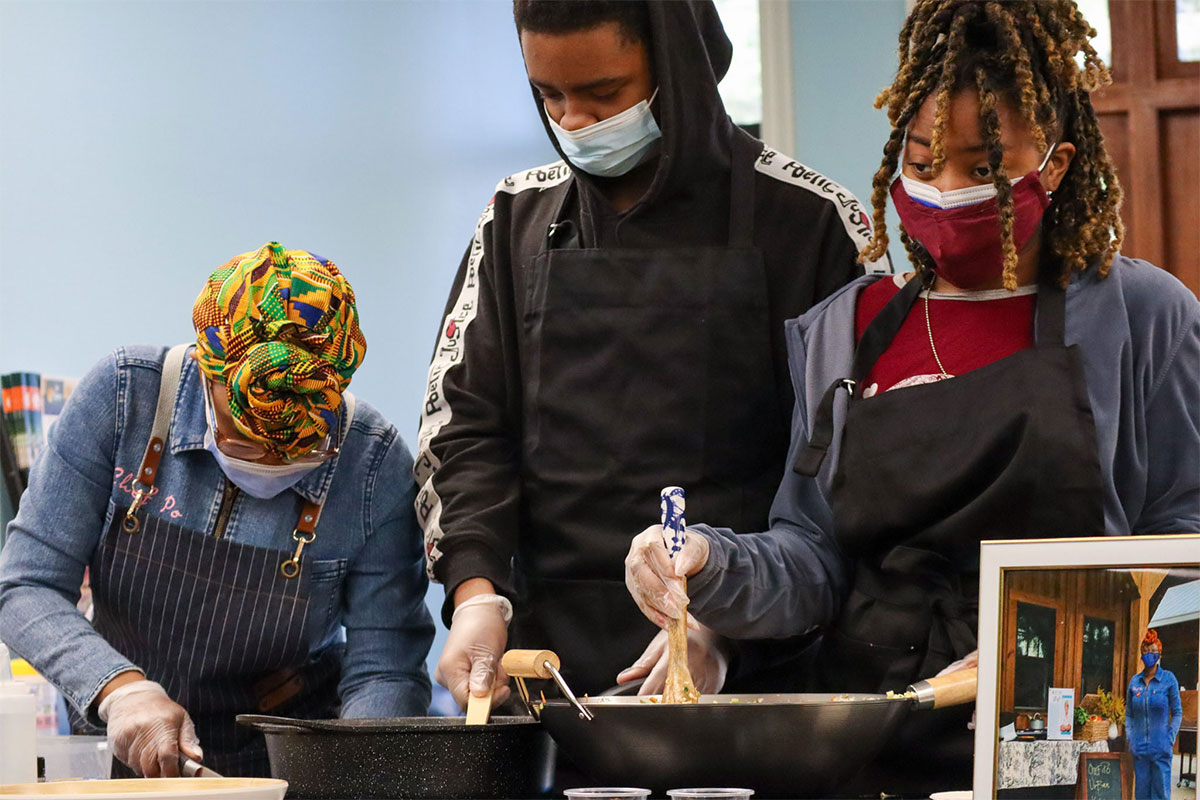
Education Programs Target Social Challenges in Mississippi

RIDGELAND, Miss.—A small group of seventh-grade boys in blue T-shirts sat on the floor in a spacious classroom at the Scientific Research facility in Ridgeland, Miss., focused on the small screws that attached a rolling track to a gear that would allow Team SCARLET’s robot to move. Piles of gears, wheels, metal rods, nuts, bolts, screws, and miscellaneous robot components of every description filled plastic buckets, boxes and bins.

Nearby, three older girls—all veteran robotics competitors—readied the parts for the cherry-picker crane that would sit atop their robot. Together, they were preparing for the 2021 First Tech Challenge. Judges for the annual robotics contest examine the design, construction and problem-solving skills of simple robots based on an annual theme. Criteria include overall size of the robot, its functionality and what obstacles it must overcome.

Kia Graham, an electrical engineer from New Orleans who commutes to Jackson each week, oversees and leads Team SCARLET. The name is an acronym that stands for “Science Creations Are Real, Let’s Evolve Together.”

“My job is to teach basic engineering concepts like soldering, coding and assembling gears so that our team of budding engineers can build a robot,” Graham told the Mississippi Free Press.
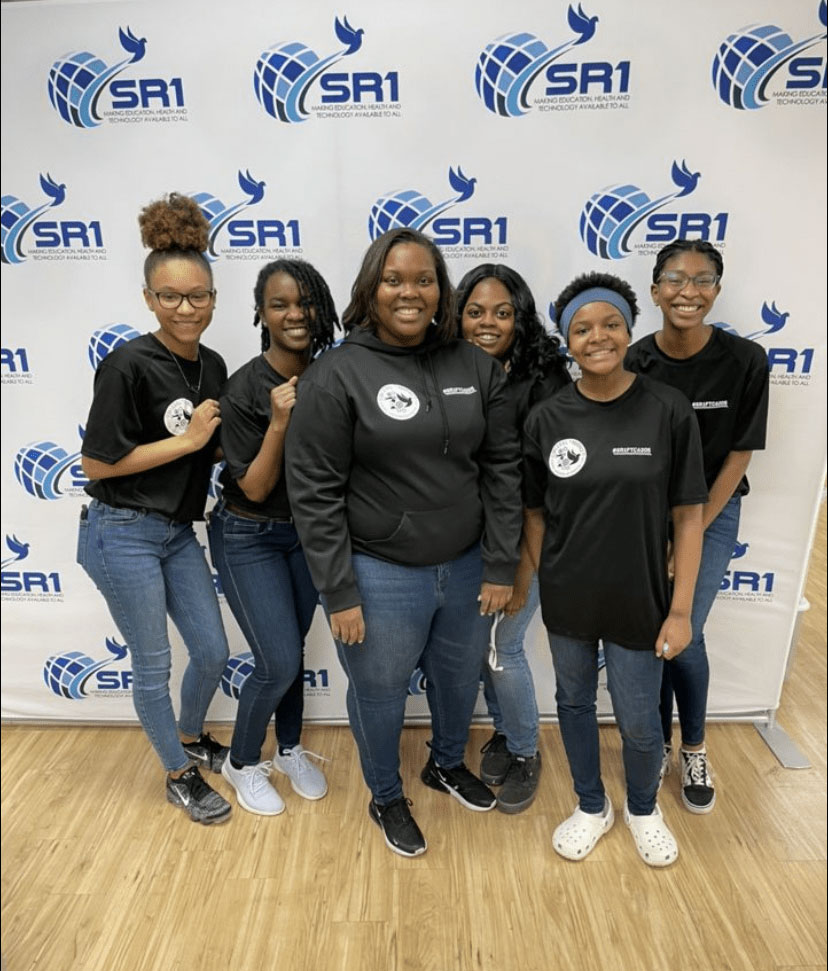
Six members of the SR1 Robotics Team in matching black shirts
Students who participate in SR1’s Team SCARLET program design and build complex machines that they enter into annual robotics competitions. Photo by Arin Inge and Kia Graham, SR1

Team SCARLET contains between six and eight students from SR1. Its size and composition change annually depending on interest and on how many students have graduated to create vacancies.

“We had an all-girls team a few years back,” said Graham, who has been volunteering at SR1 for over a decade. “(Nowadays), we have younger boys with a few older girls helping them along, which is a really interesting dynamic.”

“The theme (for 2021 was) freight frenzy,” she added. “Each team (had) to build a robot no bigger than 18 inches that can move on its own, pick up boxes, manage an obstacle course and then deposit those boxes into a dome at the other end of the field.”
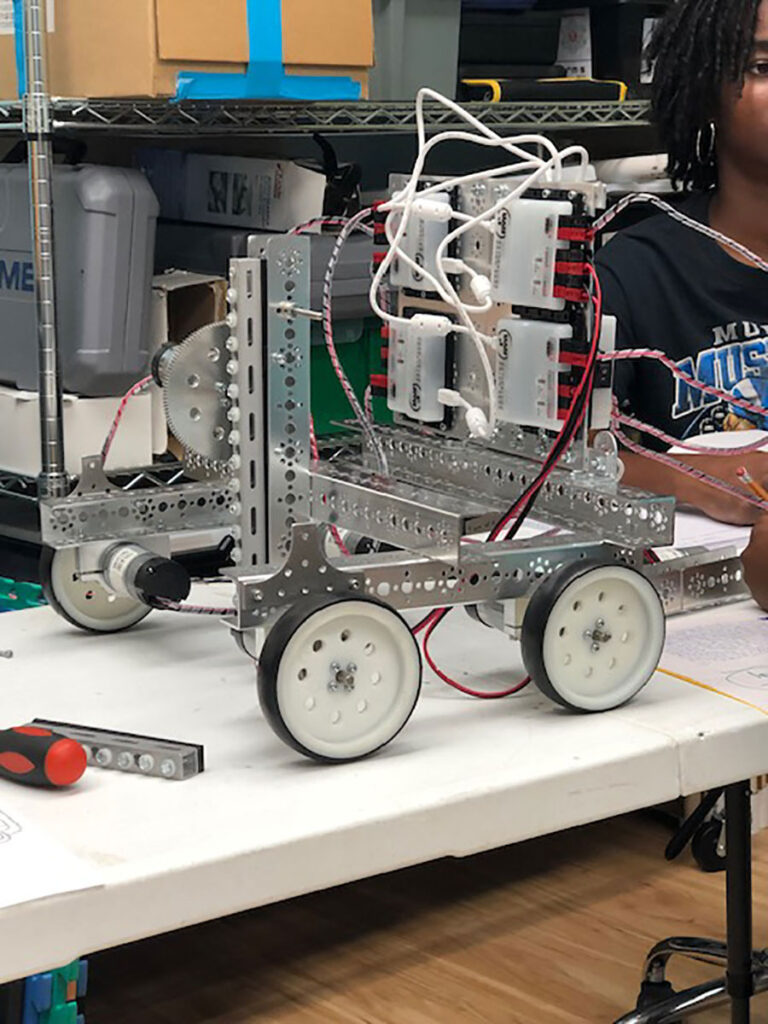
Robotic sitting on a table
Team SCARLET, a group of students who build robots with SR1 guidance, competes in First Tech Challenge each year, in which the machines participants engineer must meet requirements matching that year’s theme and other criteria. Photo by Arin Inge and Kia Graham, SR1

Team SCARLET, whose members were dressed in matching black T-shirts and scarlet-red baseball caps, planned a bot that would use military-style treads encasing six wheels and a crane (the “cherry picker”) on top to handle cargo. “We (had) two minutes to move as many boxes as possible,” Graham explained.

Despite careful coding, the cherry picker’s claw was off by 2 inches. Team SCARLET rushed to repair the error before the competition began, but a competitor team’s robot ultimately managed to move more boxes in the allotted time. Despite the loss, the students walked away with valuable lessons: teamwork, accepting loss gracefully, and hunting down problems and fixing them for another try. “We call that build, test, repeat,” Graham said with a laugh.

Challenges like this one prepare students to become good engineers. SR1’s programs help students form cooperative bonds and develop skills that assist them in competitions such as FTC and prepare them for other STEM fields they may pursue in science, technology, engineering or mathematics.

“Everything around you has been designed by or looked at by an engineer,” Graham explained. “Take the chair you’re sitting on; you trust it will hold you because an engineer designed it that way. Same with your phone, your car, even roads and bridges. Engineers solve the world’s problems using math and science.”

Seeing A Need, Facilitating A Solution

Forest, Miss., native Tamu Green founded SR1 in 2005 because he believes that STEM disciplines are critical to compete in the global economy, and he wanted to provide opportunities for those from his home state. The nonprofit, incorporated in 2007, strives to eliminate disparities in education, health, and technology through science, technology and partnerships.

“The place where you grow up you should help first,” Green told the Jackson Free Press in 2011. “It will take a whole crusade to turn this ship around, but you have to start somewhere.”

Green graduated from Mississippi State University in 1993 with a bachelor’s degree in information systems and in 1994 with an MBA.

“I was a tech guy, computers and business. I am an engineer at heart, I think,” the CEO told the Mississippi Free Press. “I am always trying to figure out how to fix things.”
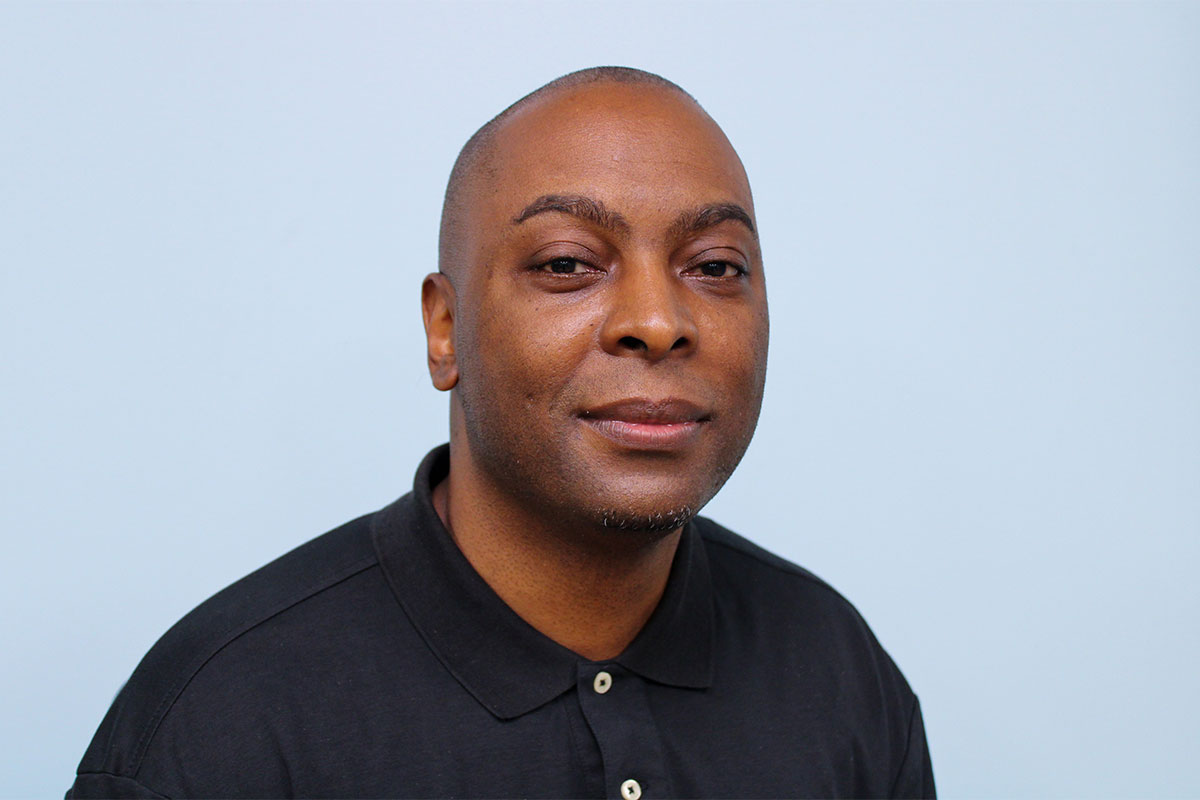
Headshot of Tamu Green
Noticing a link between education and economic disparity in his community, Forest, Miss., native Tamu Green founded SR1 in 2005 to provide opportunities for young people to enrich their educational journeys through a hands-on learning approach. Photo by Arin Inge and Kia Graham, SR1

Eleven years in state government keeping records of vital statistics on illnesses like HIV and various forms of cancer helped Green identify another piece of the puzzle. “I saw the economic statistics for Black Mississippians were much worse than for other social groups,” he explained.

Economic disparity led to educational disparity in his community, Green determined, and he wanted to be part of the solution.

“I saw that something simple, like having access to information, was very important early in a child’s education,” he said. “Missing that one key piece, a computer, meant that some kids were behind from day one.”

Under the umbrella of SR1, Green formed a team of dedicated and passionate leaders to help realize his mission, he said. Approximately 300 students and families in Hinds, Madison, Scott, Rankin, Leake, Smith and Neshoba counties participate annually in the many programs the nonprofit offers.

Most of the projects have a STEM foundation and fall under the C.O.O.L. umbrella, which stands for Community Oriented Opportunities for Learning. Green says they are evidenced-based, innovative and data-driven. The six overarching program areas, which focus on sustainable solutions, are academic and innovation, civic literacy, family and relationships, life and career skills, healthy lifestyles, and outdoor and recreation.
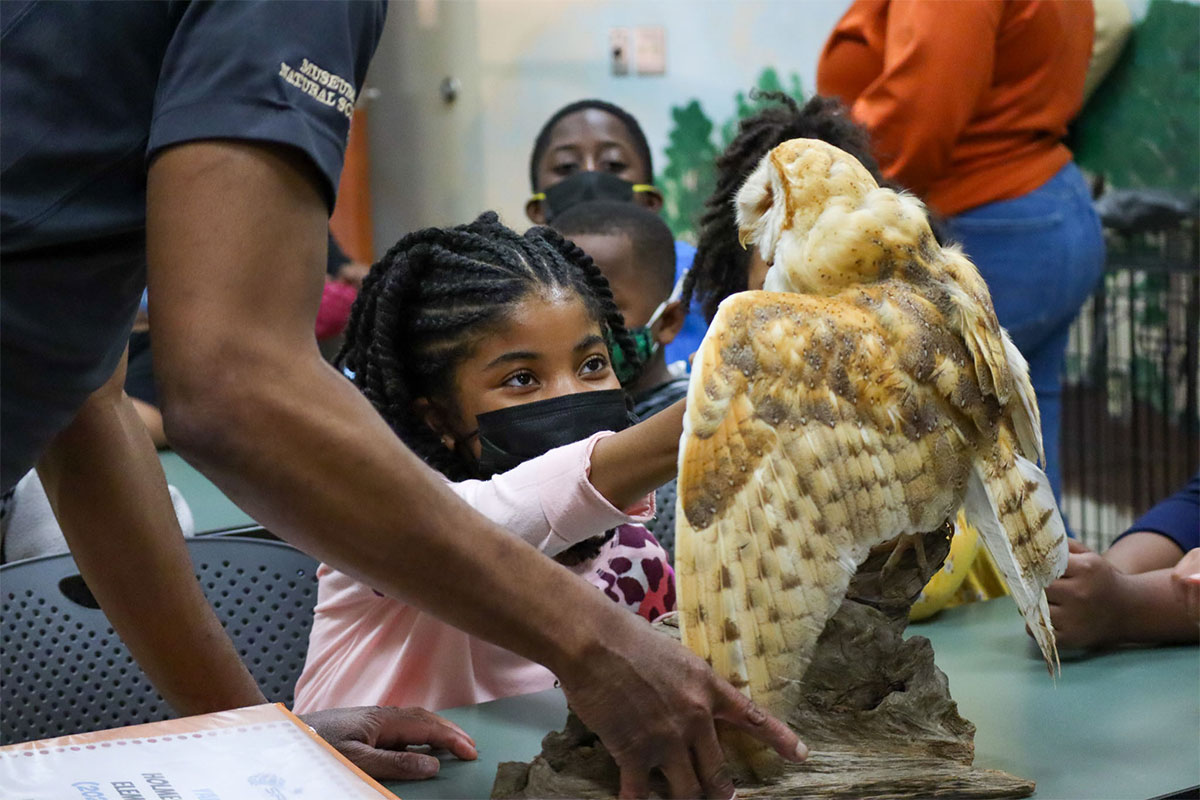
COOL Ed visits the Museum of Natural Science
SR1 markets its programs under the C.O.O.L. banner, which stands for “Community Oriented Opportunities for Learning.” These programs include after-school classes, cooking demonstrations, field trips to the Mississippi Museum of Natural Science (as depicted) and more. Photo by Arin Inge and Kia Graham, SR1

Each program area targets a different social challenge. For example, the family and relationships program area contains teen-pregnancy prevention classes called C.O.O.L. Healthy that educate students about health, goal setting, consent and building healthy relationships. Relationship Smarts PLUS 4.0 is geared toward middle-school students (grades five through eight), and Love Notes is geared toward high-school teens (grades nine through 12), including teenage parents and students who have dropped out.

Within the academic and innovation program area are several school-based projects such as C.O.O.L. Forest, C.O.O.L. Jackson and C.O.O.L. Literacy, each allowing children to receive individual help to build better reading comprehension and improved writing skills. SR1 also holds after-school classes, field trips to the Mississippi Museum of Natural Science to visit the animals and fresh-food cooking demonstrations from professional chefs.

C.O.O.L. Talks, Bite-Sized Education Tools

In early 2020, SR1 added a new project under its civic-literacy program area: C.O.O.L. Talks. The nonprofit posts the educational interview series on its new YouTube media channel, C.O.O.L Media Network. A learning tool both for students and adults, the series features firsthand accounts of historic events, as well as information and educational resources for students and parents.

“C.O.O.L. Talks are usually 15 to 30 minutes,” SR1 Videographer and Video Producer Arin Inge said. “Our primary target audience is grown-ups, but we also write for younger children, so everyone can learn something new.” SR1 worked with the Mississippi Department of Archives and History for archival footage.
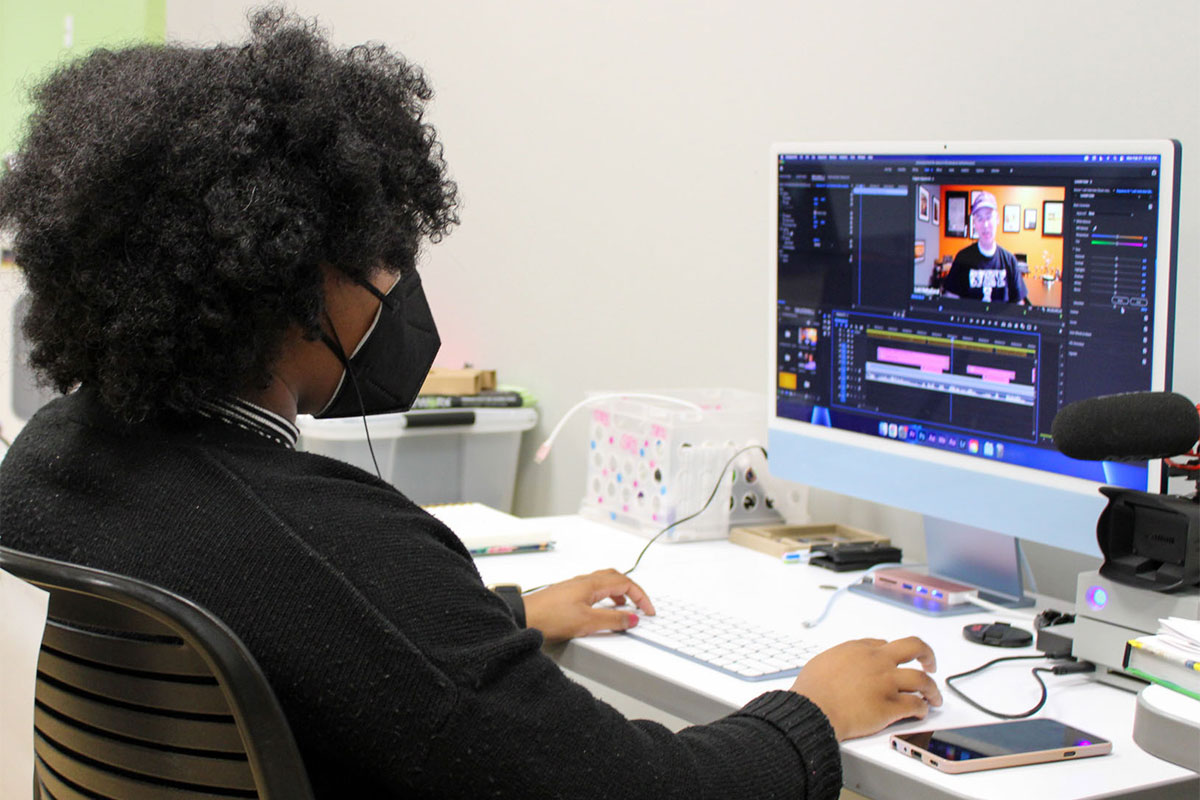
COOL Talks with a teen editing video on a computer
SR1’s C.O.O.L. Talks video series, designed for both adults and children, features interviews with experts on various academic topics and provides information on educational resources for students and parents. Here, Arin Inge sits at her desk editing an episode before publication. Photo by Angela Evans, SR1

The first episode debuted last year and focused on the life of Joan Trumpauer Mulholland, a white civil-rights activist and Tougaloo College graduate who endured unabashed hatred during the Civil Rights Movement.

SR1 also encourages civic literacy by observing national days of service such as Giving Tuesday and Make A Difference Day, introducing its participants to the concepts of altruism and philanthropy.

Combating Food Scarcity, Small-Scale Farming

The latest branch on the SR1 tree is an organic-farming project that the U.S. Department of Agriculture sponsored through a grant to help socially disadvantaged people develop organic farms. The C.O.O.L. Farming project is designed to educate and train 70 farmers to plan, launch and sustain independent organic farm businesses.

“We’re doing research and development and in-the-field testing on methods including “no till” and new ways to conserve the soil,” Jasmine Hendrix, a Mississippi State University food-science professor who served as SR1’s Agriculture and Food Science Department director, told the Mississippi Free Press in 2022 prior to resigning in November.

“We are interested to see how many people want to try organic farming. This is change at the roots—sowing seeds, helping with food equity and having access to nutritious foods at the dinner table.”

https://www.youtube.com/watch?v=qAzQsf0GgoE
SR1’s C.O.O.L. Farming project, free to participants, helps beginner farmers and ranchers develop skills to launch and sustain their own agricultural businesses as part of the program’s mission to promote organic farming with an emphasis on assisting socially disadvantaged Mississippians. Video courtesy SR1

Science specialist Jailyn Smith helped design the farms and tested different plant varieties for eventual use, including on a micro-scale, for use in backyards or even containers.

“Right now, there’s a need for mustard and collard greens because they are easy to grow and are very nutritious,” she said. “This project will show farmers how they can grow crops in hoop houses (think ‘greenhouse’), aeroponically or hydroponically on the porch or patio, or even inside the house in a small block of soil.”

In November, the successful project held its first giveaway of more than 250 pounds of nutritious collards grown on the farm plot in Forest. “The purpose of the mini-farm is to support SR1’s goal of eliminating health disparities in Mississippi,” Tamu Green said. The farm will continue to grow fresh, organic, vitamin-rich greens in food desert areas and provide the produce to community members at no cost.

“We are so happy about this pilot project,” Green continued. “Collards are perfect. Not only are they high in vitamins A and C, but they are also culturally appropriate and delicious to Southern taste buds. This helps promote healthy eating which can reduce health problems.”

The group held a second giveaway at the Forest farm on Dec. 21, 2022, and plans to distribute at least 1,000 pounds of produce and expand its greens to more locations, possibly including grocery stores, this year.

‘The More Our Youth Know, the More Choices They Have’

As SR1 celebrates 15 years of helping young central Mississippians, Tamu Green still optimistically creates new programs to add to the nonprofit’s services.

One of the latest ideas to roll out is C.O.O.L. Kids, an initiative that spotlights a group of fictional children in many skin colors, ethnicities and creeds; SR1 hopes they may serve as role models for young viewers. Keeping with the STEM theme, the cartoon children have catchy names reminiscent of various branches of science: Ardie Art, Mary Ann Veterinarian, Steve Read, Volomer Astronomer, Ryan Rhymes, Sara Science, Beckie Techie and Ignacio Ingeniero.

Illustration of many kids exploring different activities
SR1 has released a coloring book featuring the C.O.O.L. Kids, fictional children designed to demonstrate diversity and to serve as role models to child readers. SR1 plans to use the characters’ likenesses in other projects in the future. Photo by Arin Inge and Kia Graham, SR1

The foremost C.O.O.L. Kid is an African American young woman with two ponytails who wears a bright pink sweater and tennis shoes. “You’ll notice Mady (Madelyn Mathematics) in front has on matching pink glasses,” Green said. “That’s to show her intelligence. To show she’s both a cool kid and a smart kid.”

These characters have already been included in a coloring book for children, and SR1 believes the group of kids can be used in later projects as well to help kids feel represented and to help them understand the many career options available to them.

“Social modeling is so important,” Green explained. “Children need to see people who look like them in positions of authority. All the kids today say they want to be rap stars when they grow up, but there are so many other careers they can’t even imagine because they don’t know they exist.”

“Ultimately, with all the programs in SR1, it’s about exposure,” he added. “The more our youth know, the more things they see, the more choices they have … and the more they can do and become.”

For more information on Scientific Research (369 Towne Center Blvd., Ridgeland), better known as SR1, call 601-206-4544 or visit sr1tech.org. 

The teacher shortage in Mississippi is among the worst in the nation

In rural Mississippi, the geometry teacher is a recording. The chemistry students often teach themselves. Rural and southern states face a crisis.

Jakylon Smith, a 10th-grader at West Bolivar High School, completes his geometry class via a software program because of teacher shortages in Rosedale, Miss., on Sept. 23. (Rory Doyle for The Washington Post)

Comment

ROSEDALE, Miss. — It’s near the end of the day at West Bolivar High School, and Jordan Mosley is stuck. The 15-year-old sophomore stares at her laptop and restarts the video.

Her teacher that day is a stranger — a nameless long-haired man on the screen. He explains two-column geometry proofs and how students could use the software to complete them. “Prove if the length of AB is equal to the length of EF,” the man says.

But there is no one to ask for help in this classroom, where students stare sleepily at laptops amid the din of a portable air conditioner. There is only a teacher’s assistant who can print out additional worksheets if they run into trouble. So Jordan, a top student, decides to wait until she can see Ms. Butler, the high school’s popular math teacher — and its only one.

The virtual session is not a concession to pandemic learning or a stopgap for a teacher who is sick. It is how sophomores are expected to learn geometry this year after the district could not find a teacher. In the Mississippi Delta, where schools have historically been shortchanged, teaching candidates — especially those who know math — are hard to come by.

A school in rural Arizona asked a Filipina teacher to migrate just to teach junior high

The nature and the severity of the teacher crisis differ radically from state to state, district to district and even school to school. Some districts have only recently started experiencing teacher shortages, but in many Southern states, the problem has been long-standing and only gotten worse. It doesn’t help either that the state has shortchanged districts like West Bolivar Consolidated by millions of dollars, failing to fund a program that would send more money to poor districts.

Researchers have found that schools that serve high percentages of minority students and students in poverty have more difficulty finding and retaining qualified educators than Whiter, more affluent schools. The West Bolivar Consolidated School District is 98 percent Black, and 100 percent of children qualify for free or reduced-price meals.

Across the country, states and school districts desperate for candidates have resorted to shortening school weeks to make the job more appealing, eliminating requirements and, in nearby Oklahoma, permitting school districts to hire people without any college education.

In the West Bolivar Consolidated School District, keeping schools staffed is a high-wire balancing act that relies on long-term substitutes, virtual classes and hiring educators to teach subjects they have no training in. Throughout the fall, Superintendent Will Smith said, the district had bent so many rules to hire educators that it risked losing accreditation.

“It’s not fair,” he said, “but what else do we have?”

Bolivar County lies just east of the Mississippi River, its pancake-flat landscape dominated by soybean and cotton fields. It is crisscrossed with long, straight roads where traffic is often slowed by large pieces of farm equipment ambling down the highway.

Like a lot of communities in the region, the county is rich in culture, history and community pride but economically poor, having lost population when manufacturing jobs left and agriculture became more automated. Those who remain send their children to deteriorating schools that their districts struggle to run because of a dwindling tax base and a state legislature reluctant to fund schools at the per-student rate the law is supposed to guarantee.

Wanted: Teachers. No training necessary.

It’s how three small-town school districts with rival sports teams merged to become one — West Bolivar Consolidated — in 2014, at the behest of state lawmakers.

When public schools were compelled to integrate here, White students moved to private schools that came to be known as segregation academies — institutions that still stand today and serve a largely White student body. The desegregation fight in the county is hardly history: In 2016, a federal judge ordered two high schools in Cleveland, the county’s largest city, to consolidate into one to better integrate the student body. But at the schools that make up the West Bolivar district, there is nothing to integrate. White students left in the 1970s after courts told schools to open their doors to children of any race.

What’s happening in West Bolivar is common across Mississippi. Researchers trying to understand the teacher shortage could find sufficient data for only 37 states, and among those, Mississippi’s was the worst. For every 10,000 students there, 69 teacher positions are unfilled or filled by someone without traditional credentials. That’s 159 times the ratio in Missouri, according to their working paper, published by Brown University’s Annenberg Institute for School Reform.

The principal is cleaning the bathroom: Schools reel with staff shortages

It has been difficult to attract teachers to the district, and many of the people who work at the school grew up in the region. Smith, the enthusiastic 36-year-old who took the reins of the district last June, hopes to create an energy and a buzz that will draw people to this part of the state.

One tactic he used to excite people in his previous job, as principal of Utica Elementary Middle School near Jackson, made him a local celebrity: His school’s Facebook page featured videos of him surprising teachers with monthly awards. That reputation followed him to West Bolivar, and teachers in neighboring districts, according to Smith, tried to get out of their contracts to go work for him. He recruited his assistant superintendent from another Delta school system. He also had his own tricks for recruiting, starting his searches in January and locking staff down by February.

Still, six weeks into the school year, he had several teacher vacancies. One of the jobs he was hiring for? Middle-school math teacher.

On a day in late September, seventh-graders got to their seats in a math classroom overseen for the day by a teacher’s assistant at West Bolivar High, where a motivational poster declared: “I can keep going when things are tough.”

Their teacher, 42-year-old Camellia Jenkins, was 18 miles away in a classroom full of seventh-graders at the McEvans School in Shaw, Miss. Jenkins toggled back and forth, teaching two different lessons simultaneously because the McEvans students were behind in the curriculum. Piped into the classroom on laptop speakers, she was difficult to hear over the rumble of the air conditioning.

“The assignment you all are doing at West Bolivar, how are you all doing?” Jenkins asked. Later in the lesson, she asked: “What happens to the 3x now?”

“I have no clue,” a student in the back muttered.

These students, in a sense, are lucky. Two other educators — one who teaches Spanish, and another who teaches high school science — also split their time between the two campuses. But in September there were no teacher assistants available to set up a virtual class and supervise students. So when their teachers were not in the building, students worked on assignments independently. (The district has since lined up teaching assistants, so students learn from their teachers over Zoom half the time.)

Shana Bolden, the high school science teacher, said she worries about the students who are left to teach themselves. Those who are not reading on grade level, for example, will struggle to understand a science lesson.

And a lack of funding means neither school has a science lab, so students who want to study science in college may be woefully underprepared. Bolden said she doesn’t think her brightest students are being sufficiently challenged.

Quintarion Hays, 15, is one of them. With his straight A’s, he aspires to work in cybersecurity or computer engineering — and to be the first in his family to finish college. This year, though, only half of his six classes have full-time teachers. He’s in Spanish and chemistry, where he sees teachers only every other day. Then there’s the geometry class, with no teacher.

For his part, Hays said he actually likes the schedule. It allows him a little bit of a break when his teachers travel to other campuses. And he does not struggle to keep up with the work.

“I’m self-motivated,” Hays said. “I’ve had a 4.0 so far, my whole high school career.”

At the recent homecoming parade, Etoshia Robinson, 28, and her 14-year-old daughter, Sariyah Drake, watched as the queen, wearing a six-inch-high tiara, rode by wearing a dress with blinding red sequins. Robinson graduated from Shaw High School, which has since been shuttered, and remembers having veteran teachers who had been in the district so long that they taught multiple generations of students.

Her daughter’s experience has been different. Just this year, Sariyah enrolled in a band class and had hoped to play trumpet, but the teacher was transferred to West Bolivar High after three days of school.

“The kids were looking forward,” Robinson said. “They hadn’t had a band teacher in years. They were excited.”

You don’t need a teaching credential to know children learn better from an in-person instructor than a computer program. Nafatic Butler, West Bolivar High’s beloved math teacher, spelled out some of the reasons: A computer program is a one-size-fits-all approach, not taking into account that some students may learn differently from others. A computer program can’t detect when a student is struggling because they need to review concepts they learned earlier.

And a computer program cannot see when a student is down, stressed or in need of something other than help with math. A computer program cannot be a confidante or a role model or a mentor.

“If they have [math] questions, I’m there,” Butler said. “If they need me, I’m there. If they need to talk, I’m there.”

Next year, though, Butler won’t be there. She’s planning to move to Texas, where she anticipates she won’t have any trouble getting a job — or a raise.

The importance of teachers cannot be underestimated. Research suggests that they matter more to a child’s learning than any other school-based factor, including the condition of the school building or the principal. Teachers not only affect academic achievement, they can also influence the likelihood a child will graduate from high school and how much they’ll learn over the course of their lives, researchers found. For children whose teachers are underqualified, inexperienced or nonexistent, the stakes are high.

West Bolivar Consolidated has been plagued by high turnover, and many of the teachers it hires are new and lack the training for the classes they’re supposed to teach. Measured on state assessments against other school districts with more resources and fewer vacancies, it came out near the bottom, receiving a D for its dismal test scores.

Mississippi’s teacher shortage is long-standing, dating back to at least 1998, when state legislators passed a law that offered college scholarships for teachers-in-training in exchange for a commitment to teach in a community with a shortage. It has tried a number of initiatives to recruit teachers, including residencies where the state pays the tuition of a prospective teacher and a stipend for them to do long-term student teaching.

Still, it has proved difficult to keep teachers in Mississippi because the pay has been historically low compared with that of other states. Two years ago, Mississippi came in dead last in average teacher pay, according to a National Education Association report, at a little less than $47,000 a year.

Last year, for the first time, the state’s Department of Education surveyed districts to learn just how many teachers were needed. It found that schools had more than 3,000 positions that were either vacant or filled by uncertified instructors. Not long after, the state gave teachers a historic pay increase, boosting salaries by an average of $5,140.

Nationally, experts trace the current teacher shortage to the 2008 Great Recession, when the nation’s public education system lost more than 120,000 teachers. When the economy rebounded and schools started hiring again, they found that many of those who had left were reluctant to return. There have been other factors, too: The number of people entering teacher training programs dropped by about one-third between 2008 and 2019.

One Monday in mid-September, Smith got an email that a U.S. Postal Service employee had applied through the school’s website. The woman had not taught on her own before, but she had a combination of qualities that no one else did: credentials to teach math, and a desire to work in this out-of-the-way school district.

“When you get that email, you’re jumping,” Smith said. “You have to quickly call the candidate and have a talk before they get hired by somebody else.”

He offered her a job over the phone, pending approval of the school board. Then he called an in-person emergency board meeting, and members quickly signed off. Within a week, the woman was in front of students at West Bolivar Middle.

By late December, though, the picture still looked bleak. A woman who had come back part time to teach art at McEvans had decided not to return for the second semester. Smith’s plan to move a long-term substitute to the same school to restore the music class was also derailed when the man called to say he planned to stop subbing at the end of the semester. And Smith had given up on trying to find teachers for Spanish, chemistry or geometry for the current school year.

A month later, the district’s luck shifted: He hired five teachers — two for high school science, and three for elementary school — for the upcoming school year.

Still, there was little he could do for students in classes now. It was hardly fair for the students, who would face state exams just like their peers in districts that had in-person teachers five days a week, instead of a patchwork of instructors who often left midyear, he said.

“At the end of the day, you’re still expected to produce the results,” Smith said. “None of the excuses are going to matter.”

Story editing by Adam B. Kushner. Photo editing by Mark Miller. Copy editing by Allison Cho. Design by J.C. Reed.