
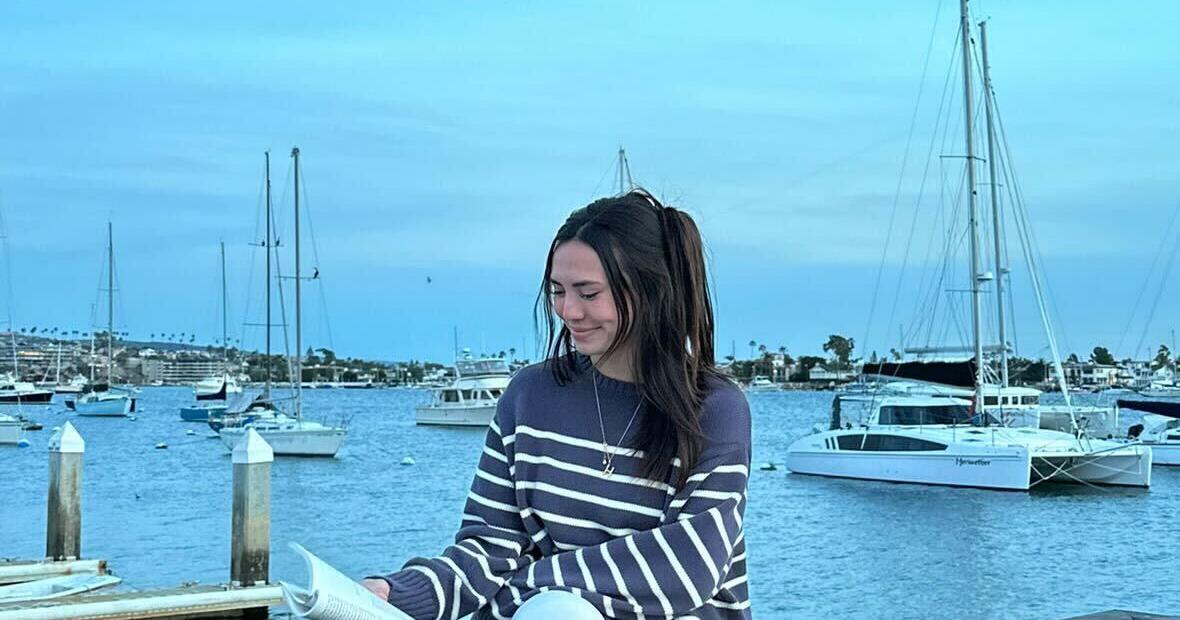

YouTuber Haley Pham often posts motivational videos and book reviews to encourage her followers to read more.
Before the internet, people read books for enjoyment and pleasure. While some watched television, many young people read for entertainment. However, with the rise of the digital age and social media in the early 2010s, reading declined tremendously.
Young people used to be avid readers, especially in the era of releases like “Twilight” by Stephanie Meyer and “The Hunger Games” by Suzanne Collins.
A study done by a professor of psychology, Jean Twenge, and the American Psychological Association in 2018 found that in 2016, one in three high school seniors did not read a book for fun, and 82{af0afab2a7197b4b77fcd3bf971aba285b2cb7aa14e17a071e3a1bf5ccadd6db} of seniors were on social media sites every day.
The study also found that in the 1970s, 60{af0afab2a7197b4b77fcd3bf971aba285b2cb7aa14e17a071e3a1bf5ccadd6db} of high school seniors reported reading a physical form of print, whether that be a book, magazine or newspaper — and this percentage has been steadily declining for years.
The internet led to an increase in Amazon users, so people who were reading for fun were doing a lot of purchasing online. This meant that the internet quickly became a problem for publishing companies, chain bookstores and independent bookstores. These businesses were seeing major declines in sales.
For years, because many young people stopped reading for fun due to social media apps, and it negatively impacted the book world. However, the internet brought literature back to life with the rise of TikTok.
TikTok is an extremely popular app among young people in the U.S. It changed the game for many companies when it came to promoting products and marketing. People post short videos on the app, often sharing what products and services they are enjoying, and certain things become trends that millions of people join in on.
This trend also translated to the publishing industry. There is an entire algorithm on TikTok that is labeled “BookTok.” BookTok is a community within the app where people review and make videos about books that they love, and they often get a lot of attention. Whether it be romance, thrillers or fantasy books, this community covers just about everything. The hashtag #BookTok on the app currently holds almost 110 billion views, and in 2021, a new record was set with 843 million print books sold in the U.S.
This side of the app began trending at the end of 2020 after a user — @aymansbooks — posted about a book called “The Invisible Life of Addie Larue” by V.E. Schwab. Her video received millions of views and a lot of engagement from young people.
Because of her persuasive language while describing the plot, the book ended up being sold out on Amazon after three days of her video being posted. Many people made comments on her video saying that the book was also sold out at their local bookstores and Barnes & Noble.
Certain books – such as “The Invisible Life of Addie Larue” – go viral and then to the top of the New York Times Bestseller’s list in a short period of time after receiving exposure on the app. Schwab’s book was on the bestseller’s list for forty weeks.
Colleen Hoover is an author who is another example of the magic of BookTok. Her 2016 novel “It Ends with Us” received a 70{af0afab2a7197b4b77fcd3bf971aba285b2cb7aa14e17a071e3a1bf5ccadd6db} jump in sales because of BookTok in 2021, and she has been thriving on NYT Bestseller’s list for weeks for many of her books. She even credited BookTok in her acknowledgments in her most recent novel, “Reminders of Him.”
Young people enjoy doing what is “trendy,” and because of social media’s influence, people find that reading has become fun and addictive again. Users are constantly trying to discover new books to talk about and share on the app, and it’s a never-ending cycle.
BookTok has recently been the most popular platform for book promotion, but Instagram and YouTube also have a large book community, which people refer to as “Bookstagram” and “BookTube.” Publishers and authors have been taking advantage of these apps as well.
YouTube is one of the oldest social platforms that has created a large number of influencers.
Haley Pham is an internet sensation – a 22-year-old social media creator with 2.5 million subscribers on YouTube. She is married to Ryan Trahan, a YouTuber with 11.7 million subscribers.
Pham’s content, which she began creating when she was 12 years old, used to solely focus on lifestyle, but in 2021 she began to focus on book content creation. Pham also has a second channel with over 800,000 subscribers where she creates book vlogs.
Pham has had a major influence on book sales. In 2022, she discussed the book “Better than the Movies” by Lynn Painter in a couple videos on her channel, which caused the book to sell out of stores for months. In Lynn Painter’s following novel, “The Do Over,” she credited Pham in the acknowledgements for making her work go viral, saying “Haley Pham, I adore you and your delightful followers.”
Pham spoke to The Daily Beacon on how social media impacts her own personal reading trends.
“I think social media has been a huge proponent of reading books consistently month after month because of the community aspect,” Pham said. “If I ever find that I’m not very excited to read, by the first of the next month there are tons of creators raving about the books they read the previous month and it reignites my excitement to read all over again.”

With 2.5 million subscribers, YouTuber Haley Pham is one of the internet’s most-followed book influencers.
While Pham began her career in the social media industry years ago, many new creators have recently worked their way up in the industry, and since have been able to quit their full time jobs.
Hailie Barber, a YouTube book creator with around 130,000 subscribers, found a community in the book world after stumbling upon BookTok. After she began posting her own book videos, they quickly became her best received videos.
“Last year I was dealing with a lot of anxiety and trying to learn ways to cope with it and relax my mind when I ended up on BookTok. I decided to pick up ‘The Seven Husbands of Evelyn Hugo’ after seeing it everywhere and from there I went from reading like two books a year to almost reading 100 last year,” Barber said. “The community is so tight knit and sweet, it’s the most wholesome social media experience I’ve ever had since I began six years ago.”
Authors and publishers began using social media platforms to their advantage to sell their own books and create partnerships with influencers. Many bookstores also have BookTok tables in their stores to attract readers, as well as BookTok sections on their websites.
B.K. Borison is a popular romance author known for her “Lovelight” trilogy. Borison shared how social media impacted her own work and success as an author.
“If it wasn’t for the organic opportunity available through social media, I wouldn’t have been able to build my readership,” Borison said. “In just one year, I’ve been able to grow my audience tremendously. I went from a self-published author, to picked up by a major publishing house.”
Ali Goodwin creates book content on YouTube with over 90,000 subscribers, and the book side of social media has had a huge impact on her life – specifically when it comes to her career.
“Less than a year ago I had a normal job and I’ve since been able to do content creation full time because of the book community. Getting to work with publishing companies and authors on paid sponsorships has allowed me to do content creation full time and receiving free arcs allows me to do videos like giant book hauls and just generally make more content about books,” Goodwin said.
Similarly to Goodwin, Sara Carrolli is a recent college graduate who had plans to go into the workforce for marketing. During her final years as a student, she began posting book videos and marketing herself, allowing her to pursue YouTube full time now.
Carrolli now has close to 160,000 subscribers and is able to make a successful income. Carrolli said BookTube has influenced her in the best way possible.
“Having a bigger platform to share my opinions on books is so so cool…I used to just read books on my own personal time but now having a bigger platform I’m able to share all of those thoughts in a super public way, and I can see how it influences the people who follow me and trust my taste,” Carrolli said. “It’s amazing to see how huge the community is and how everyone has different tastes and opinions.”
In addition to YouTubers, Instagram creators are also sharing in the success.
Grayson Holmes is a large Bookstagrammer – @goodreadswithgray – with over 130,000 followers. Because of her platform, publishers often reach out to her for book promotion to create buzz.
“I must admit it’s quite cool to get early copies of books sometimes, or to just get sent books in general. It’s something that still shocks me sometimes, that publishers and authors are interested in me posting their works on my platform,” Holmes said. “I’ve also had a number of paid brand deals, which is something else that truly baffles me. Overall, it’s been a super fun experience for me, and I truly love everything about it.”
It is not just bigger creators who are garnering success and opportunities – smaller creators are too.
Kendall Norberg is a smaller creator with around 5,000 followers on Bookstagram – @urlocalhotreadergirl – and she said that TikTok was the main influence to get her to start reading again along with lockdown-induced boredom. She has been able to partner with publishers to receive advanced reader copies of her most anticipated reads to review on her account.

Sara Carrolli celebrates reaching 100,000 subscribers on YouTube in on Aug. 16, 2022. Now she has nearly 160,000 subscribers.
“I also recently launched an interactive book club in partnership with the ‘Fable’ app, which is my most significant milestone. I’m so grateful to have opportunities like this, but ultimately reading and connecting with other book lovers is my passion, so I want to make sure that I don’t lose the authenticity and joy in running my account,” Norberg said.
While social media has often been known to cause mental health issues among younger people, it has also given people an avenue to share their love for books and even create a successful career from just creating content on books. It has revived the publishing industry and has allowed new bookstores to open across the country, as well as influences people to pick up books.
“When I posted my first ever book haul on YouTube I remember being so nervous because no one had ever wanted to talk to me about books before, so why would anyone on the internet want to either?” Alexa Fadeley-Amoia, a YouTube creator with over 60,000 subscribers, said.
“That’s the beauty of social media though – I’ve been able to connect with book lovers all over the world and we’ve created a community where we can have fun talking about books we love, authors we enjoy and so much more. I think social media has helped create a whole new generation of book lovers and it will forever be one of the best impacts the internet has had on the world.”
In Knoxville, business owners are taking action due to the increase in reading rates.
There have been two new indie bookstore openings in the summer of 2022, Bear Den Books in Sequoyah Hills and Addison’s Bookstore on Gay Street. The newest indie store — Fable Hollow Coffee and Bookshoppe — is a fantasy themed store that opened this month.
Knoxville bookstores have even hopped on the train of BookTok and have entire sections and tables dedicated to BookTok, which brings in young readers.
The Kingston Pike Barnes & Noble, McKays and lowercase books also have BookTok pages to bring in local customers. The Farragut Branch of the Knoxville Public Library even hosted a “Teen #BookTok Trivia Night” this past summer to encourage reading in youth.
With new local stores opening and community events, it is clear that social media has had a major role in the success of Knoxville’s literary community’s success and growth.
