Smartphone application as a tool for English learning

Introduction

English Education in Japan

According to the 2022 results of the Education First’s English Proficiency index, Japan is classified as a country of low English proficiency, ranking in eightieth out of 111 countries and regions.1 In order to improve the English skills of students, the English educational system in Japan has been under constant refinement. For example, the national syllabus for English was revised to place emphasis on developing oral communication skills. However, many Japanese grad students still cannot speak English even after having studied English for ten years from high school to university.2 This is partly due to the English requirements of the university entrance examinations. Students who plan on advancing to universities tend to focus on grammar and memorize vocabulary in English, not really for authentic usage, but for entrance examinations.3 All medical universities have an English language section as part of their entrance examination, but none of them tests the speaking skills. As a result, students tend to have little conversational practice.

Despite having enough English knowledge to pass the competitive medical university entrance examinations, it is often said that the English ability of medical students peak at matriculation and declines thereafter. Although many medical universities teach English to some extent for one to two years, the English education curriculum is yet to be standardized.4 No two medical schools have the same program. Course objectives, material, topics, and teaching methods depend on the teacher. Even within a single year in a single medical school, the materials taught to students in different classes may differ.

It has been reported that many medical staff and students feel that the English education at their universities have failed in improving their English communication skills.5 They lack confidence and feel uncomfortable in using English in unscripted situations.6 The general emphasis on grammatical accuracy over oral fluency throughout English education, and the tendency for Japanese medical staff and students to be perfectionists, leads to their fear of making mistakes in public.

The Needs and Challenges of Learning English in the Medical Field

As a result of globalization, there is an increasing need for proficiency in English, especially communication skills, in medical staff. For a long time, English was not essential for clinical practice in Japan because the national health insurance system in Japan demanded that all medical terms in the chart to be written in Japanese.7 English was primarily used to access or share the latest knowledge in medicine, as international journals and conferences mainly use English as the common universal language. However, with the increasing number of foreign visitors and residents, there is more demand for the use of English in clinical practice nowadays. Furthermore, many of the English-speaking patients are not native English speakers and so sufficient skills to manage general English is required as well as medical English.6

Although both medical staff and students are aware of the need to improve their English communication skills, it is not easy for them to find time and opportunity to do so. According to Ishikawa, who reported the outcomes of medical English conversation classes held at a hospital, there were three factors that led to the decrease in the number of attendees: irregular work shifts, poor motivation, and an insufficient level of English needed for medical English communication.8 Medical staff often have irregular work shifts and may have to work overnight. Even after leaving the hospital, some may need to respond to emergency calls. Setting time aside and motivating themselves to learn English outside their studies or work, is not easy.

Problems Related to Willingness to Communicate and Communicative Competence Among Japanese Medical Staff and Students

In order to improve English communication skills of medical staff and students in Japan, it is essential to investigate their willingness to communicate. Willingness to communicate, a concept in applied linguistics, is defined as the intention to speak or to remain silent, given free choice.9 There are various factors that enhance willingness to communicate. Assessing these factors will give us a better understanding of why learners do or do not engage in second language communication (Figure 1).10 State of communicative self-confidence, which is low among medical staff and students, directly affects willingness to communicate, and consequently the use of English.

Figure 1 Heuristic model of variables influencing willingness to communicate. (Reproduced from The Modern Language Journal with permission from John Wiley & Sons, Inc).

Among the factors that influence communicative self-confidence, the lack of communicative competence in Japanese learners is frequently mentioned.2,11,12 Communicative competence, another concept in applied linguistics, is the ability to control the knowledge of a language in actual communication. Learners need to develop communicative competence in order to communicate successfully. Among the subcomponents of communicative competence, grammatical competence (ability to use sounds, grammar, and words correctly) is emphasized throughout English education in Japan. Lack of conversational practice means that learners do not experience the necessity of sociolinguistic competence (ability to use the language in a socially and culturally appropriate manner), discourse competence (ability to connect sentences logically one after the other) and strategic competence (ability to come up with strategies to compensate for breakdowns in communication).

Furthermore, due to the Japanese culture where silence is considered a virtue, many feel uneasy in situations where they must speak to strangers. Willingness to communicate remains a challenge, even in the native language.3

To summarize, willingness to communicate is the key to fostering English communication skills. In order to enhance willingness to communicate among medical staff and students, communicative self-confidence is required. Among the various factors that build communicative self-confidence, Japanese learners need to work especially on their communicative competence through conversational practice.

Learning English Online: Computers versus Smartphones

Computer-mediated online videoconferencing is one of the popular methods in learning English communication skills. Communication software such as Skype create a comfortable, spontaneous, and less threatening environment for second language learners to interact with native speakers.13 Studies using Skype have suggested that it could increase confidence in English communication, develop oral communicative competence and intercultural awareness.14–18 These Skype based studies used computers but nowadays, many smartphone functions mimic computer functions.19 Currently, over 95{af0afab2a7197b4b77fcd3bf971aba285b2cb7aa14e17a071e3a1bf5ccadd6db} of Japan’s population in the 20–39 age group own a smartphone. Half of them spend two to four hours a day on their smartphones.20 Screen size and costs, which used to be the barriers to learning through smartphones, are becoming less of a problem. So, smartphones may be effective tools in young learners of English.

Most of the previous studies on language learning through smartphones focused on receptive language skills (listening and reading) rather than productive language skills (speaking and writing).21–24 Due to the lack of studies on smartphone-mediated conversation practice despite the rising need for English communication skills among medical staff and students, the present study set out to investigate the effects of a smartphone application for learning English as a foreign language.

Materials and Methods

This is an exploratory quasi-experimental study and is based on the TREND Statement. The two research questions addressed in this study are: 1) What are the effects of a smartphone application on medical staff and students in learning English as a foreign language? 2) What are the strengths and weaknesses of smartphone applications in learning English communication skills? To answer these questions, two methods were used to collect data: assessments of the participants’ listening and speaking skills and questionnaire. t-tests were performed on quantitative data of the assessments and questionnaire. Content analysis was performed on qualitative data of the questionnaire.

Participants and Recruitment

As this is an exploratory study, the number of participants was based on the number of credited accounts arranged for the study. The participants were recruited via open recruitment at Yokohama City University or by invitation. Medical staff and students who owned a smartphone with access to Wi-Fi were eligible for the study. Many medical students at Yokohama City University feel the need for English communication skills as half of the students take the opportunity to study abroad during their time at the University. The medical staff in the study were those who occasionally required English communication skills, for example when they had English speaking patients or when they attended international conferences. Their working environment varied from primary care settings to public tertiary hospitals. This study was approved by the Ethics Committee of Yokohama City University. All participants provided informed consent in writing.

The online teachers were native English speakers, mostly residents of the Philippines, selected by the provider of the application, ABC Talking Laboratories Inc. They were not English teachers per se, and possessed other jobs, such as nursing. This meant that the teachers did not necessarily have a teacher’s license, but they were all specifically recruited and interviewed online for an hour to see if they were native speakers fit to teach through this application. The interviewer focused on the interviewee’s character, the quality of their English-speaking skills, their ability to use smartphones and their access to Wi-Fi. All teachers were orientated on the aim of the application, how to use the application, how to evaluate students and give feedback.

Intervention

When we investigated services that provided online English conversation lessons to Japanese learners, the average lesson duration was 25 minutes. Most of them were Skype based videoconferences. Among these services, a smartphone application called “ABC Talking” (currently unavailable due to application renewal) was selected for this study. This application was chosen for its three distinct features. First, as far as we could find, it was the only service in Japan that provides five-minute lessons. The application was designed to provide an opportunity for users to engage in brief but frequent chats. Second, the application did not require appointments. This allowed the medical staff and students to practice English whenever they find time, whether at home, school, or work. Third, the application used voice-based communication and does not have a camera function. The participants engaged in a normal audio call, either with the smartphone pressed to one ear or using a headset. In a face-to-face or video-based communication, second language learners can resort to a wide range of paralinguistic cues such as body language and gestures to get their points across.25 However, in a voice-based communication, learners must convey their thoughts only through speaking. Additionally, as some studies have noted, to be thrust into a live conversation with a stranger can be awkward. In a study using Skype videoconferencing, students felt the need to look their best before the sessions began.18 Thus, the aim of the application was to lower the hurdles of English conversation by promoting short, frequent chats and by not including a camera function. These features were expected to allow medical staff and students to engage in English conversation within their unpredictable work or study schedules. They also would not need to worry about others overhearing them which may reduce their fear of making mistakes in public.

The participants installed the application on their smartphones. This application allowed them to converse with native English speakers living abroad. The participants were given credited accounts, as each call cost JPY 250 (Japanese yen) on an average. The participants of the study used the application to call twice a day over five consecutive days. They simply logged in and looked for an available online teacher. A participant could start the study any day as long as the five days included a weekend; thus, some started on a weekend, and some ended on a weekend.

The teachers of the application were orientated to let users raise conversation topics and to suggest some topics if the users were unable to do so. Having no set topic of conversation could be an advantage as well as a disadvantage. Giving learners the opportunity to raise conversation topics allow them to choose and prepare topics that they are comfortable talking about. Furthermore, selecting appropriate topics of conversation in certain situations will enhance their communicative competence. However, beginners with low willingness to communicate may find this challenging. Another disadvantage of this application is that the users must keep themselves motivated. Making appointments for future lessons motivates users to continue language learning. As this application does not require prior appointments, the users are responsible for finding a time and place during their day to make the calls and continue to do so.

Data Collecting Strategies

Two sets of data were collected: assessment and questionnaire (Figure 2). From the first group, which consisted of 6 participants, only assessment data were collected. From the second group, which consisted of 12 different participants, data from assessment and questionnaire were collected.

Figure 2 Study schedule.

In the assessments, the participants self-rated their listening and speaking skills after each call. The assessment was on a scale of 1–5, with 1 representing “very poor” and 5 representing “very good”. The online teachers assessed them the same way.

The questionnaire was requested to the second group to allow further analysis (Figure 3). The questionnaire in the study was based on the questionnaire used in Mita’s study, which was originally created by Kobayakawa.16,17 Kobayakawa created the questionnaire to see the change in learners’ views on their English skills and on learning English. Out of the previous studies of Skype based computer-mediated language learning in Japan, only Mita and Kobayakawa used the same questionnaire. Since the aim of the questionnaire was similar to the current study, and because it was the only questionnaire that was used in two separate studies, this questionnaire was selected and adapted to the current study. The validity and reliability of the questionnaire are yet to be assessed.

Figure 3 Questionnaire administered in the second group of the study.

Questions 1 to 3 were added to Mita’s questionnaire to investigate the participants’ views on the application. Questions 4 to 15 aimed to investigate the participants’ views on their English communication skills. Questions 16 to 28 aimed to investigate the participants’ views on learning English. Questions 29 to 34 were open ended questions. The questionnaire used a seven-point Likert scale. The responses were coded 1–7, with 1 representing “strongly disagree” and 7 representing “strongly agree”.

Data Analysis and Reporting

Data were extracted from hard-copies (self-assessments and questionnaire) and web-based forms (teachers’ assessments) and integrated in Microsoft Excel software. Percentage change was used to compare the assessment scores of the first five sessions to those of the last five. Average self-assessment scores and teacher assessment scores were compared using a t-test. The statistical significance level was set at p-value < 0.05 and was considered statistically significant. A paired t-test was performed on quantitative data of the questionnaire, and content analysis was performed on qualitative data.

Results

18 participants completed the five-day session. There were 13 male and five female participants, aged 20–35. Table 1 shows the level of English proficiency of the participants in the second group (this information was requested in the questionnaire that was added in the second group). As the participants had experience with different English proficiency tests, such as the International English Language Testing System, Test of English for International Communication, Test of English as a Foreign Language and Jitsugyo Eigo Gino Kentei (EIKEN, a test of practical English proficiency done in Japan), the scores were converted and standardized to EIKEN scores for comparison. For EIKEN, grade 5 is the lowest and grade 1 is the highest.

Table 1 English Proficiency of Participants in the Second Cycle of the Study

Assessment After Each Session (Scale of 1–5)

The participants and online teachers assessed the participants’ listening and speaking skills after each session. When the scores of the first five sessions were compared to those of the last five, the self-assessment scores increased in all items (Figure 4). Although the participants’ self-assessment scores increased, the teachers’ assessment scores showed little change. Table 2 shows the percentage change of self-assessment and teacher’s assessment between the first five sessions and the last five sessions. For example, participant A’s self-assessment in catching words through listening increased by 10.7{af0afab2a7197b4b77fcd3bf971aba285b2cb7aa14e17a071e3a1bf5ccadd6db}. The average self-assessment percentage change increased by 14.8–26.1{af0afab2a7197b4b77fcd3bf971aba285b2cb7aa14e17a071e3a1bf5ccadd6db}, while the teacher’s assessment percentage change varied between −4.5–2.1{af0afab2a7197b4b77fcd3bf971aba285b2cb7aa14e17a071e3a1bf5ccadd6db}. This implies that although there was no objective improvement of the listening and speaking skills, the participants’ self-perceptions improved.

Table 2 Percentage Change of Self-Assessment and Teacher’s Assessment Between the First Five Sessions and the Last Five Sessions

Figure 4 Self-assessment and teacher assessment results.

Changes in self-assessment between the first five sessions and the last five sessions did not depend on the participants’ English proficiency levels (Table 3). Table 4 compares self and teacher assessment scores of all ten sessions. For example, participant G’s self-assessment scores were lower than the teacher assessment scores in all items. With the exception of participant I, whose self-assessment was higher than the teacher’s assessment in all items, the self-assessment scores were generally lower than the teacher’s assessment scores. A t-test was performed on these data. The statistical significance level was set at p-value < 0.05 and was considered statistically significant. The results showed that participants with lower English proficiency levels tend to evaluate themselves lower than the teachers’ evaluations.

Table 3 How Self-Assessment from the First Five Sessions Changed in the Last Five Sessions

Table 4 Comparison of Average Self-Assessment Scores to Teacher Assessment Scores

The Questionnaire (Seven-Point Likert Scale)

Participants’ Impression of the Application

Figures 5–7 show the participants’ impression of the application at the end of the study. Making a five-minute call twice a day was generally accepted by the participants.

Figure 5 Participants’ impression of the length of each conversation (“I feel that the 5-minute call is long”).

Figure 6 Participants’ impression of the frequency of conversations (“I feel that calling twice a day is too frequent”).

Figure 7 Participants’ impression of the length of the study (“I feel that calling for five consecutive days is too long”).

Participants’ Views on Their English Skills and on Learning English

Questions 4 to 28 focused on the participants’ views on their English skills and on learning English. The results of the questionnaire done before the five-day period are available as Supplementary Figures 1 and 2, and those from after the five-day period are available as Supplementary Figures 3 and 4.

A paired t-test was performed on these data (Table 5). An increase in the average scores for question 4 and 8: “I can understand what the other person is saying”; and “the other person understands my pronunciation (p=0.026, 0.046 respectively, p<0.05) was observed. These items represent skills in listening comprehension and speaking respectively. The average score for question 6 “When I cannot understand a word in the conversation, I can ask them to explain” also increased (p=0.012, p<0.05). This represents improvement of strategic competence, one of the subcomponents of communicative competence. Increase in the average scores imply enhancement of self-confidence, an important component of willingness to communicate. There was no significant change in the participants’ views on learning English.

Table 5 Comparison of Questionnaires Done Before and After the Five-Day Period

Responses to Open Ended Questions

When asked what they enjoyed, nine out of ten participants that responded gave examples of successful experiences such as “when I understood what the teacher said”, “when the teacher understood what I said”, and “when I succeeded in telling the second teacher what I had failed to communicate to the first teacher” (Table 6). On the other hand, when asked what they found challenging, all the participants referred to having poor English communication skills, such as “The silence. When I couldn’t say what I wanted to say”, “when I couldn’t decide what to talk about”, and “when I can’t correct myself even though I know that I am wrong”. A few also experienced unavailability of teachers or problems with Wi-Fi connection. When asked if there were any changes within themselves, six out of eight responses mentioned that their motivation to learn English was reignited. The two other responses were about enhanced sociolinguistic competence, which refers to the ability to select appropriate topics of conversation in a specific setting.

Table 6 Responses to Open-Ended Questions

Time and Location of Application Usage

More than 80{af0afab2a7197b4b77fcd3bf971aba285b2cb7aa14e17a071e3a1bf5ccadd6db} of the calls were made from home and 70{af0afab2a7197b4b77fcd3bf971aba285b2cb7aa14e17a071e3a1bf5ccadd6db} occurred in the evening (Figures 8 and 9). It may be difficult for learners to find an appropriate place to engage in a phone call, especially because speaking on mobile phones in enclosed public spaces such as public transportation and cafes is considered rude in Japan. They also need a quiet (so that the learner can hear the teacher) and safe (so that the learner can focus on the call) environment. In addition, free public Wi-Fi in Japan is scarce compared to many other countries. These factors may have led to the participants’ decision to use the application in the evening when they are at home, despite having the option to use the application at any time and at any place.

Figure 8 Timing of application usage (all participants, 10 calls each).

Figure 9 Location of application usage (all participants, 10 calls each).

Discussion

The results of the study can be summarized as follows. First, the self-assessment and questionnaire both showed increases in “state of communicative self-confidence”. Second, the self-assessment scores improved although the teacher-assessment scores showed little changes. Third, participants with low English proficiency had low self-perception of English communication skills when compared to the teachers’ perception. Fourth, the participants used the application at home in the evening, despite the flexibility of the smartphone application. Finally, participants’ motivation to learn English was reignited.

Effects of a Smartphone Application on the Medical Staff and Students in Learning English as a Foreign Language

As there are no reports of smartphone-based studies focusing on oral communication skills, the results of the present study were compared with computer-based studies using Skype in Japan (Table 7). Kobayakawa reported an increase in confidence in English communication.17 Mita reported similarly.16 Ryobe reported that Skype was effective for improving communicative competence in spoken English and developing intercultural awareness.14,15 The current study also showed increase in communicative self-confidence. Some participants also experienced improvement of communicative competence, such as sociolinguistic competence (“I learned to come up with conversation topics according to the teacher’s nationality”) and strategic competence (“I was able to explain a difficult topic”).

Table 7 Previous Studies on Foreign Language Education Using Computer-Mediated Skype Based Communication

It should be noted that while the participants of the previous studies engaged in 25-minute conversations over a period of three to six months, the participants of the current study engaged in five-minute conversations, twice a day, over five days. Thus, our study shows that communicative self-confidence could be enhanced in several days. Although there was no measure of objective improvements of the participants’ English communication skills during the course of the study, communicative self-confidence was enhanced through the use of a smartphone application. Furthermore, communicative competence also improved and the participants were further motivated to learn English communication skills.

Strengths and Weaknesses of Smartphone Applications

The strengths of smartphone applications are their flexibility and portability. These traits allow learners to engage in short, frequent conversations. In order to improve English communication skills among medical staff and students, communicative self-confidence needs to be enhanced through conversational practice. However, setting aside blocks of time within their unpredictable work or study schedules is difficult. In the past, computer-mediated online English training required commitment, as the learner had to be in a certain place at a certain time. The application used in the current study provided on-demand English conversational practice and required only five minutes. The results showed that engaging in five-minute conversations twice a day can improve communicative self-confidence and enhance communicative competence. The first step in improving English communication skills among medical staff and students is to lower the hurdles of online English learning, so that they would take these opportunities to learn and engage in conversation. The flexibility and portability of smartphones make this possible.

Three weaknesses of smartphone applications were observed in this study. First, smartphones cannot use wired LAN and requires Wi-Fi. Previous Skype-based studies required a facility with adequate capacity and transmission speed for an entire class to use Skype, as Skype video chats involve two-way audio-video communication.15 Theoretically, the current study did not require the same capacity or transmission speed, as the application was audio-based, and because the participants used the application individually. However, the internet connection in the Philippines was unstable due to the monsoon season. Some calls were terminated (these calls were excluded), and some learners could not hear the teacher due to poor reception. This problem could occur in any smartphone application as the stability of Wi-Fi may vary depending on the environment. Second, free public Wi-Fi in Japan is not as common as other countries. This may be one of the reasons why most participants in the study did not make use of the flexibility of smartphones and used the application at home. Third, applications that provide on demand English lessons have a possibility of teachers being unavailable. Without prior appointments, it is difficult to estimate the number of teachers required. In the current study, some participants reported that they were unable to find available online teachers. Improvements in connection and providing the appropriate number of teachers may further promote the use of smartphone applications.

Study Limitations

There are various limitations associated with this study. First, this is an exploratory study consisting of a small sample with a short turnaround time. A study with a larger sample observed over a longer period is required to assess the long-term effects of the smartphone application for English communication skills training in medical staff and students. The second limitation of this study is that the participants chose to take part in the study, and thus were motivated to use the application to begin with. Whether or not less motivated learners will use smartphone applications and how they respond is yet to be studied. Third, the validity and reliability of the assessments and questionnaire are yet to be assessed. Finally, a more qualitative approach, such as interviews, may have been favorable for data collection.

Practice and Pedagogical Implications

This study shows that short daily conversations in English using a smartphone application could enhance communicative self-confidence. While other methods of conversational practice, such as computer-mediated videoconferencing or face-to-face lessons, could also enhance communicative self-confidence, these lessons take more time. The first challenge for learners is to take part in conversational practice. As smartphone applications allow medical staff and students to engage in conversation at their convenience, it should be considered as a tool to improve the English communication skills. Within the application, teachers should be aware that learners tend to assess themselves lower than their actual ability, so that they can give appropriate feedback to the learners.

Future Research

There is a plan to follow-up on the participants to see whether they have continued to learn English in any form, for example by using smartphone applications or by attending face-to-face English lessons. Further work should be done for a longer period to investigate if their motivation is maintained and if improvement in communication skills is achieved. Utilizing larger sample sizes, for example by making smartphone-mediated online English learning a part of English education at medical universities, could clarify whether smartphone applications are useful in less motivated learners. Another good recommendation would be to compare this application with other applications, or to compare smartphone and computer applications of the same service (for example, using Skype on a smartphone or a computer).

Conclusion

This study provides insights into the effects and drawbacks of using a smartphone application to improve the English communication skills of medical staff and students in Japan. The results suggested improvements in communicative self-confidence, which may lead to enhanced willingness to communicate. Participants also experienced improved communicative competence. Making a five-minute call twice a day on their smartphones to practice English conversation was generally accepted by the participants. Using a smartphone application allows on-demand English training, which may be especially useful to medical staff and students with unpredictable schedules. Teachers should be aware that learners tend to assess themselves lower than their actual ability, so that they can give appropriate feedback to the learners.

Abbreviations

EIKEN, Jitsuyo Eigo Gino Kentei (Test for Practical English Proficiency); JPY, Japanese yen.

Ethics Approval and Consent

This study was approved by the Ethics Committee of Yokohama City University (Approval number A170400004). All participants provided informed consent in writing to participate and for publication.

Consent for Publication

Consent for publication was taken and agreed to publish.

Acknowledgments

The kind offer by ABC Talking Laboratories Inc to provide free accounts for our participants to use their application made this research possible. The authors received no compensation from ABC Talking Laboratories Inc. We would like to thank Editage for English language editing.

Funding

Manuscript preparation and open access funding was provided by the basic research fund of Yokohama City University.

Disclosure

The authors declare that they have no competing interests in this work.

References

1. English First. EF English proficiency index 2022; 2022. Available from: https://www.ef.com/wwen/epi/. Accessed December 25, 2022.

2. Yamaoka K. The current situation and future prospects of Japanese English teaching. Ritsumeikan Univ Lang Cult Stud. 2010;22(1):59–66.

3. Torikai K. English Language Education in Japan: past, present and future. Lang Teach. 2000;24(7):4.

4. Barron P, Breugelmans R, Ashida R. A fundamental approach to radically improve English education in Japanese Medical Schools. Igaku Kyoiku. 2009;40(2):113–115. doi:10.11307/MEDEDJAPAN.40.113

5. Hasegawa M, Ozaki C. A Survey on Medical Students’ attitudes towards learning English language. Kawasaki Ikaishi Arts Sci. 2016;41:41–48. doi:10.11482/KMJ-LAS41)41

6. Willey I, Tanimoto K, McCrohan G, Nishiya K. An English needs analysis of medical doctors in Western Japan. JALT J. 2020;42(2):143. doi:10.37546/JALTJJ42.2-3

7. Uemura K. Medical English education in Japan: past, present & future. JMEE. 2009;8(1):7–11.

8. Miho I, Hiroki W. Medical English conversation classes for nurses and doctors at Shikoku Central Hospital. JMEE. 2018;17(3):112–116.

9. Macintyre PD. Willingness to communicate in the second language: understanding the decision to speak as a volitional process. Mod Lang J. 2007;91(4):564–576. doi:10.1111/j.1540-4781.2007.00623.x

10. MacIntyre PD, Clement R, Dornyei Z, Noels KA. Conceptualizing willingness to communicate in a L2: a situational model of L2 confidence and affiliation. Mod Lang J. 1998;82(4):545–562. doi:10.1111/j.1540-4781.1998.tb05543.x

11. Haugh S. Examining the challenges concerning communicative competence within Japan. Human Welfare. 2019;11(1):173–179.

12. Chambers G. English Education in Japan: (Re)Considering the continuous challenges in communicative competence. Bull Faculty Sociol. 2015;53(1):127–137.

13. Xiao M. An empirical study of using internet-based desktop videoconferencing in an EFL setting; 2007. Available from: https://etd.ohiolink.edu/!etd.send_file?accession=ohiou1194703859&disposition=attachment. Accessed August 4, 2020.

14. Ryobe I. The effects of skype-based video chats with volunteer Filipino English teachers (II). In: WorldCALL Conference. The Japan Association for Language Education and Technology; 2008. Available from: http://www.j-let.org/~wcf/proceedings/proceedings.pdf. Accessed August 13, 2020.

15. Ryobe I. Using skype and moodle at the university level for supplementary oral communication practice. In: GLoCALL Conference; 2009. Available from: https://glocall.org/pluginfile.php/453/mod_resource/content/0/Ryobe_glocall_2009_in_Chiang_Mai.ppt. Accessed August 13, 2020.

16. Mita K. Using Skype to enhance junior college students’ oral English proficiency. Bull Jissen Women’s Junior Coll. 2014;35:19–43.

17. Kobayakawa S, Fukuda A. English education through communication with overseas university students using Skype. Studies in Improving Education through ICT (ICT利用による教育改善研究発表会); 2012:42–43. Available from: http://www.juce.jp/archives/houhou_2012/b-08.pdf. Accessed August 13, 2020.

18. Terhune NM. Language learning going global: linking teachers and learners via commercial Skype-based CMC. Comput Assist Lang Learn. 2016;29(6):1071–1089. doi:10.1080/09588221.2015.1061020

19. Chinnery GM. Going to the MALL: Mobile Assisted Language Learning. LLT. 2006;10(1):9–16.

20. Information and Communications in Japan. Ministry of internal affairs and communications; 2018. Available from: soumu.go.jp/johotsusintokei/whitepaper/eng/WP2018/2018-index.html. Accessed July 30, 2020.

21. Kukulska-Hulme A, Shield L. An overview of mobile assisted language learning: from content delivery to supported collaboration and interaction. ReCALL. 2008;20(3):271–289. doi:10.1017/S0958344008000335

22. Yang B, Zhou S, Ju W. Learning English speaking through mobile-based role-plays: the exploration of a mobile English language learning app called engage. EuroCALL Rev. 2013;21(2):38. doi:10.4995/eurocall.2013.9788

23. Duman G, Orhon G, Gedik N. Research trends in mobile assisted language learning from 2000 to 2012. ReCALL. 2014;27(2):197–216. doi:10.1017/S0958344014000287

24. Darmi R, Albion P. A review of integrating mobile phones for language learning. In: 10th International Conference Mobile Learning; 2014.

25. Payne JS, Whitney PJ. Developing L2 oral proficiency through synchronous CMC: output, working memory, and interlanguage development. CALICO J. 2003;20(1):7–32. doi:10.1558/cj.v20i1.7-32
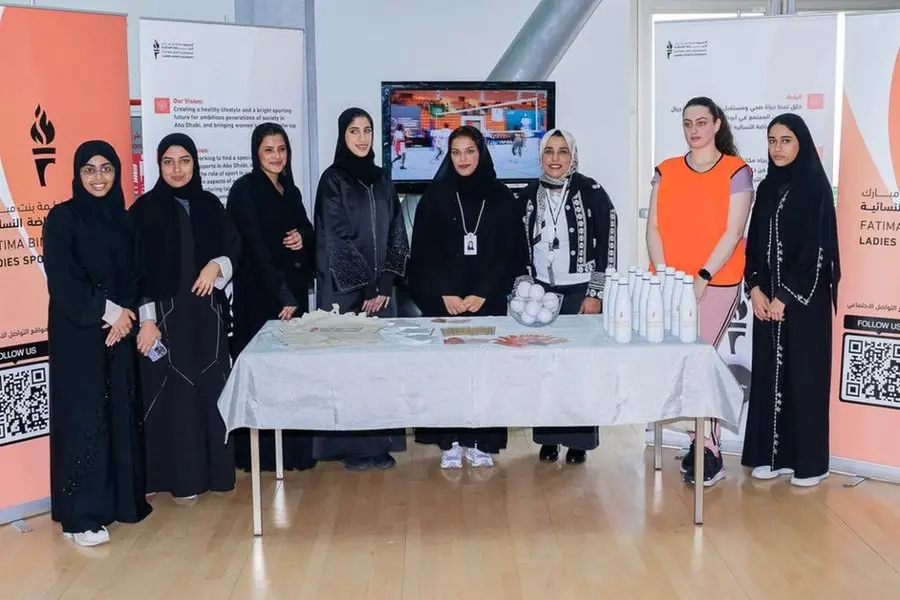
The Department of Physical Education at UAEU organize the “ Fitness Open Day “

Al Ain: As section of the functions of “UAEU Innovates 2023”, the Physical Instruction section in collaboration with Fatima Bint Mubarak Women Sports Academy organized the “Physical fitness Open up Working day” for female pupils. This occasion aimed to increase consciousness about the relevance of physical exercise and its wellness added benefits.

Physical fitness open up days have involved various sporting activities pursuits, like relay races, tugs of war, volleyball, basketball, and various sporting activities activities. Physical overall health and exercise indicators have been measured by individuals. The college students of the Actual physical Education Office sent these actions under the supervision of the College instructors.

Dr. Gehan Handouk, an instructor in the Actual physical Instruction office, has provided an awareness lecture in which she pointed out the significance of doing actual physical functions, and the advantages that the learners and culture can obtain by shifting their behaviors, working out/staying active, and adopting an active way of living. She also emphasized the purpose of sporting activities and its impact on the physical visual appearance of the unique, as properly as the capacity to obtain actual physical abilities. She also drop gentle on the result that actual physical actions can have on boosting an individual’s psychological point out and temper/mental health and fitness.

She added, “Physical fitness can increase the general wellness as it can make improvements to the crucial capacity of the lungs, and the heart. In addition, it can produce the muscular method and prevent the unfold of conditions, specifically coronary heart illnesses. Additionally, physical fitness can increase the control of system body weight.”

On the other hand, Maryam Al Mansoori, Head of Coaching Applications Office at the Fatima Bint Mubarak Ladies Sports activities Academy, reported, “The academy will maintain up its groundbreaking role in empowering females and boosting their job in all the sports activities field by supporting the incredible female athletes. The academy will also proceed to participate on all situations and celebrations worried with women’s sports activities. It will also arrange forums, seminars, and conferences devoted to women’s sports. This is since we stay in the state of achievements and are blessed by a sensible leadership that believes in women’s capabilities, which therefore built it a world wide job design for other countries.”

Al Mansoori extra, “We are pleased to be present in the UAE university in its open up exercise working day, and are happy to participate in its functions that intention at strengthening the community activity, and keeping a friendly atmosphere concerning the members, which will fortify sportsmanship and promote group cohesion as activity has develop into a way of life for numerous. These activities deliver the chance to appreciate athletics functions and competitiveness inside the relatives environment.”

-Ends-

Penguin to publish ‘classic’ Roald Dahl books after backlash

LONDON (AP) — Publisher Penguin Random Home announced Friday it will publish “classic” unexpurgated versions of Roald Dahl’s children’s novels after it acquired criticism for cuts and rewrites that were being supposed to make the guides appropriate for present day visitors.

Alongside with the new editions, the organization explained 17 of Dahl’s publications would be posted in their original form afterwards this yr as “The Roald Dahl Vintage Collection” so “readers will be free to choose which version of Dahl’s stories they favor.”

The go comes right after criticism of scores of changes designed to “Charlie and the Chocolate Factory” and other much-cherished classics for the latest editions printed under the company’s Puffin children’s label, in which passages relating to excess weight, psychological well being, gender and race had been altered.

Augustus Gloop, Charlie’s gluttonous antagonist in “Charlie and the Chocolate Factory” — originally released in 1964 — became “enormous” somewhat than “enormously unwanted fat.” In “Witches,” an “old hag” grew to become an “old crow,” and a supernatural feminine posing as an ordinary lady may well be a “top scientist or managing a business” alternatively of a “cashier in a grocery store or typing letters for a businessman.”

In “Fantastic Mr. Fox,” the term “black” was eradicated from a description of the “murderous, brutal-looking” tractors.

The Roald Dahl Story Corporation, which controls the legal rights to the textbooks, said it experienced worked with Puffin to assessment and revise the texts due to the fact it desired to make sure that “Dahl’s great stories and characters proceed to be appreciated by all children nowadays.”

Although tweaking old textbooks for contemporary sensibilities is not a new phenomenon in publishing, the scale of the edits drew potent criticism from cost-free-speech teams this sort of as writers’ group PEN The us, and from authors together with Salman Rushdie.

Rushdie, who lived below danger of demise from Iran’s Islamic regime for several years because of the alleged blasphemy of his novel “The Satanic Verses,” named the revisions “absurd censorship.”

Rushdie, who was attacked and significantly hurt last calendar year at an occasion in New York state, tweeted news of Penguin’s improve of heart on Friday with the terms “Penguin Textbooks back down following Roald Dahl backlash!”

PEN America chief govt Suzanne Nossel wrote on Twitter: “I applaud Penguin for hearing out critics, using the time to rethink this, and coming to the ideal position.”

Camilla, Britain’s queen consort, appeared to offer you her check out at a literary reception on Thursday. She urged writers to “remain correct to your calling, unimpeded by these who may possibly desire to suppress the independence of your expression or impose restrictions on your creativity.”

Dahl’s guides, with their mischievous young children, bizarre beasts and often beastly adults, have marketed much more than 300 million copies and keep on to be read by little ones about the world. Their multiple stage and display variations consist of “Matilda the Musical” and two “Willy Wonka” films based on “Charlie and the Chocolate Manufacturing facility,” with a 3rd in the works.

But Dahl, who died in 1990, is also a controversial determine due to the fact of antisemitic opinions made throughout his life. His loved ones apologized in 2020.

In 2021, Dahl’s estate sold the legal rights to the publications to Netflix, which strategies to generate a new generation of movies dependent on the stories.

Francesca Dow, running director of Penguin Random Dwelling Children’s, stated the publisher experienced “listened to the discussion in excess of the previous 7 days which has reaffirmed the incredible energy of Roald Dahl’s guides and the quite genuine thoughts about how stories from yet another period can be retained appropriate for every new era.”

“Roald Dahl’s amazing books are usually the first tales youthful kids will study independently, and getting treatment for the imaginations and fast-building minds of youthful audience is equally a privilege and a responsibility,” she said.

“We also acknowledge the relevance of preserving Dahl’s vintage texts in print,” Dow stated. “By generating each Puffin and Penguin variations readily available, we are supplying visitors the decision to decide how they encounter Roald Dahl’s magical, great tales.”

Copyright 2023 The Linked Push. All rights reserved. This content might not be revealed, broadcast, rewritten or redistributed without authorization.

Few speak Ojibwe as a first language. This ‘nest’ is teaching kids to in Cloquet

Persia Erdrich’s son had just turned 2 years old when he spoke his first sentence in Ojibwe. 

The pair were visiting the Minnesota Zoo as part of a group of babies, toddlers, parents and elders in a program to teach Ojibwe to young children and their parents. Erdrich, whose Ojibwe name is Netaa-niimid, said it happened when her son Patrick Linehan, whose Ojibwe name is Ogimaagaabaw, pointed at a bear in an enclosure.

“Mokwa nibaa,” he said. The bear is sleeping.

This was possible for Erdrich’s son because they attend a language nest in Cloquet, Minn., on the Fond du Lac Reservation called Gookonaanig Endaawaad, or “Grandma’s House.” The program started in 2020, and now seven families learn Ojibwe traditions and language from elders who speak it as their first language.

What does that mean? The news, analysis and community conversation found here is funded by donations from individuals. Make a gift of any amount today to support this resource for everyone.

Grandma’s House is not like a drop-off daycare or an immersion school where only the children learn. Through a grant from the Blue Cross and Blue Shield of Minnesota Foundation, parents get paid to learn alongside and speak with their children in Ojibwe five hours a day, four days a week.

elder, parent, and child pick strawberries and place in a birch bark bucket

From top, Niigaanibines Don Jones, Zoongwegiizhigook Liz Zinsli and toddler Waase pick strawberries at summer camp using a birch bark bucket made that week when birch was peeling at Grandma’s House, an Ojibwe language nest in Cloquet, Minn., on the Fond du Lac Reservation.

Courtesy of Grandma’s House

Don Jones, whose Ojibwe name is Niigaanibines, is one of the elders who teaches at Grandma’s House. He said the language nest got its name because “a lot of young Anishinaabe people always went to Grandma’s house for food, company, legends, and stories.”

The word Anishinaabe refers to the Indigenous people of this area of the U.S. and Canada, and Ojibwe is a specific subgroup, so some use the terms interchangeably.

Jones has been learning and speaking Ojibwe since he was born. No Ojibwe native speakers remain in Fond du Lac Reservation, according to several people with Grandma’s House. All of the elders sharing their teachings at Grandma’s House travel to Cloquet from places like Ontario, Manitoba, and Wisconsin.

For instance, Jones travels from Nigigoonsiminikaaning First Nation, which is on the Canadian side of the border from International Falls, Minn.

“Even in our community on the Canadian side, I grew up in that kind of environment. I appreciate the love and kindness from grandmothers and what they provide: love and caring and sharing. So, that was the whole idea about recreating that kind of concept here.”

The beginning of language revitalization

Grandma’s House wouldn’t have been possible a little more than a generation ago. 

In the late 1800s, the U.S. government created a policy that banned speaking or teaching in any language other than English in schools. This was standard practice in Native American boarding schools. For generations, Native children were taken from their families, banned from speaking their native language or engaging in traditional religious practices, and often abused if they didn’t comply.

Hundreds of Native children died in these schools. Counts vary, but there were at least a dozen of these boarding schools in Minnesota. 

“It wasn’t until the passing of the Native American Languages Act in 1990 that we saw a federal policy that allowed the use of Native American languages in the classroom,” said Deidre Whiteman, director of research and education for the National Native American Boarding School Healing Coalition, which is based in Minneapolis.

several children and adults forage for tobacco in winter

A group looks for materials to make asemaa, a traditional form of tobacco used for ceremonial purposes, at Grandma’s House.

Courtesy of Grandma’s House

“When Indigenous communities lose their languages, they also lose thousands of years of stories and traditions,” Whiteman stated. “Everything we know about ourselves as Native peoples is found in our languages — our songs, our stories, and our ceremonies. Our connection to our lands is rooted in languages. It’s what makes us who we are.”

A study led by The Australian National University and published in 2021 found that, worldwide, “The loss of language diversity results from a complex network of factors, particularly those associated with colonization, globalization, and social and economic change.”

Ojibwe is endangered and there were only an estimated 678 first-language Ojibwe speakers in Minnesota in 2009, according to the University of Minnesota.

The “language nest” model of language revitalization began in New Zealand, where a movement to revive the Maori language began in the 1970s. In the 1980s, the government there began funding language nests, or Te Kōhanga Reo, which brought elders together with children and their parents. 

The program flourished there. By 1991, a year after the U.S. lifted the ban on learning Native languages, New Zealand had “630 kōhanga reo operating, with a total enrollment of 10,451 children and about 4,000 staff”, according to an essay from Maori scholars Tania Rei and Carra Hamon. 

Language nest models now exist worldwide, but only a few exist in the United States. Commonly cited reasons include a lack of fluent speakers, financial challenges, and loss of language diversity.

Likely the oldest equivalent to a language nest in the U.S. is ‘Aha Pūnana Leo, meaning “nest of voices,” in Hawaii.

There also is a history of language revitalization programs including language nests in Minnesota. Eni-gikendaasoyang, or the Enweyang Ojibwe Language Nest, was an elementary school that taught Native and non-native children common core subjects in Ojibwe at the University of Minnesota, Duluth. The school ran from 2009 to 2014.

Minnesota is also part of several Native ancestral homelands, such as Lakota and Dakota people. In South Dakota they have a Lakota Language & Education Initiative, and in North Dakota the Lakȟól’iyapi Wahóȟpi Lakota Language Immersion Nest. And last fall in 2022, the University of Minnesota began a Dakota language nest program.

Other language nests are still forming across the U.S. today: Saad K’idilyé Diné Language Nest (SKDLN) opened in August in New Mexico. 

How Grandma’s House came to be

The seed that bloomed into Grandma’s House started more than a dozen years ago with Erdrich. She said she learned some Ojibwe from her mother and grandmother, but went to school to learn Ojibwe.

child processes sunflower seeds

Dibishkoobinesiikwe Grap-Gahbow processes sunflower seeds from the nest garden at Grandma’s House.

Courtesy of Grandma’s House

“When she was just graduating college she approached the Fond du Lac Tribal College to create the program that had adults participating in a camp with first language speakers and elders,” said Nicole Kneeland, who is the grant manager for Grandma’s House. 

That became Ojibwemotaadidaa, an Ojibwe Immersion academy for adults. It was there that discussions began about making an Ojibwe language nest for the adults at the academy who were planning or starting to have children, including Erdrich. 

“I was actually living in Wisconsin but I moved back here because I wanted him to learn how to speak Ojibwe,” she said about her son. 

Many minds went into the creation of Grandma’s House. Families from Leech Lake, Bad River, and even Ontario attended these adult language camps where part of the brainstorming of Grandma’s house took place. 

When Grandma’s House was developing, the group did a pipe ceremony. Jones said they requested “guidance from the Spirits, for the program to be looked after and funded, and to provide spiritual guidance in the way this unfolds in the future.” Putting his faith in that ceremony, Jones stated Grandma’s House would “come about the way it should come about.”

“It was prophesized that a new generation would come in and bring back what was lost. And I really feel like the people in the language revitalization movement are that generation,” said Kneeland, whose Ojibwe name is Gaagigegiizhigookwe. Kneeland helped secure the grant that financially supports parents in Grandma’s House. 

Blue Cross and Blue Shield of Minnesota Foundation got involved because it is “committed to increasing access to early childhood care and education in a way that advances racial and health equity. The efforts of Fond Du Lac Tribal College and their creation of Grandma’s House is a great example of that intersection,” stated Bukata Hayes, chair of the Blue Cross and Blue Shield of Minnesota Foundation board.

Due to distance, some families who helped develop Grandma’s House can’t attend. From elders to parents to Fond du Lac Tribal and Community College, to the newest and youngest first-language Ojibwe speakers at Grandma’s House, the program’s foundation is still growing.

“Learning Ojibwe in college and pursuing learning the language and teaching the language, I hadn’t really thought about babies speaking it as their first language,” Erdrich said. 

“It seemed like this impossible thing because of how much work it would be, how hard it would be to have a whole community and other babies to be speaking Ojibwe, but it’s happening! And it’s amazing because it’s the peer language here so the kids are speaking Ojibwe to each other,” she said. 

‘Language is healing’

Even though it falls under the Fond du Lac Tribal and Community College, Grandma’s House is not like other college language programs. Learning a Native language in an academic setting is beneficial for language revitalization, but academic learning does not usually include learning the traditions, heritage, or spirit within a Native community.

boy snowshoeing

Ogimaagaabaw Patrick Linehan snowshoes at Grandma’s House, an Ojibwe language nest in Cloquet, Minn., on the Fond du Lac Reservation.

Courtesy of Persia Erdrich

A regular day at Grandma’s House begins with a snack and casual interaction while the kids, parents, and elder or elders arrive. Then, depending on the season, they head outside for activities.  In winter the group will snowshoe along trails or set rabbit snares; other times they will tap trees for syrup and sugar. 

A lot of the work is in noticing and identifying when things are changing in nature and telling the kids about it. For example, now is the season when rabbits are pregnant, so parents and elders teach the kids not to kill animals that carry young. After, everyone heads back inside to eat lunch. Sometimes they teach the little ones to process and eat wild rice, or eat what’s harvested from their garden.

Language diversity provides different ways of thinking and listening. Jones described that when he hears stories in Anishinaabe, “the words are very beautiful.” He said he can see a picture developing as other elders talk, as opposed to when he hears something in English and has to listen carefully to see what’s being said. 

He said his teaching style at Grandma’s House relies more “on the legends, the stories, and what my grandparents and my parents taught me to speak the language.”

two children water three sisters

One of the many daily activities in the summer at Grandma’s House is caring for the garden. Adalynn Wilson (left) and Waase water the three sisters, which are corn, bean, and squash.

Courtesy of Grandma’s House

Grandma’s House is set to expand soon. It recently got notice of funding to start an extended program this fall for children ages 3-5 to learn Ojibwe, taught by Erdrich, according to Kneeland.

“We’re working with the Fond du Lac Tribe to find a licensed space. Families that are currently in the program will shift their children into that program which will open up more family spots in our Grandma’s House,” shared Kneeland. It will continue Ojibwe language learning when children leave the language nest.

“There will be applications soon, but we’re still working on it right now. This summer will be a big application period for us because we’re going to go through two programs: Grandma’s House and the new preschool classroom,” she said. 

several ojibwe adults and children watch an elder prepare a fire

Elder Don Jones, left, whose Ojibwe name is Niigaanibines, demonstrates how to start and care for fire at Grandma’s House. He is joined by, from left, Niizhoodewii Denomie, Ningaabii’anookwe Grap, Dibishkoobinesiikwe Grap-Gahbow, Gabrielle Farrell, Ogimaagaabaw (Patrick Linehan), and Netaa-niimid Aamookwe (Persia Erdrich).

Courtesy of Grandma’s House

Waking up a sleeping language 

Although it’s common to refer to a language no longer commonly spoken as a “dead language,” some people in the language revitalization movement instead refer to them as “asleep.” The idea is that sleeping languages can be awakened through family and community efforts. 

Waking up Native languages can also bring intergenerational healing.

“There’s a tremendous amount of healing in everything that we do around Grandma’s House. Once they get to a certain age, they can pass on that knowledge later on if they’re in their 30s and 40s. Then they can share what we passed on to them so it continues, it lives on,” Jones said. 

“We all need each other to heal,” Whiteman said. “Our elders are our knowledge keepers and carry the memories of our ancestors. In our communities, elders are revered. When the youth are able to hear stories from elders, they are able to make that connection to who they are.”

Native people learning their language is not only changing families but healing them. 

“Language is healing. When you speak your language, you have your Anishinaabe name, and your clan, and can introduce yourself and where you’re from. So we always tell people that the spirit is always listening to us, not just the Great Spirit, but everything has spirit — the trees, the plants, all these are healing,” Jones said.

Whiteman explained that some elders are “hesitant to re-learn their Native languages because of shame and guilt. Many struggle with their identities and feel robbed of that connection to their cultures that they felt they should have had. There were also many families who converted to Christianity and assimilated to survive.”

child smiling at elder making bannock

Elder Nancy Jones, whose Ojibwe name is Ogimaagwanebiik, teaches how to make and enjoy bannock while Miles Trimble, whose Ojibwe name is Giiwitaagiizhig, smiles and watches at Grandma’s House.

Courtesy of Grandma’s House

However, the elders and families at Grandma’s House are motivated to “break the cycle,” Kneeland said. 

“We do have situations where elders are hesitant to do this work due to the effects of being at boarding schools. It can be a really lonely trail doing this. We have to build that community and support each other, and now the language line is back in families. We have seven families that will have the language back since the last speaker two to three generations ago. This is changing families,” Kneeland said. 

Jones appreciates the lightness that can come with speaking and learning Ojibwe. 

“The spiritual language has a lot of humor. There’s a lot of humor in our language, stories, directions, and mostly, what we call ‘Gizhewaadiziwin,’ which is love and kindness, that’s ingrained in the language,” Jones said. 

A woman talks with her son

Persia Erdrich (with her hands out) talks with her almost 2-year-old son Patrick Linehan in Ojibwe while teacher Gabby Farrell (right) looks on, Feb. 1 at Grandma’s House.

Derek Montgomery for MPR News

Erdrich is “fluent enough to keep a conversation but waiting to know enough to tell a good joke in Ojibwe.”

“I can’t believe it’s happening: my little boy is speaking Ojibwe as his first language. The last person to speak it was my great-grandfather. It’s a full circle of healing,” Erdrich said. 

Her son is now beginning to dream in Ojibwe. He recently shared with her a dream about a small bird flying high. It was eating, resting, and sleeping. 

“It was just this powerful moment because he was talking about his dream in Ojibwe and usually, in my experience, I only hear people speak about their dreams in Ojibwe when we are at ceremonies or there is some special important, maybe sacred, occasion. But, for him, he was speaking because that’s the language he has.”

Learn Arts and Crafts – 14 Free Online Courses in 2023

“The world always seems brighter when you’ve just made something that wasn’t there before,” – Neil Gaiman.

We all had art and craft classes in our schools, which we utterly enjoyed. And this definition of enjoyment was distinguished into three categories of students. First were the ones who enjoyed creating new art and craft. Second were those who wanted to learn but needed more of the x-factor. And lastly, those who only enjoyed the class as a free period. Honestly, I was in the second category. I liked making paper craft but somehow missed that razzle-dazzle. But this never made me quit. Indeed it led me to be more creative.

For all my friends still under the clouds of dilemma and doubt of what and how I bring you some mind-boggling online craft courses. Get ready with your paper, scissor, and glue for some art and craft time.

A plethora of online platforms exists, like Skillshare, Udemy, Coursera, Creativelive, EDX, etc. They offer us courses that make learning and creating exciting and accessible. Among them, I have listed free art and crafts courses below for you to learn and polish your skills.

Free Online Art and Craft Courses for All

1. Modern Crochet: Essential Skills for Getting Started: Tony Lipsey

Since childhood, we have seen our grandmothers and mothers embroidering with a hook needle to form a fancy lace-like pattern, making different doily covers, patches, borders of quilts, bags, and so on. But guess what? This 19th-century artwork has again become the talk of the town. With thousands of tutorials and patterns available online and in the market, creating this free craft has become easy-peasy. Tony Lipsey’s class on crochet is among the best for those just starting with this skill.

Modern Crochet Essential Skills for Getting Started

2. Polymer Clay and Sculpting Basics: Stephaine Kilgast

All of us have played with clay and made numerous patterns and structures from them. But as creativity has no end, making various crafts from this versatile material is increasing. The world is your canvas, from fridge magnets to jewelry and sculpting to making trinkets. Stephaine Kilgast, in her free paper craft course, teaches us the basics and essentials of starting innovation with clay.

Polymer Clay and Sculpting Basics

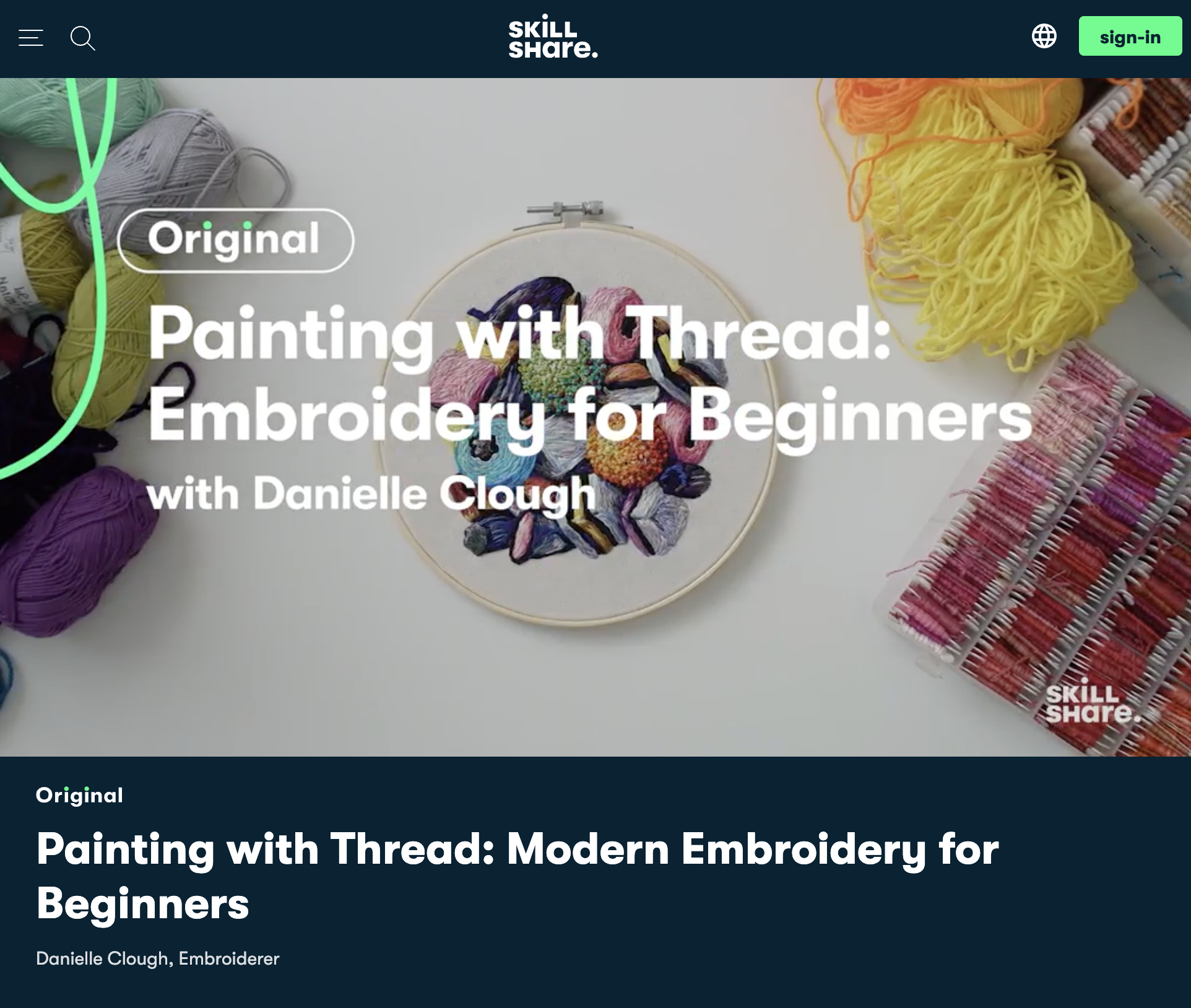
3. Painting with Thread: Modern Embroidery for Beginners: Danielle Clough

This art is often called thread craft or yarn art. This craft is based on your expertise in creating geometric patterns and playing with different strings to create a mesmerizing craft. Different colored yarns are given geometric patterns with more form and dimension. Another artistic way in which threads can be used is for embroidering pictures on paper or cloth to provide a more aesthetic and contemporary appeal to create a superb paper craft. Danielle Clough’s unique and free course is all about painting with modern embroidery.

Painting with Thread Modern Embroidery for Beginners

4. Mandala Art: Yvette St. Amant

An art form with symbolism and spiritualism. Mandala is considered the sphere of the universe, which holds within itself several squares and sections organized to form a soothing art. This artwork instruments meditation by offering the artist comfort and peace of mind. It is as intricate as it seems and has no boundaries or limits to its size and form. The Yvette St. Amant free online class is the best bet to learn the fundamentals of this papercraft.

Mandala Art

5. Hand Sewing Basics: Bernadette Banner

Want to create wonders just by using a needle and thread? Then, this artistry is for you. The magic is done either by sewing machine or simply by our hands. The craft is as old as the hills and will always remain as fresh as a daisy. Using this, one can create myriad pieces. But it is more challenging than it seems as it has a lot of methods and procedures to it, but once you get hold of it, it is a piece of cake. For guidance and help, Bernadette Banner and Denise Bayron’s free online classes are your best options.

Hand Sewing Basics

6. Introduction to Oil Painting: Ashleigh Atmore

This is the most ancient form of painting prevalent still today. Paints infused with oil bring colors to the art, which are dried up and blended to give a more polished finish. Depending upon your level of expertise, you can use oil paints from its vast range. Those just starting with oil painting and want to learn this paper art can learn from Ashleigh Atmore’s free online class.

Introduction to Oil Painting

7. Create a Macramé Wall Hanging Using 5 Easy Knots: Peggy Dean

This art is for those artists who have a phobia of needles. A façade of different knots in a series of patterns will create this beautiful art. This craft can execute various ideas, like wall hangings, planters, and key chains, and the sky is the limit. The best online course is Peggy Dean’s to learn this art form.

Create a Macramé Wall Hanging Using 5 Easy Knots

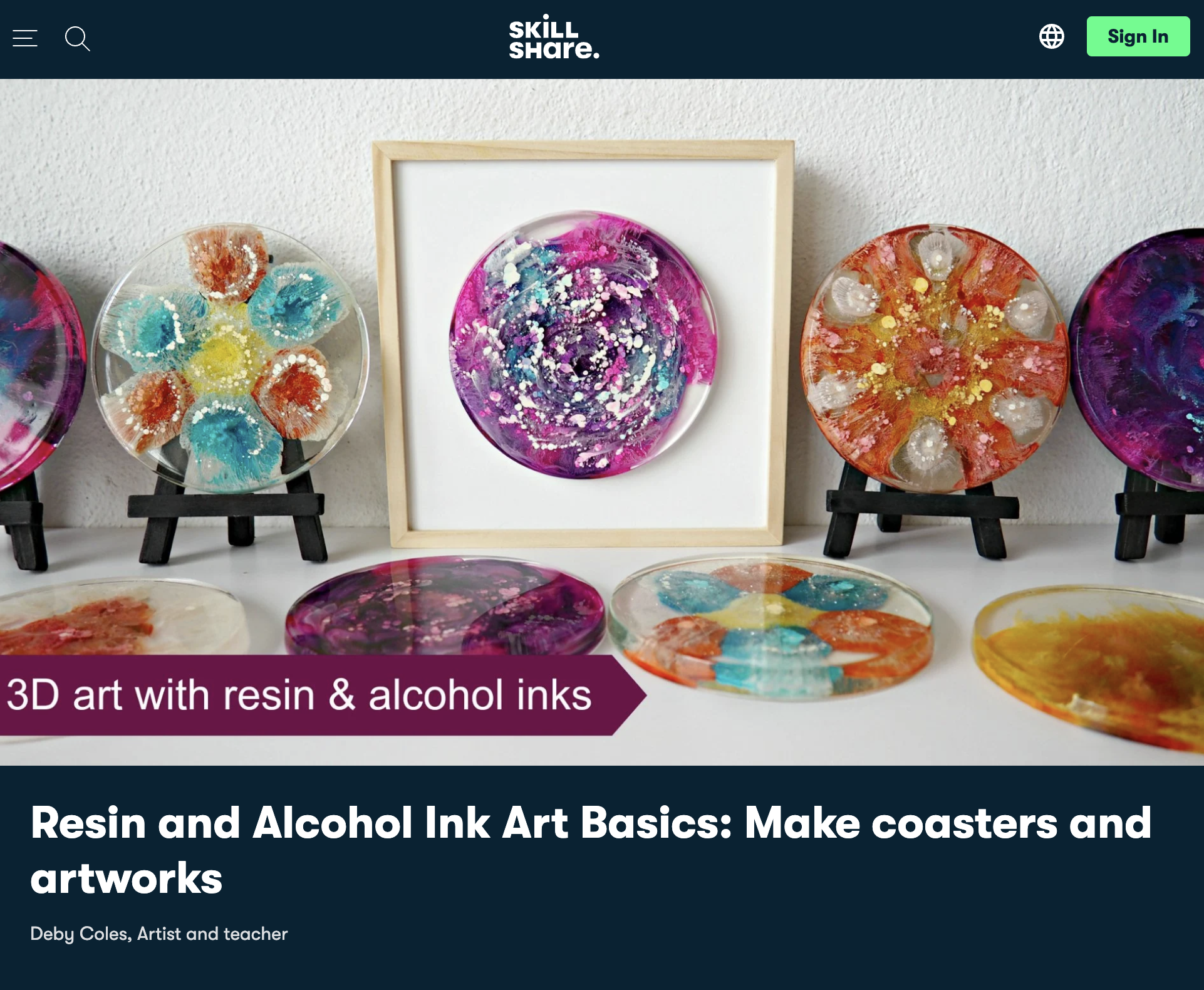
8. Resin and Alcohol Ink Art Basics: Deby Cole

This type of art is created using a liquid material called epoxy resin. Now for the next popping-up question what is epoxy resin? Is it a combination of two substances, epoxy, and hardener? When we combine these two liquids, the solution thus formed is poured over the respective elements to create the art. Because of its versatility, this resin substance can withstand any condition and can be given any form. To understand this art better, we have Deby Cole’s and Katie Krell‘s online craft courses to our rescue.

Resin and Alcohol Ink Art Basics

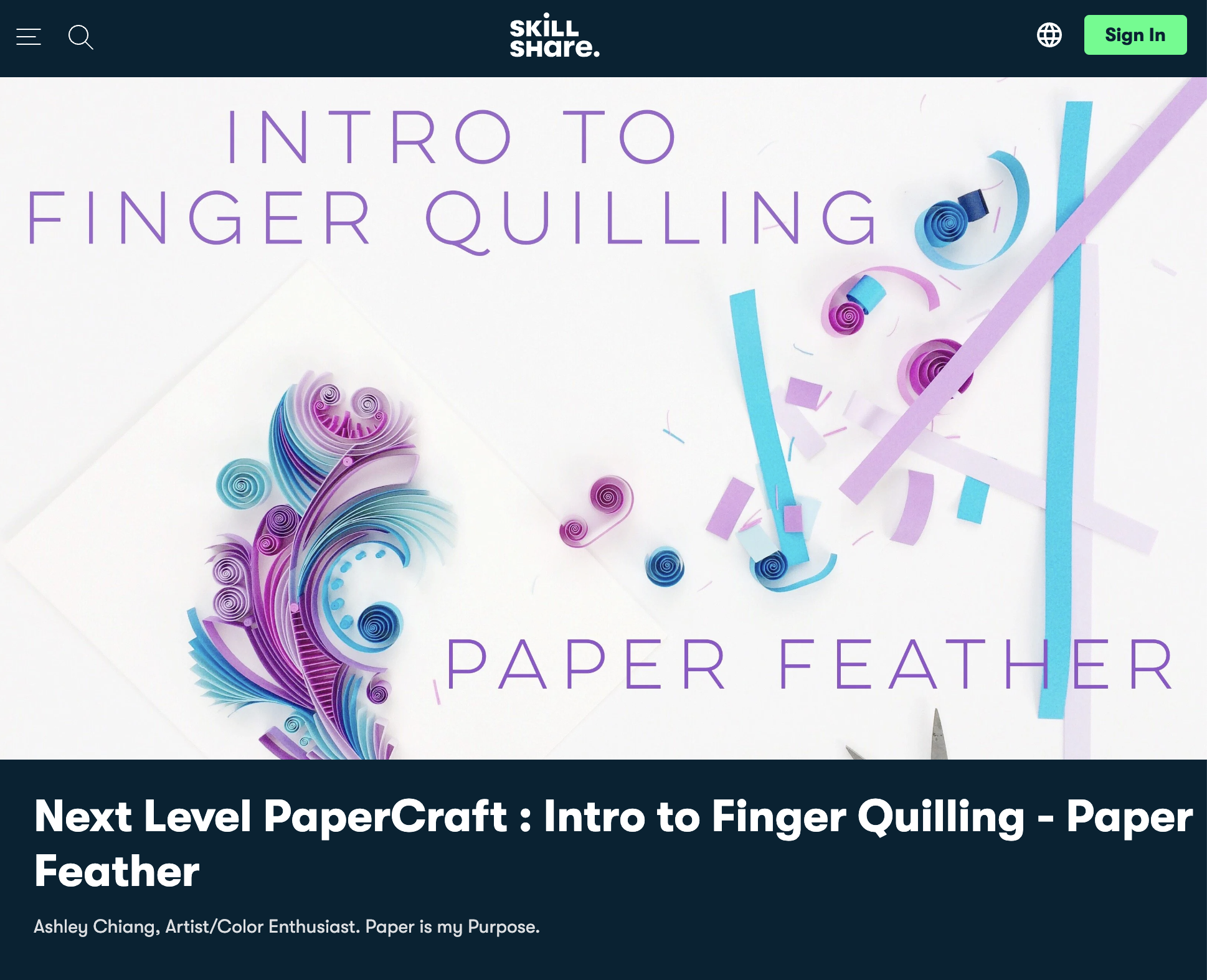
9. Next Level PaperCraft: Intro to Finger Quilling: Ashley Chiang

The craft is the same as the name defines it. Quilling means folding and rolling paper to make different designs and patterns. The true origin of the quilling is unknown; it dates back to when the paper was invented in China or around 300-400 AD when Silver and gold threads were designed in this pattern. Since then, quilling has been bestowed with love and affection from all corners. This papercraft can be used to create masterpieces and can add uniqueness to all its elements. In her free course, Colo Alonso teaches the techniques and tricks with utmost precision. And Ashley Chiang teaches next-level quilling hacks in her online class.

Next Level PaperCraft Intro to Finger Quilling

10. Candle Making: Scent Your Way to Paradise: John Norman

To bring more aesthetic and elegant appeal to your home and living space, the best option to be added is Candles. They illuminate the entire space making it livelier and warmer. I know what you all are thinking when there are tons of candles, and not just plain candles but aromatic candles available in the market; why will one take all the pains to make them at home? But imagine a candle that represents the fragrance of your home, the aroma that calls out to you and defines your home or just your personality, and, most importantly, has your personal touch to it. For these reasons, you will make candles at home, or you can even start your own small business selling customized candles. Like I always say, the world is your blank canvas. So take the hint and begin your bright journey with John Norman’s candle-making free online course.

Candle Making

11. Understanding Tone In Watercolour Painting: Arie Swanepoel

Everyone can paint in their exceptional style. I love painting and especially enjoy watching small reels of painting. But just a few months back, I learned that there are so many types of watercolors. Apart from tubes and bottles, there are watercolor pencils, markers, sheets, and whatnot. This revelation led to in-depth watercolor research, which led to color mixing techniques and then learning about undertones and strokes, finally realizing this is not my cup of tea. I am happy with using basic acrylic colors and creating a mind-boggling painting. If this information intrigues you even a little bit or makes you want to learn all the technicalities of painting and mixing, I have the perfect online courses for you. Arie Swanepoel’s online class on understanding tones and watercolors, Erika Lancaster’s everything about colors, and Ana Victoria Calderon’s paint mixing online classes are a must.

Understanding Tone In Watercolour Painting

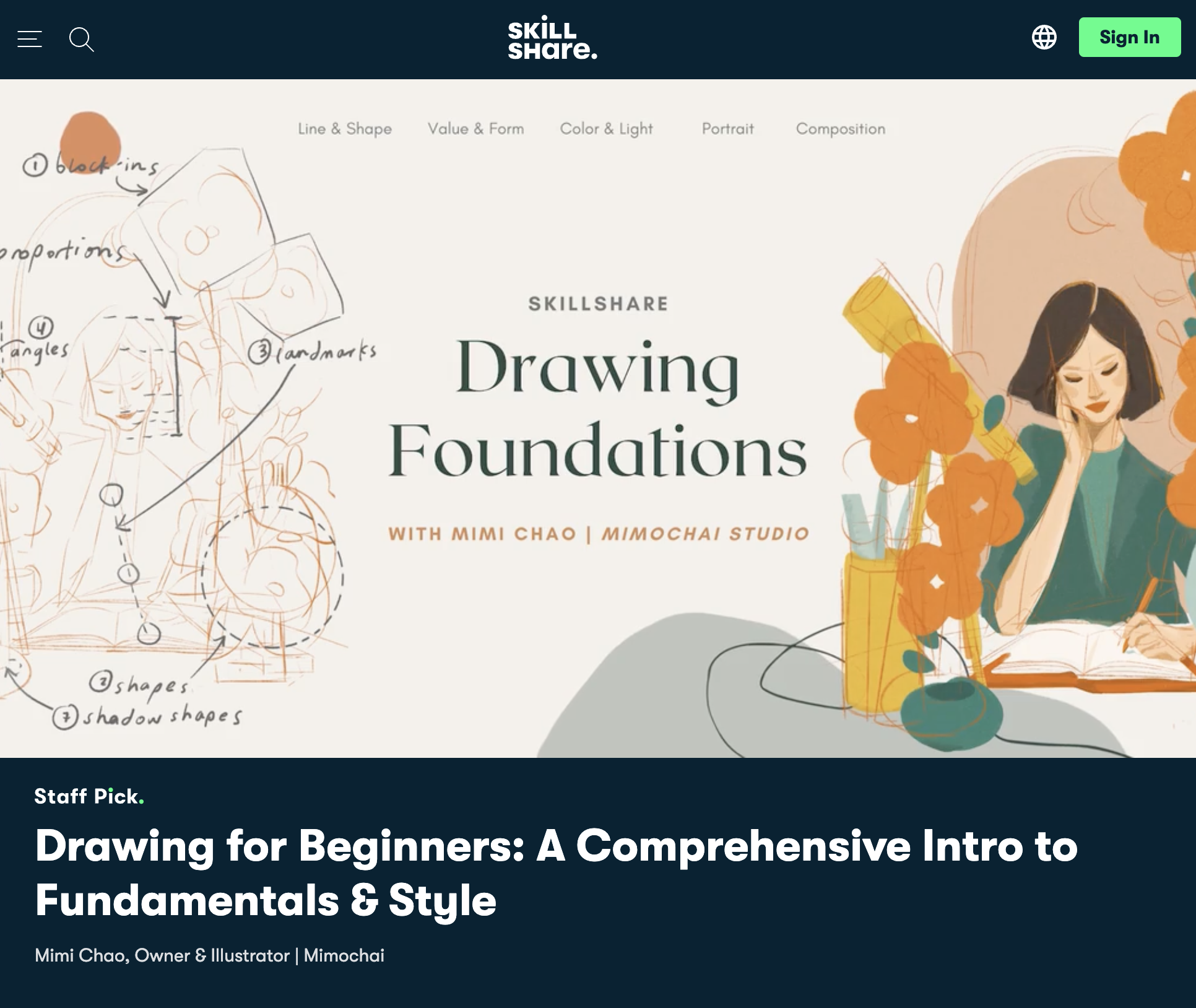
12. Drawing for Beginners: A Comprehensive Intro to Fundamentals & Style: Mini Chao

Before we paint anything, we need to draw; obviously, we are all artists. Yes, I am a superb artist; the other day, my niece asked me to draw a doll for her, and after I finished, she complimented my drawing skills by saying, “this is the most hideous-looking doll; it looks like she is ready for Halloween.” Ouch! I know kids can break your heart in pieces, but mine was only broken into a few pieces, which got glued back together after I drew an even more hideous-looking doll with utmost dedication and joy. Nothing will stop me from doing what I like even if I don’t know its ABC…. With this same dedication, I need you all to follow what your heart desires, and if your heart desires to sketch and draw, look no further Mini Chao’s online course on the fundamentals of sketching is a perfect fit for all, beginning with paper art, and Brent Eviston’s free online class will take your skill up a notch.

Drawing for Beginners

13. Mastering Illustration: Sketching, Inking & Color Essentials: Josiah Brooks

Being on the same page with drawing and painting. The next creative aspect is an illustration. An illustration is any sketch or drawing clearly explaining an idea or thought without any textual information. Seeing an illustration, one should be able to tell the story conveyed through it. There are different styles of illustration like editorial illustration, advertising illustration, fashion illustration, digital illustration, infographics, and the list goes on. Those artists interested in this form of drawing and sketching can learn from the free online course offered by Josiah Brooks.

Mastering Illustration

14. Pottery on the Wheel for Beginners: Steve McDonald

Pottery art dates back decades and is still relevant today in all its charm and glory. There are so many people out there who have geared up their studios and started a small pottery businesses. You can get creative with making pottery to your heart’s content. But getting hold of its basics demands a lot of patience and perseverance. If you have it, you must flaunt it with all our pottery-making. You need a small setup, and you are good to go. Steve McDonald’s online craft class is about ceramics and pottery for those just starting with this idea.

Pottery on the Wheel for Beginners

Conclusion

This brings us to the end of my listicles on being creative in the most creative way. You can make your list of art and craft classes. All the crafts listed above can be practiced in the comfort of your home.

Some might need an extra setup, but this small effort can lead to starting your own small business and give you the title of Entrepreneur, FANCY, I know! So, before I take my final leave, a small word of motivation for all, “Art is not a handicraft; it is the transmission of feeling that the artist has experienced” by Leo Tolstoy.

Art is not just about creating; it is about expressing yourself and shaping your feelings and mental set. It is not just the tools that help you define the form; adding that personal touch brings out the true artisan in you. You deliver in your art what your heart desires.

Your art is your true reflection. So never be afraid to practice the art or to make a craft by calling yourself ordinary because the most ordinary person makes the art. So start with your paper and pen to make your art and craft by learning from these best and free online courses.

Free tutoring programs will tackle COVID learning loss, prioritize early grades in N.J.

As New Jersey universities reckon with one more yr impacted by the world-wide pandemic, a sequence of new plans the state announced Friday will handle COVID-19-linked finding out decline.

The “High Effect Tutoring” system, which the condition has started to request distributors for, will prioritize 3rd and fourth grades. 1-on-a person or little group periods will be held at minimum twice a week for as a lot of as 10 months when the application launches, the New Jersey Section of Education mentioned Friday.

Two other plans, Studying Acceleration Skilled Integrated Progress (Speedy) and “RAPID-Plus,” will offer instruction and other progress possibilities for educators.

The tutoring and expert advancement courses will be welcome in Camden, among the the state’s approximately 600 community school districts, where by about 6,800 college students discover — most of whom are Black and Hispanic, officers there stated.

“There is an component, specifically for the younger grades, of time that demands to be made up,” Keith Benson, the teacher’s union president in Camden, claimed Sunday.

“I consider all college students can use some kind of extra aid,” he added, “but specially in the decrease grades.” Tutoring throughout the school working day “can be possibly transformational.”

In accordance to a November 2021 report from Boston-primarily based education and learning analysis agency, Curriculum Associates, extra pupils had been two or more quality levels at the rear of, when compared to before the pandemic begun.

The state Section of Education and learning reported faculty districts will be in a position to use to be reimbursed from a pot of at least $17 million in federal income from the Governor’s Crisis Education Reduction Fund.

An additional $2 million from the state’s fiscal yr 2023 finances will fund the Immediate program. And about $3.7 million in federal Elementary and Secondary College Unexpected emergency Relief cash will also help both the Rapid and Fast-Furthermore applications. Speedy-Moreover will explore how faculties and universities may perhaps be in a position to coach instructors in strengthening literacy for fourth and fifth graders.

“The educational difficulties going through New Jersey college students replicate all those confronted by students during the nation as a end result of the worries posed by the COVID-19 pandemic,” Angelica Allen-McMillan, acting commissioner of education, claimed in a assertion Friday. “These Large Impact Tutoring and Fast educator training packages are tactics that will accelerate our students’ mastering and assistance them reach bigger academic success as we move forward.”

To find out additional about the packages click right here.

Our journalism wants your guidance. Remember to subscribe now to NJ.com.

Steven Rodas might be achieved at srodas@njadvancemedia.com. Adhere to him on Twitter @stevenrodasnj.