School Physical Education Programs Could Play an Important Role in Reducing Kids’ Depression, New Research Suggests

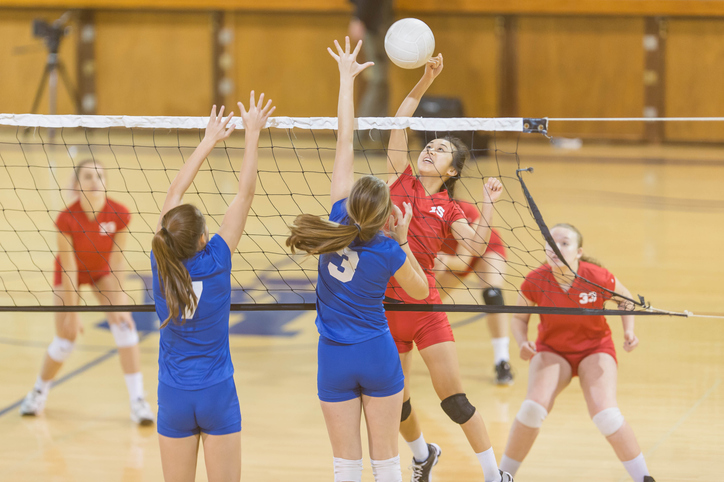
Teen girls playing volleyball

Because physical activity is associated with a significant reduction in depression symptoms, physical education programs in primary and secondary schools can play a key role in improving the mental health of children and adolescents.

Pills

Online health guidance from Harvard Medical School calls exercise “an all-natural treatment to fight depression” and says antidepressants aren’t the only solution.

Couple walking dogs

Research found that for adults, even relatively small doses of physical activity are associated with substantially lower risks of depression.

Strong evidence points to physical activity as effective treatment for depression – the challenge is getting people to do it.

The evidence that physical activity is effective medicine for mental health is robust; now we need to find ways to get people to take it.”

— Eduardo E. Bustamante, PhD, University of Illinois Chicago

WASHINGTON, DC, US, January 5, 2023 /EINPresswire.com/ — A rigorous, new study has confirmed a link between physical activity and significantly reduced depression symptoms in children and adolescents, with a greater benefit derived by teenagers and by those more severely depressed. A separate study last year found a similar association between exercise and depressed adults.

Citing the fact that current clinical guidelines for treatment of depression in children and teens call for psychotherapy and psychiatric drugs, which have proven unworkable for many young patients, researchers from Hong Kong and the U.S. addressed what they termed “an urgent need to explore novel treatment approaches that can be safely, feasibly, and widely implemented in the daily routine of children and adolescents with depression.”

They conducted a systemic review and meta-analysis of a wider range of studies than any previous study on the association between physical activity and depression in children and adolescents. They found that getting depressed kids to exercise more – three activity sessions a week for up to 12 weeks – was associated with a significant reduction in depression symptoms compared to those in control groups who did not receive the physical activity interventions. [1]

The study findings, published in JAMA Pediatrics, also indicate that increased physical activity has greater benefits for more severely depressed children and adolescents and for depressed teens aged 13 years or older, an age range in which physical activity levels have been found to decrease and depressive symptoms increase.

“The available evidence supports physical activity interventions as an alternative or adjunctive approach to alleviate depressive symptoms in children and adolescents, substantiating the beneficial influence of physical activity on the mental health of pediatric populations,” wrote lead author Francesco Recchia, MSc, of the School of Public Health at the University of Hong Kong.

Most of the studies reviewed by the researchers involved increasing students’ participation in physical activities at school, ranging from simple aerobic exercises, such as running and jumping, to playing sports. The researchers suggested that schools could look to their physical education programs as a means to improve students’ mental health.

“The findings of this systematic review and meta-analysis strengthen the role of physical activity for depressive symptom management and highlight the potential of structured physical education programs in primary and secondary schools for improving the mental health of children and adolescents,” the researchers wrote. They called for further investigation of the frequency, duration, and supervision of physical activity associated with this improvement.

A companion editorial in JAMA Pediatrics urged research to find how to make physical activities more widely available and engage more children and teens in them, which is key to getting widespread public health benefits. “The evidence that physical activity is effective medicine for mental health is robust; now we need to find ways to get people to take it,” wrote Eduardo E. Bustamante, PhD, of the Department of Kinesiology and Nutrition at the University of Illinois Chicago. [2]

Other research findings have found similar links between exercise and depression in adults. A 2021 systematic review and meta-analysis, published in JAMA Psychiatry, found that adults who are physically active have a lower risk of depression than those who do not exercise at all and that “relatively small doses of physical activity were associated with substantially lower risks of depression.” [3]

Similar results were found when researchers analyzed data from 1.2 million American adults who took the Centers for Disease Control and Prevention’s Behavioral Risk Factors Surveillance System survey in 2011, 2013, and 2015. The 2018 study, published in The Lancet Psychiatry, found that all types of exercise – even walking – for an average duration of 45 minutes three times a week were “significantly and meaningfully” associated with fewer days of poor self-reported mental health by survey participants as compared to those who did not exercise. [4]

Online health guidance from Harvard Medical School calls exercise “an all-natural treatment to fight depression.” “Pills aren’t the only solution. Research shows that exercise is also an effective treatment,” according to the Harvard Health Publishing website. [5]

Currently, 45 million Americans are prescribed antidepressant drugs, whose side effects include sleep problems, emotional dulling, sexual dysfunction, anxiety, irritability, hostility, aggressiveness, loss of judgment, and the impulsiveness and mania that can lead to violence and suicidal thoughts and actions.

Worse still, those who want to stop taking antidepressants risk serious withdrawal symptoms that can persist for a year or more. [6]

The longer antidepressants are taken and the higher the dose, the more severe and prolonged the withdrawal symptoms may be, causing an untold number of users to give up trying and instead remain on a drug they no longer want.

Even the rationale for prescribing antidepressants – to correct a supposed chemical imbalance in the brain – has been questioned by researchers who conducted a comprehensive review, which for the first time integrated all relevant research, to evaluate whether scientific evidence supported the theory that a low level of the brain chemical serotonin caused depression.

“The serotonin theory of depression has been one of the most influential and extensively researched biological theories of the origins of depression,” wrote lead author Joanna Moncrief in Molecular Psychiatry in July. “Our study shows that this view is not supported by scientific evidence. It also calls into question the basis for the use of antidepressants.” [7]

The Citizens Commission on Human Rights (CCHR) continues to raise public awareness of the risks of serious side effects and withdrawal symptoms from antidepressants and other psychiatric drugs, so that consumers and their physicians can make fully informed decisions about starting or stopping the drugs. CCHR supports safe and science-based non-drug approaches to mental health.

CCHR also recommends a complete physical examination with lab tests, nutritional and allergy screenings, and a review of all current medications to identify any physical causes of depression or other unwanted mental and emotional symptoms, which might otherwise be misdiagnosed and incorrectly treated as a psychiatric disorder.

WARNING: Anyone wishing to discontinue or change the dose of an antidepressant or other psychiatric drug is cautioned to do so only under the supervision of a physician because of potentially dangerous withdrawal symptoms.

The Citizens Commission on Human Rights was co-founded in 1969 by members of the Church of Scientology and the late psychiatrist and humanitarian Thomas Szasz, M.D., recognized by many academics as modern psychiatry’s most authoritative critic, to eradicate abuses and restore human rights and dignity to the field of mental health. CCHR has been instrumental in obtaining 228 laws against psychiatric abuses and violations of human rights worldwide.

The CCHR National Affairs Office in Washington, DC, has advocated for mental health rights and protections at the state and federal level. The CCHR traveling exhibit, which has toured 441 major cities worldwide and educated over 800,000 people on the history to the present day of abusive and racist psychiatric practices, has been displayed at the Congressional Black Caucus Foundation Annual Legislative Conference in Washington, DC, and at other locations.

[1] https://pubmed.ncbi.nlm.nih.gov/36595284/

[2] https://jamanetwork.com/journals/jamapediatrics/fullarticle/2799813

[3] https://jamanetwork.com/journals/jamapsychiatry/fullarticle/2790780

[4] https://pubmed.ncbi.nlm.nih.gov/30099000/

[5] https://www.health.harvard.edu/mind-and-mood/exercise-is-an-all-natural-treatment-to-fight-depression

[6] https://pubmed.ncbi.nlm.nih.gov/29758951/

[7] https://www.nature.com/articles/s41380-022-01661-0.pdf

###

Anne Goedeke
Citizens Commission on Human Rights, National Affairs Office
+1 202-349-9267
email us here
Visit us on social media:
Facebook

CCHR: Antidepressant warning

Parents seek creative options for kids’ education

Rapid City’s population growth is contributing to an emerging trend in education. New and longtime residents increasingly want personalized, interactive learning that fits their children’s unique needs and abilities.

Innovative private schools and programs in Rapid City offer options for families who want choices beyond local public or faith-based schools.

Dakota STEAM

Dakota STEAM debuted earlier this year with summer camps. Its founders and co-owners, Jamie Bennett and Deanna Vallone, are teachers who saw a need for more STEAM (science, technology, engineering, art, math) education than kids might be getting during a typical school day, so the women created Dakota STEAM.

They take STEAM lessons to local schools and homeschoolers, and they’ll take their program to nearby communities. Bennett said Dakota STEAM is currently serving more than 100 students every week just in Rapid City schools and they want to continue reaching more kids and families.

People are also reading…

Bennett and Vallone partner with businesses, as well, and recently presented a Sip and STEAM event at Cohort Craft Brewery in Rapid City.

“We were really excited at the turnout. We were able to have families build STEAM projects we created,” Bennett said. “It’s a different way to bring education to the community. It’s finding those non-traditional ways of meeting families where they’re at. We’re going where the community needs us and wants us.”

STEAM activities build emotional and life skills as kids learn, Vallone said. She believes getting more kids and adults involved in STEAM education will strengthen the community as a whole.

“I just became really obsessed not only as an educator but as a parent with all the benefits of STEAM,” said Vallone, who was previously an elementary school teacher. “STEAM became my biggest passion in life. … Our community needs something for families that’s educationally based.

“The best thing about STEAM at a young age is it’s about what it builds inside of kids. As an educator and a mom, STEAM is the best way to build self-esteem. It’s the best way to develop a strong growth mindset and to know failure is a part of life and growth is the most important aspect,” Vallone said. “It helps kids believe in themselves and in this digital age, it helps them get more hands-on. It really hits the four Cs – critical thinking, creativity, communication and collaboration. If a kid can get those four things, they’re unstoppable.”

Every STEAM lesson melds some elements of science, technology, engineering, art and/or math. For example, Vallone recently taught second-graders how to make crayon drawings and transfer them to another piece of paper. The art lesson brought in science as students studied why and how the solid crayons melted into liquid.

Such hands-on projects let students use their creativity and kids tend to remember the lessons, Vallone said.

“It really comes to life and they’re never going to forget learning it. That’s what I love about it. Kids are honoring the inquiry process and becoming curious,” she said.

STEAM lessons give kids opportunities to collaborate and share ideas, said Bennett, who taught seventh grade math for 10 years.

“Every kid solves their own unique project … but we really do believe in collaboration. Talking with somebody could spark an idea you needed to get started … and see it in another perspective,” Bennett said.

Though they share ideas, kids are encouraged to find their own distinctive ways to complete a project.

“We give them a few (guidelines) and materials. Over the course of time, we’ve seen students come to class with more confidence and understanding that they can be different than the person next to them,” Bennett said.

“We love teaching kids and we do think they’re our future,” Bennett said. “Employers will be looking for those types of (STEAM) skills. We really believe kids can do challenging tasks in learning.”

Go to dakotasteamlearning.com or follow Dakota STEAM on Facebook and Instagram for more information.

EmpowerEd

EmpowerEd will join the Festival of Lights parade with a float its students built in school. For the small school launched in fall 2021, hands-on learning and community involvement are vital parts of its curriculum.

“Things that make EmpowerEd particularly different are we believe in collaborative learning and exploring and respecting a quite diverse perspective of cultures and beliefs, as well as abilities and levels of experience and expertise,” said Angela Griffin, the founder, director and a teacher at EmpowerEd.

“We take the kids from wherever they are and whatever they know and we help them to grow from where they are,” she said. “We have kids that are struggling and behind a grade level like the entire nation is. We have other kids well above their grade level so they would be bored in normal circumstances. We’ve got some kids reading at a college level so we’re meeting them there.

“You might have a third-grade kid and their math ability might be first grade, or they might have a tenth-grade reading level but they’re supposed to be doing all the third-grade stuff. How does that help the kid?” Griffin said.

Griffin taught English and Spanish at Stevens High School while dreaming of running a school like EmpowerEd. The school focuses on student-centered learning rather than teaching kids to prepare them for standardized tests. The school’s approach to education is based on research.

“I have been dreaming of this program for 20 years. … It’s something I’ve been researching and working on,” Griffin said. “One of the things about EmpowerEd is the title itself. We believe in empowering children in their education.”

EmpowerEd is for ages kindergarten through grade 12 students, and Griffin said more families have expressed interest in enrolling their children. EmpowerEd will accept new students any time during the school year. The school uses classroom space at Calvary Lutheran Church in Rapid City, although Griffin emphasizes EmpowerEd is not a religious school.

The school currently has 11 students who learn together in a single classroom.

“We don’t separate kids out into classrooms. The research shows that kids learn better and more deeply if they are exposed to different ages and different levels (of skill and knowledge) and also if they are engaged and enjoying what they are learning,” Griffin said.

EmpowerEd incorporates social and emotional learning and physical well-being into the school day.

“We provide time and space for children to be able to go and move around and take breaks. … Everything, even down to our schedule, is based on when kids’ minds and bodies are at their best. Being research-based really helps, and kids have said (they like) the sense of community and friendship and feeling safe, and that it is fun and happy,” she said.

Every Friday, the school schedule includes a field trip and a chance for kids to get involved in community service. The students have volunteered with Meals on Wheels and Feeding South Dakota, among other projects. Field trips help kids understand the process of being engaged and giving in the community, Griffin said.

“The families and the kids really appreciate the focus on community and cultural respect,” she said.

Marty Two Bulls Jr.’s 8-year-old daughter is now in second grade at EmpowerEd, and Two Bulls serves on the board of directors. Two Bulls said his daughter began attending EmpowerEd after the COVID-19 pandemic began but public schools were not requiring masks.

“We felt like (EmpowerEd) was a safer option for her, and she enjoys the smaller learning environment,” Two Bulls said. “There aren’t the same restrictions around learning about Indigenous history as there are in public schools.”

Two Bulls is an artist. He created the graphic arts program at Oglala Lakota College in Kyle and is a full-time faculty member there. He volunteers at EmpowerEd by teaching art lessons for the students.

Two Bulls said his daughter likes going to school.

“She’s a lot more confident, especially (when she’s) engaging with her community and adults,” he said. “There’s a different culture of inclusion and students have a voice in their education.”

Justin and Emily Huntley’s home has become tri-lingual since their 9-year-old daughter and 12-year-old son began attending EmpowerEd. The family’s heritage is German and Swedish, so their daughter, who has dyslexia, is learning German and and their son is studying Swedish.

“Suddenly she’s talking with my father-in-law, who speaks German,” Emily said. “We say good night in German every night.”

Like the Two Bulls family, the Huntleys were uncomfortable with the lack of COVID-19 precautions in public schools and that was one aspect that drew them to EmpowerEd.

The Huntleys said their children are thriving in the personalized environment. Each student has a learning plan tailored to the way they learn and their interests.

Justin said he was skeptical of the school’s approach to education but now has volunteered to be president of EmpowerEd’s school board after seeing the school’s positive effect on his son and daughter. Emily likes being able to go in and volunteer anytime her work schedule permits.

“The students are not just expected to hit a certain measure. They truly are able to develop a knowledge base,” Emily said.

Go to empoweredbh.org or follow EmpowerEd on Facebook for more information.

Black Hills Montessori

As Rapid City’s population grows, so does the interest in Montessori education.

“I think a lot of people moving here … are familiar with Montessori schools. Their children have already been in the programs and they want their children to be in Montessori schools. It’s a lot more normalized in other areas,” said Monica Sorensen, director of Black Hills Montessori.

“We’ve had a ton of families move here from out of state and immediately they already know what Montessori is. We practice traditional Montessori here and the families that seek traditional Montessori call us,” she said.

Montessori education is focused on learning and how to support learning. Traditional Montessori follows a child’s natural development and what’s appropriate for them, Sorensen said. Children are given lessons based on their developmental path.

“I just think parents are understanding that children aren’t the blank slate model where we give them information and that’s how knowledge occurs,” Sorensen said. “They really need to have a hands-on experience in order to learn. I think (the importance of) how we learn is becoming more apparent in people’s school choices.”

Black Hills Montessori serves preschool through sixth-grade students, and Sorensen said the school will be adding an adolescent program as the need arises. Rapid City currently doesn’t have a Montessori option for kids beyond elementary school.

“We also have an outdoor program component we implement because we (are situated on) four acres. Kids can develop fine and gross motor skills in an outdoor environment. We’re the only school that provides that option,” she said. 

Finding alternatives to traditional public education is a trend Sorensen said this generation of parents is exploring more frequently. Though she’s getting calls from families who are new to Rapid City, Sorensen said she’s seeing an equal amount of interest from locals.

“There’s a lot of kids on IEPs (individualized education programs) and Montessori typically does its own individual education plan, so they’re looking for something that is a better fit for their children,” Sorensen said.

The school’s enrollment is 38 students now. Sorensen anticipates the school could build and expand as needed within the next year or two.

Because of the rising demand for Montessori education, she’s starting South Dakota’s first Montessori teacher training program in 2023.

“I think it’s important to have (Montessori) teacher training. … I’m starting the Montessori project because I want to help people start schools so they have options. We need to have alternatives and we need to have alternatives in the preschool area,” Sorensen said.

Follow Black Hills Montessori on Facebook or email Bhmontessorisd@gmail.com for more information.

Children’s House Montessori

Children’s House Montessori in Rapid City recently expanded and anticipates more growth ahead.

“I definitely am seeing more people who are moving here from out of state. I’m seeing a lot of new inquiries … and especially for those families that know Montessori already. Either their child has gone or currently goes, and they definitely want to be at a Montessori school,” said Michelle Kagarmanov, director of Children’s House Montessori. “I get a lot of calls from people moving to the area wanting to know what enrollment is like and is there a waitlist.”

The school is also being contacted by local families who are looking for options.

“Wherever they are now, it’s not working for their child and they’re looking for alternatives, and they’re questioning that paradigm (of public school),” Kagarmanov said.

Children’s House Montessori has grown over the past two or three years as the COVID-19 pandemic and the influx of new residents in the Black Hills has resulted in more parents seeking education options.

“I do foresee, maybe five years from now, we’ll probably be in a similar position of needing more space. It seems like more and more families are seeking alternatives to public education – something other than one size fits all,” Kagarmanov said. “People aren’t just assuming they’re going to send their child to public school anymore. The pandemic really shook things up in that regard. A lot of families changed their viewpoint.”

Children’s House Montessori has had an enrollment of about 80 students ages 3 to 12 in preschool through sixth grade, Kagarmanov said. The addition this year of a separate preschool and kindergarten location will allow it to nearly double its capacity and serve up to 120 students. Kagarmanov anticipates the school could reach full enrollment by next year.

Children’s House Montessori uses hands-on learning and Montessori curriculum to teach to state standards.

“Our goal is student-centered education,” Kagarmanov said. “When we’re doing our teaching and our learning, the expectation is we’re developing a relationship with the child. Before any learning can take place, that relationship has to be established.”

The school emphasizes collaboration rather than competition between students, and it incorporates social and emotional skills such as inclusion and conflict resolution.

“Students have to feel nurtured and secure and safe in the classroom, and it sets the stage for some really good learning,” she said.

The Montessori method of learning uses handheld materials to teach academic standards. Students might work individually or in groups to use the materials to solve a problem or work on a project.

“It allows students to learn in different ways, so rather than ‘we’re all going to learn the same way today,’ we’re all going to learn the same thing today,” Kagarmanov said.

She believes Montessori education gives students skills that will serve them well into adulthood.

“You’re building up this capacity of ‘I am figuring this out myself’ and isn’t that amazing? You can teach people to learn that, so eventually when they graduate, they are capable to do jobs that require creativity and capability,” she said. “The kind of jobs I believe are going to be available (when students enter the workforce) are not the ones where you go in and make (an object). That’s not what our workforce needs.”

Go to chkids.net or follow Children’s House Montessori on Facebook for more information. 

You must be logged in to react.
Click any reaction to login.

How do we improve learning for kids already behind before the pandemic?

When will the U.S. education program return to the learning levels of 2019? One headline summed up the challenge this way: “Two Decades of Advancement Wiped Out by Two Decades of Pandemic.”

People today who have been finding out our educational facilities for a long time are cautious when answering my question. Some say examining and math averages could rebound by 2028, but they acknowledge numerous small children will never ever get every thing they skipped.

The industry experts have their own concern: how ready are we to spend the effort and cash necessary to enhance the mastering of youngsters whose households are at the base of the income scale? Providing learners much more time to master and improved-trained teachers seems to function. But lots of students did not have this kind of assistance right before the pandemic. How can we anticipate them to get it now?

Diane Ravitch is our finest instruction historian and very best-recognised author about colleges. She said: “My hunch is that the downward slide in exam scores can be prevail over, not immediately, but in significantly less time than the time stolen by the pandemic. … My hope is that learners will make up for misplaced time in a calendar year or two if they have professional academics and steadiness — no faculty closures or disruptions.”

Point of view | Deprived youngsters damage by trying to keep pandemic’s peaceful educating design

That’s a major if. Instruction coverage guru Chester E. Finn Jr.’s hottest ebook assesses the countrywide checks we use to measure progress in mastering. He, much too, features a combine of hope and fear about the long run. “Based on what we know currently, history suggests that gains equal to the pandemic losses could be noticed in as minor as 4 or 6 decades right after 2022, but the additional popular tempo of change in both equally instructions is glacial,” he mentioned. “I fear especially about looking through, which has witnessed the fewest gains above the long haul.”

Some specialists are optimistic. “This year’s NAEP [National Assessment of Educational Progress] scores need to be the bottom in conditions of pandemic effects,” claimed Tom Loveless, writer and former senior fellow at the Brookings Institution. “Barring another pandemic or Wonderful Economic downturn, I count on NAEP scores to return to 2019 amounts in just two NAEP cycles, by 2026.”

Michael J. Petrilli, president of the Thomas B. Fordham Institute, noted that concentrating on examination outcomes ignores hurt to youngsters much too youthful to be analyzed. “Not only do we have to look at the severe detrimental repercussions of the pandemic and school closures on young ones who ended up school-age throughout 2020-22, but also how the disaster impacted little ones ages zero to five,” he mentioned. “There’s some evidence that a lot of of all those children endured developmental delays, and missed out on large-high-quality child care and preschool experiences, that means they will come into college even further behind as nicely.”

Tying shoes, opening bottles: Pandemic little ones absence essential daily life skills

Harvard College education and learning pro Paul E. Peterson explained the best scientific studies of university closings in the past reveal lasting damage. In Austria and Switzerland, very little touched by Environment War II besides for the closing of universities, scientists observed “those who shed a long time of schooling by no means recovered, judging by earnings obtained in adulthood,” Peterson reported.

Karin Chenoweth, author of the books “Schools That Succeed” and “Districts That Triumph,” described an vital simple fact remaining out of the discussion: “The ironic component of all the doomsaying stress about how the pandemic erased two many years of progress is that hardly any individual recognized that we experienced designed such progress when we have been generating it.”

Recovering from the disaster, she stated, involves recognition that progress in the the latest previous came “in massive aspect because for the very first time, educational institutions were predicted to train all small children, not just some. Numerous educators took that charge severely and seriously ramped up the volume small children in their charge acquired.” Will that transpire now?

Some gurus emphasized that large gaps in the public training process existed ahead of the pandemic hit. “In 2019, just 15 per cent of Black eighth graders were at or previously mentioned examining proficiency,” claimed Eva Moskowitz, founder and chief executive of the Achievements Academy charter universities in New York Metropolis. “Low-earnings children of color are entitled to far better, a lot greater. Initial, educational facilities really should halt reducing specifications and dumbing down curriculum.”

Prosperous programs prepare academics to stimulate learners and earn their trust, somewhat than just make calls for. Thuan Nguyen, chief govt of the nation’s most significant faculty preparatory method, Development Through Particular person Perseverance (AVID), reported “we can collectively make a decision how very long it will acquire to recover from the impression of the pandemic” by embracing the truth that “the very best way … to speed up learning is by means of relationships.” Nguyen said the bond amongst students and lecturers is vital: “There is nothing as powerful as possessing somebody who thinks in you and cares about you.”

General public schooling is dealing with a crisis of epic proportions

Kinnari Patel-Smyth is performing chief government and president of the KIPP Basis, which oversees the nation’s biggest charter university community. “Moving forward in this restoration suggests that federal and state politicians require to prioritize instructional shelling out, at minimum for a further 10 years,” she said. “It signifies we require to get the job done more difficult to assure each and every boy or girl is a robust reader. It suggests we want to tackle the trauma triggered by this pandemic and the inequities in this nation.”

There are lots of other solutions for reform. Regrettably we did not get pretty much with most of them prior to the pandemic. It is not likely we will do greater when our principal emphasis is just acquiring back again to where by we had been.

The Benefits of Online English Education for You & Your Kids

english

“The World-wide-web has built it quick for you to discover English. It has also produced it achievable for you to make income even though doing so.” We must not consider of these on-line English instruction classes as a replacement for traditional English instructing. They are just a instrument that can be applied by dad and mom and college students alike to enhance their competencies in the language.

Parent’s interest in these kinds of on the net English teaching programs can be improved by delivering their young children with helpful instructional product.

What is English instruction and how can it gain you?

English is the most extensively utilized language in the world. It is spoken by more than 500 million persons, and it has turn into a world language.

The English education system is based mostly on English as a second language (EFL), which implies that learners are taught to communicate, go through and generate in English. But it is not plenty of to find out English as a next language they also need to offer with everyday daily life in the state in which they are living.

A large amount of corporations use on the web learning platforms for their personnel and shoppers, this kind of as Udemy for courses on programming languages, Coursera for classes about different subject areas, Udemy for courses on e-commerce or business enterprise administration, and AmazingTalker for the English language. These platforms allow you to study from pro lecturers who are also current on the platform alone, so you can get true-life working experience

What are the Greatest Web pages to Understand And Research English?

It is critical to find out English as a second language. According to the United Nations, much more than fifty percent of the world’s populace is predicted to be bilingual by 2030. This indicates that we will have to understand English and other languages to connect with individuals from unique cultures and nations globally.

The very best way to learn English is as a result of on-line courses, so we can choose which just one fits us finest. There are many sites that give classes on different topics, such as grammar, creating model and vocabulary. Some of them are cost-free when other folks need a charge but most of them will support you boost your skills speedier than you could ever picture.

Why On-line Language Mastering is a need to-have in today’s environment

On the internet language courses will develop into a necessity for all learners. We want to discover languages in order to communicate with folks from distinctive countries and cultures. Nevertheless, there are many challenges that facial area us when it comes to learning languages, this sort of as the complexity of the language and its grammar.

On the web language mastering is a great way of finding out languages simply because it provides you the flexibility of finding out on your individual routine and at your very own tempo. Online courses are also considerably more effortless than heading to university or university for the reason that you can review any where you want devoid of obtaining to transform college schedules or commute far away from dwelling.

The Gains Of Online Education is Way too Very good Not to Attempt It Today!

It has been claimed that English is the second most spoken language in the planet and it is also one of the most hard languages to find out.

English academics on the web can be valuable for pupils who want to boost their English producing abilities. They can assist you get to know the language and society of a state. They can also help you strengthen your pronunciation and grammar, and they can even give you with precious insights into the society of the state.

As a result, there are a number of added benefits that arrive with mastering English on-line. On the web education and learning can enable you reach your plans and desires by assisting you learn English at an inexpensive price tag.

On the web education and learning can be used each for finding out English as nicely as for increasing your qualified expertise and knowledge of various fields. It can support you obtain related information and facts or understanding by various resources.